Why Ånderdalen National Park stands out
Ånderdalen is best known for its exceptional old-growth coastal pine forest, one of the finest examples of primeval forest in northern Norway. The forest contains trees exceeding 600 years of age, including distinctive marble pines that have become emblematic of the park's ecological character. The dramatic glacial landscape, with its deep valleys carved into hard granite, provides a striking backdrop that illustrates the powerful forces that shaped the Senja coastline. The park also serves as an important habitat for semi-domesticated reindeer, which use the area as a calving and grazing ground.
Ånderdalen National Park history and protected-area timeline
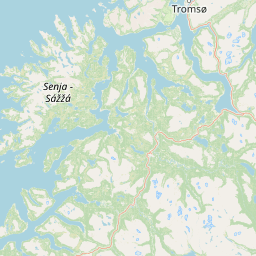
Ånderdalen National Park was established through royal decree on February 6, 1970, marking Norway's commitment to preserving the outstanding coastal mountain landscape of the Senja region. The initial designation protected the core area of what was recognized as a representative northern Norwegian landscape with significant ecological and scenic value. At the time of establishment, the park covered a more limited area than it does today.
A significant expansion occurred in 2004, when the park boundaries were extended to include additional terrain that enhanced the protected area's ecological integrity and representativeness. This enlargement reflected evolving understanding of the park's conservation significance and the importance of maintaining functional ecosystems within protected area boundaries. The expansion also acknowledged the growing recognition of the old-growth pine forest's national importance.
The establishment of Ånderdalen came during a period of increasing environmental awareness in Norway, when the country was expanding its system of national parks to better represent the diversity of Norwegian landscapes. The park was designated under IUCN Category II, reflecting its primary objective of ecosystem conservation while also providing for compatible public recreation and environmental education. The management authority rests with the Norwegian Environment Agency, which oversees protection measures and visitor management within the park.
Ånderdalen National Park landscape and geographic character
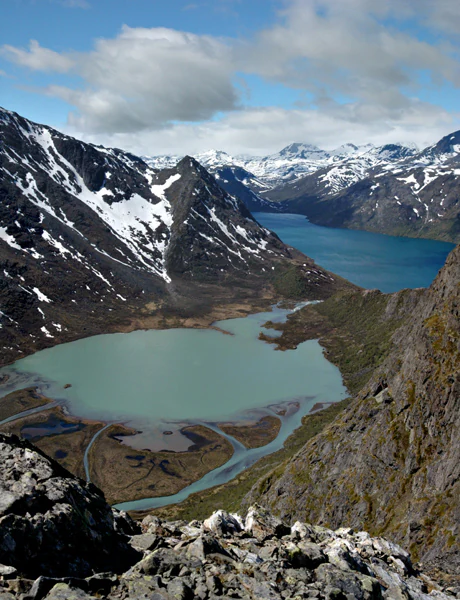
The landscape of Ånderdalen National Park exemplifies the dramatic coastal mountain terrain characteristic of northern Norway's Arctic regions. The underlying bedrock consists of hard granite that has resisted the erosive forces of ice and water, creating a terrain of ridges, cliffs, and steep-walled valleys. The glacial imprint remains clearly visible in the cirques, U-shaped valleys, and erratics that dot the landscape, providing tangible evidence of the ice ages that sculpted this terrain.
The park's topography ranges from sea level along the fjords to considerable elevations on the inland slopes, creating diverse environmental conditions within a relatively compact area. The valley floors, where rivers have carved their courses, contain the most lush vegetation, while the ridges and upper slopes support more open vegetation adapted to exposure and thinner soils. The contrast between the sheltered, fertile valleys and the exposed ridges creates a visually striking landscape.
The coastal setting introduces maritime influences that modify the continental climate typical of inland arctic areas. Fog, salt spray, and the proximity to the sea all shape the vegetation and character of the park. The boundary between land and sea is sharp along parts of the park's perimeter, where granite cliffs plunge directly into fjord waters. This interplay between terrestrial and marine environments adds another dimension to the park's landscape character.
Ånderdalen National Park ecosystems, habitats, and plant life
The ecological character of Ånderdalen National Park is defined by the convergence of northern boreal and coastal arctic influences within a mountainous setting. The coastal pine forest represents the park's most distinctive ecological feature, forming a near-continuous forest cover on suitable terrain. In the most mature areas, the forest approaches old-growth condition, with a multi-layered canopy, large-volume trees, and significant quantities of dead wood that support specialized communities of organisms.
The age of somepine trees within the park exceeds 600 years, making them among the oldest living trees in northern Norway. These ancient specimens, along with the distinctive marble pines that feature striking patterned bark, have become icons of the park's ecological significance. The forest's longevity reflects both the suitable growing conditions and the protection afforded by national park status.
Along the river valleys and floodplains, different ecological communities prevail. Birch forests dominate these moister, more nutrient-rich sites, creating a vegetational contrast with the pine-covered slopes. These riparian areas support higher productivity and provide important habitat for wildlife species that require the combination of cover, moisture, and foraging opportunities that such forests provide. The transition zones between forest types support their own distinctive communities.
Ånderdalen National Park wildlife and species highlights
The wildlife community of Ånderdalen reflects the park's position at the intersection of northern boreal and Arctic ecosystems. Moose, now well-established in the park, were absent before 1940 but have since established a permanent population that contributes to the park's ecological dynamics. The presence of moose has influenced forest composition through browsing pressure, creating a more varied landscape structure.
Semi-domesticated reindeer use the park extensively as calving and grazing areas, representing a traditional form of land use that continues within the protected area. These reindeer, owned by Sami herders, move through the park according to seasonal patterns, maintaining a connection between the landscape and indigenous pastoral traditions. The park provides important forage resources during critical seasonal periods.
Smaller mammals are well-represented, with red foxes, stoats, hares, various small rodents, and two species of shrews among the common residents. Along the rivers and at the heads of the fjords, otters are frequently observed, reflecting the excellent aquatic habitat the park provides. Seals frequent the fjord waters at the park's boundaries. The freshwater fish community includes trout, Arctic char, and Atlantic salmon, with salmon running far up the rivers to reach spawning grounds in Lake Åndervatn.
Ånderdalen National Park conservation status and protection priorities
Ånderdalen National Park serves as a key conservation area for northern Norwegian coastal mountain landscapes, representing an ecosystem type that occurs across limited portions of Norway's Arctic territory. The protection of old-growth coastal pine forest within the park addresses a conservation priority at the national level, as such forests have been significantly reduced by historical logging and land-use changes across their range.
The park's conservation value extends beyond its terrestrial ecosystems to include the rivers and fjord systems that border or traverse the protected area. The salmon runs in the park's rivers demonstrate the ecological connectivity between freshwater, riparian, and marine environments, and the health of these populations depends on the habitat protection the park provides. The presence of species such as otter further indicates the ecological integrity of aquatic systems.
The combination of old-growth forest protection, wildlife habitat conservation, and watershed preservation positions Ånderdalen as a significant contribution to Norway's protected area network. The park works in conjunction with other protected areas in the Senja region and across northern Norway to maintain ecological connectivity and represent the diversity of northern Norwegian landscapes.
Ånderdalen National Park cultural meaning and human context
The cultural context of Ånderdalen reflects the long history of human presence in the Senja region, though the park area itself has been relatively sparsely populated. The name 'Ånderdalen' derives from Norwegian, with 'dal' meaning valley, indicating that the valley has been a recognized place for centuries. The first element of the name has an uncertain meaning, but the place has clearly been known and named by local communities for generations.
The presence of semi-domesticated reindeer in the park connects to the Sami reindeer herding traditions that have shaped land use across northern Norway. While the park itself was not a core area of settlement, the surrounding lands and waters have supported human communities whose relationships with the landscape extend back centuries. The fishing and small-scale agriculture that characterized the broader Senja region created a cultural landscape that included areas like Ånderdalen as wild, uncultivated terrain.
The establishment of the national park formalized the recognition that areas with limited human modification retained outstanding natural value deserving protection. This represents a shift from viewing such lands merely as undeveloped or marginal to recognizing their intrinsic importance as representatives of Norway's natural heritage.
Top sights and standout views in Ånderdalen National Park
Ånderdalen National Park offers visitors the opportunity to experience one of Norway's finest coastal pine forests, with ancient trees over 600 years old creating a primeval atmosphere. The dramatic glacial valleys, carved into hard granite, illustrate the powerful geological forces that shaped the Senja landscape. The park supports populations of moose and serves as important calving ground for semi-domesticated reindeer, providing wildlife viewing opportunities in a dramatic Arctic setting. The rivers contain healthy populations of Atlantic salmon, and the fjord areas support otters and seals.
Best time to visit Ånderdalen National Park
The best time to visit Ånderdalen reflects the sub-Arctic climate of the Senja region, with summer offering the most accessible conditions for exploration. The relatively mild summer months allow visitors to experience the full range of the park's landscapes, from the coastal pine forests to the mountain terrain. Autumn can bring striking colors to the birch forests and favorable conditions for wildlife observation as animals become more active before winter. Winter transforms the landscape dramatically, though access is more limited and conditions require appropriate preparation for arctic conditions. The quality of light varies dramatically across seasons, with summer offering long days above the Arctic Circle and winter providing the possibility of northern lights viewing.