
Why Axios Delta National Park stands out
Axios Delta National Park is best known as one of the most ornithologically important wetlands in Europe. The park hosts remarkable concentrations of breeding and migratory waterbirds, including the largest European population of the vulnerable Dalmatian pelican and substantial flocks of greater flamingos that congregate in the shallow lagoons. The sand dunes between Alyki Kitrous lagoon and the Aegean Sea support Europe's largest and world's most densely populated colony of Hermann's tortoises. The park is also notable for its population of Axios horses, a unique feral breed descended from farm animals abandoned in the 1960s that now roam freely within the delta ecosystem. The delta serves as a critical staging area along the East Atlantic Flyway, making it a premier destination for birdwatching and wetland ecology study.
Axios Delta National Park history and protected-area timeline
The Axios Delta area has supported human settlement and activity for millennia, with the fertile Macedonian plain attracting agricultural communities since antiquity. The rivers that traverse this landscape—the Axios (known historically as the Vardar), the Haliacmon (or Aliakmonas), and the Loudias—carried rich sediments that formed the extensive delta wetlands. Historical accounts from travelers such as William Martin Leake in the 19th century documented the area's wildlife, including wild boars that are now locally extinct.
Modern conservation efforts began in 1971 when the delta was designated as a Ramsar Wetland of International Importance, recognizing its global significance for waterbird conservation. This early recognition came amid growing awareness of the ecological value of Mediterranean wetlands, many of which had been extensively drained for agriculture in the preceding decades. The Ramsar designation provided the first layer of international protection, establishing the framework for ongoing conservation of the area's wetland ecosystems.
Formal establishment as Axios Delta National Park came in 2009, elevating the protection status and providing a clearer management framework for the diverse ecosystems within the delta. The park's official name, Axios-Loudias-Aliakmonas Delta National Park, reflects the inclusion of multiple river systems beyond the Axios proper. This expansion acknowledged that the ecological integrity of the delta system depends on the interconnected functioning of all the rivers that feed into the Thermaic Gulf through this area. The national park designation placed the area within Greece's system of protected areas, establishing it as IUCN Category VI—recognizing it as a protected area where sustainable use of natural resources is permitted alongside conservation objectives.
Axios Delta National Park landscape and geographic character
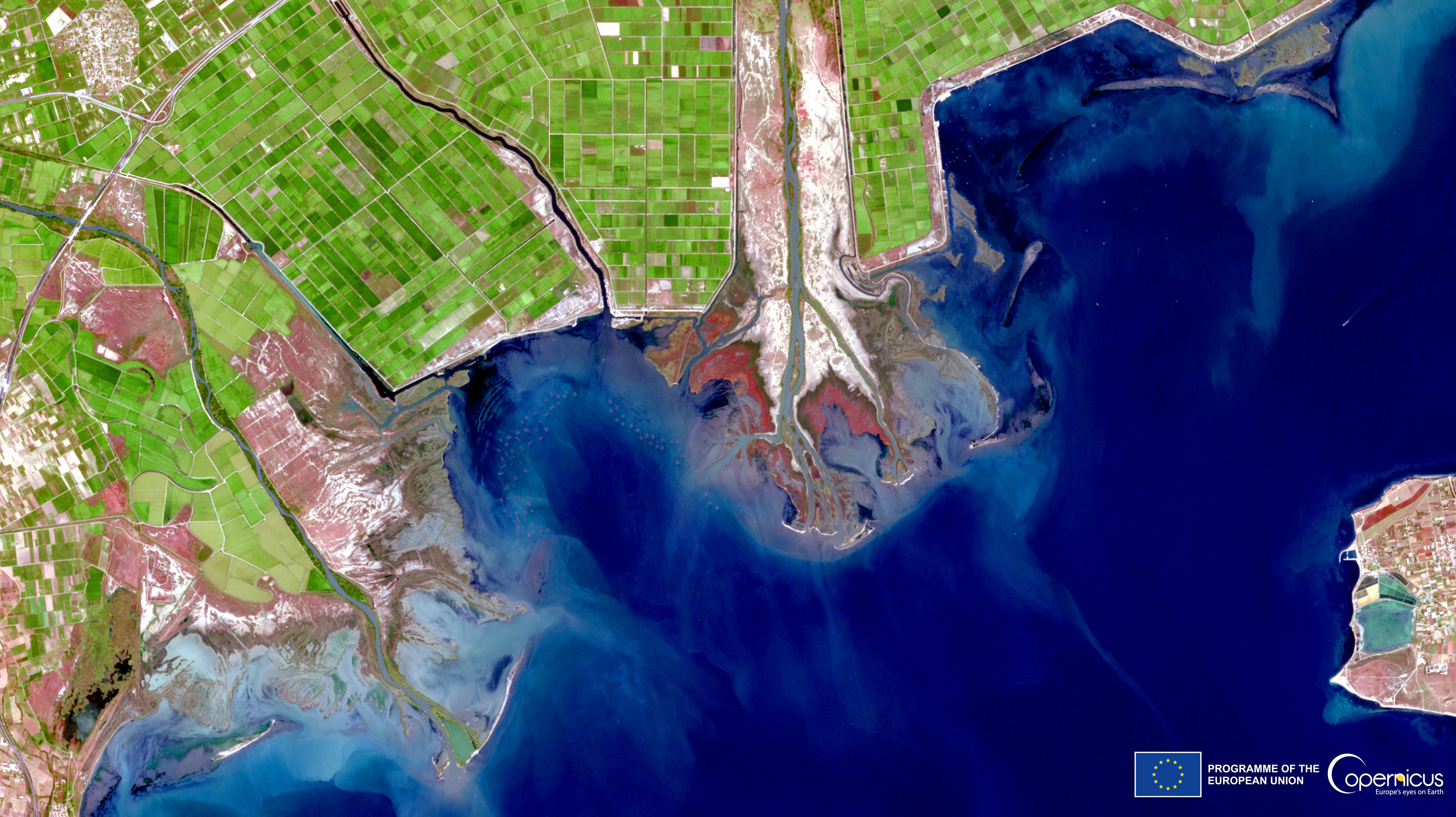
The Axios Delta landscape is characterized by a flat, low-lying terrain where rivers have deposited layers of sediment over millennia, creating a complex mosaic of aquatic and terrestrial habitats. The delta surface barely rises above sea level, with most of the area occurring at elevations of just a few meters above the water table. This topography creates ideal conditions for wetland formation, as water drains slowly across the flat landscape, allowing extensive marshes, lagoons, and reedbeds to develop.
The river channels themselves form the backbone of the landscape, their braided courses spreading across the delta as they approach the sea. The Axios River, originating in the mountains of North Macedonia and Yugoslavia, carries substantial sediment loads that have built out the delta coastline over time. Similar sediment contributions from the Haliacmon (Greece's longest river) and the Loudias create a continually evolving landscape where river courses shift and new land emerges. The Gallikos River, though smaller, adds its own deltaic contribution to the western portion of the park.
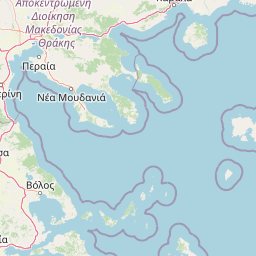
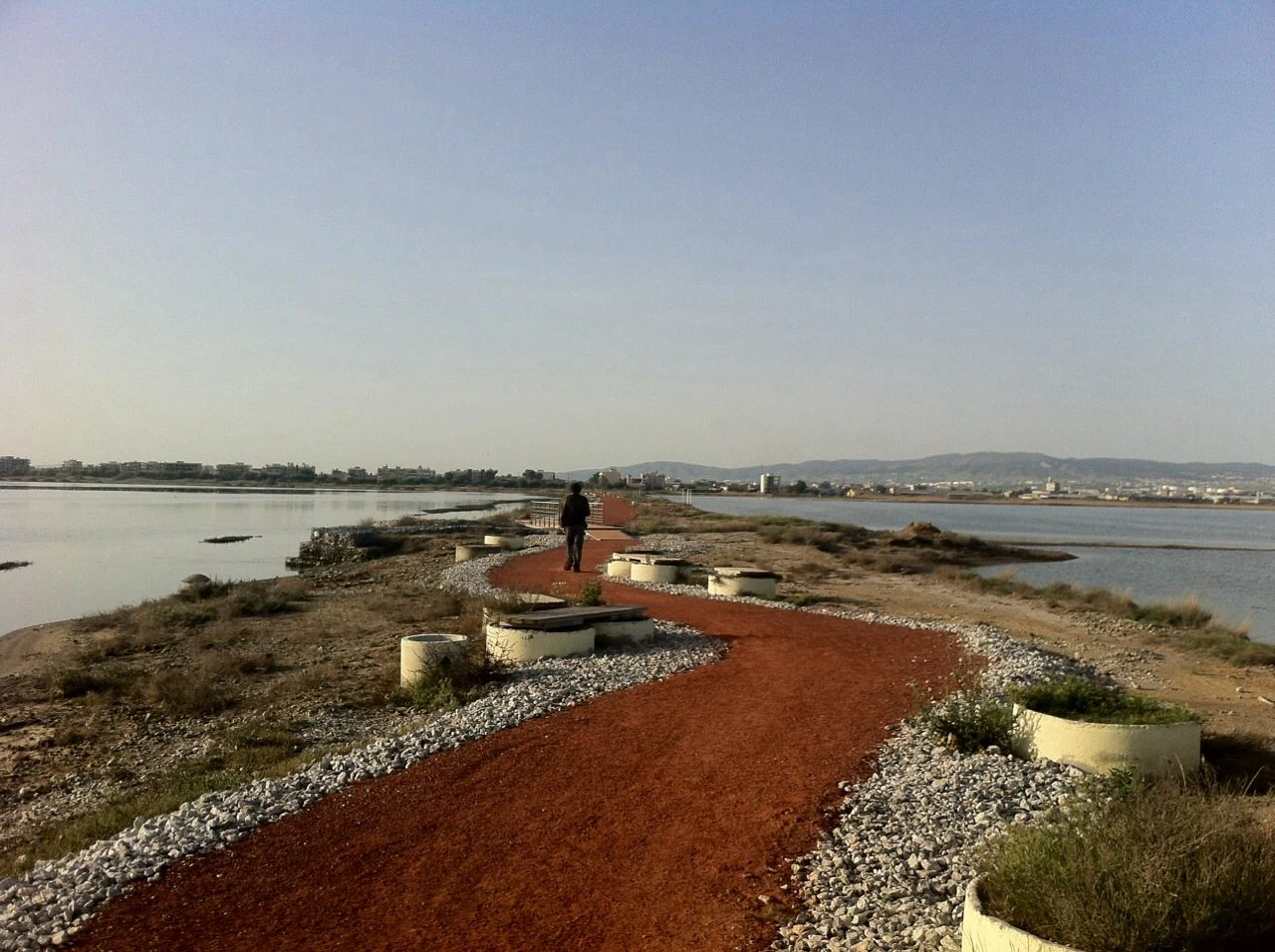
Lagoons and coastal wetlands punctuate the interface between river and sea. The Kalochori lagoon near Thessaloniki and the Alyki Kitrous lagoon to the north provide sheltered, shallow bodies of brackish water separated from the open gulf by narrow landform barriers. These lagoons support rich aquatic communities and serve as critical feeding and resting areas for migratory waterfowl. Between the lagoons and the Aegean Sea, sand dunes have formed along parts of the coastline, creating a distinct habitat type characterized by mobile sand, specialized pioneer plants, and the rare reptile populations that depend on this warming, well-drained substrate. The entire delta lies within the Aegean and Western Turkey sclerophyllous and mixed forests ecoregion, though the wetland areas themselves support quite different vegetation assemblages dominated by reeds, rushes, and halophytic plants.
Axios Delta National Park ecosystems, habitats, and plant life
The Axios Delta supports an extraordinary diversity of ecosystems within its 338 square kilometers, making it one of Greece's most ecologically significant protected areas. The wetland complex includes several distinct habitat types that together create a highly productive environment supporting hundreds of species. Reedbeds dominate large areas, with common reeds and bulrushes forming dense stands that provide shelter and nesting sites for birds, amphibians, and mammals. The lagoons support beds of submerged aquatic vegetation and, in their more saline sections, extensive communities of glassworts—succulent halophytic plants adapted to brackish conditions.
The vegetation across the park reflects the gradient from fully freshwater river channels through brackish lagoons to fully saline coastal waters. Riverbanks support galleries of European alders, elms, and willows that stabilize sediments and provide shade for aquatic organisms. In more upland areas within the delta, patches of deciduous woodland occur, though these are limited in extent. The sand dunes support distinctive psammophytic vegetation adapted to sandy, nutrient-poor conditions. Across all habitat types, the park records approximately 370 plant species, representing the typical flora of northern Greek wetlands and coastal zones rather than any significant endemic or rare plant community.
The ecological productivity of the delta stems from the constant flow of nutrients from the river systems into the coastal zone. The Axios, Haliacmon, and Loudias rivers all carry agricultural runoff and natural sediments that enrich the coastal waters, supporting the extraordinary mussel farming industry that operates along the park's coastline. This nutrient input drives the entire food web, from microscopic phytoplankton through invertebrate populations to the fish and birds that feed upon them. The mixing of fresh and salt water in the delta creates a highly variable environment that many species have evolved to exploit, making the area particularly rich in both freshwater and marine organisms.
Axios Delta National Park wildlife and species highlights
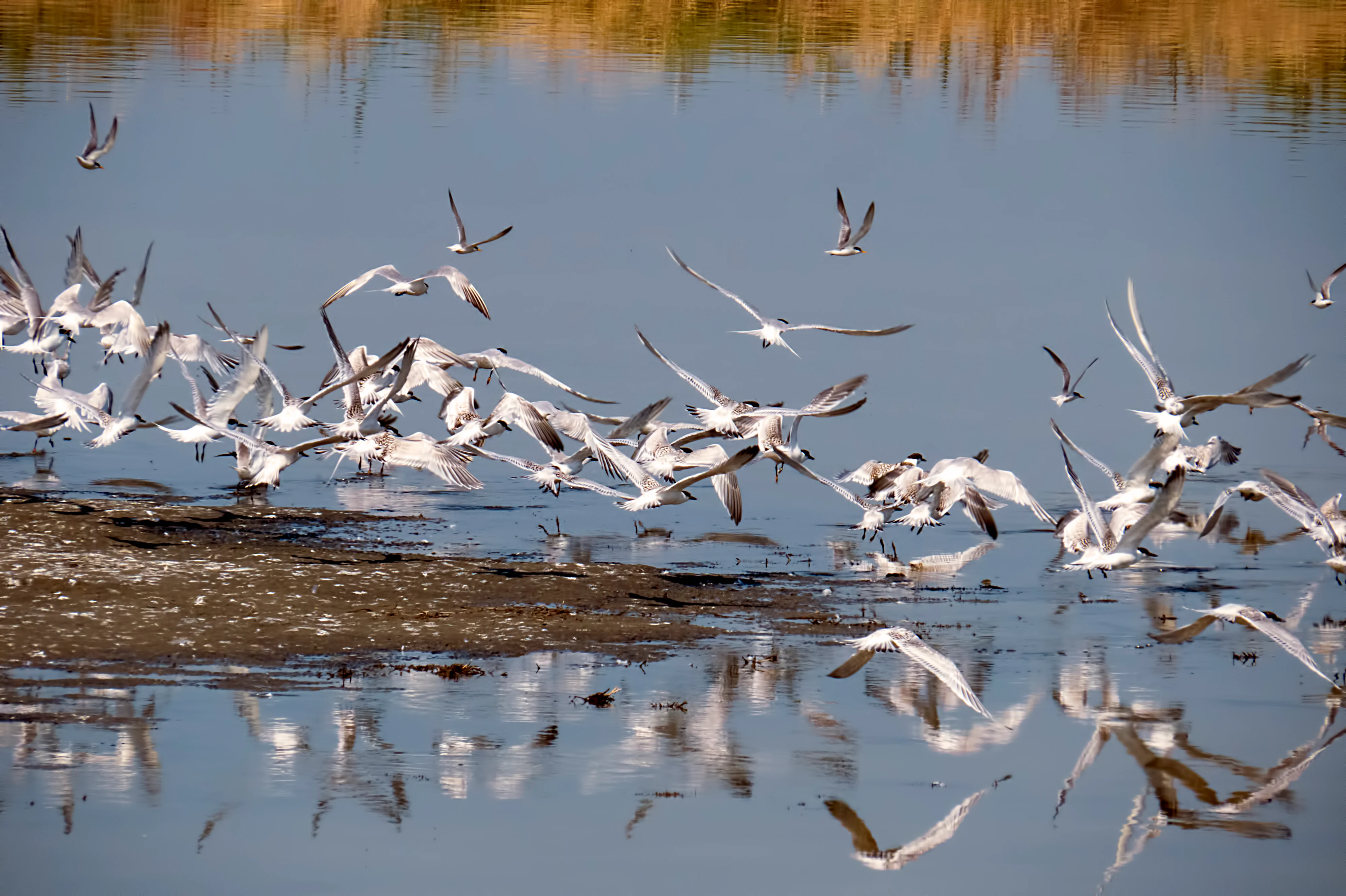
The wildlife of Axios Delta National Park is remarkable for its diversity and abundance, particularly among bird populations that make this delta one of Europe's most important wetland bird habitats. The park has recorded 299 bird species—astonishingly representing 66% of all bird species ever observed in Greece—making it a destination of global significance for ornithologists and birdwatchers. Waterbirds dominate the avifauna, with colonial nesting species including Dalmatian pelicans, greater flamingos, and various herons and egrets forming large breeding colonies in the reedbeds and islands within the lagoons.
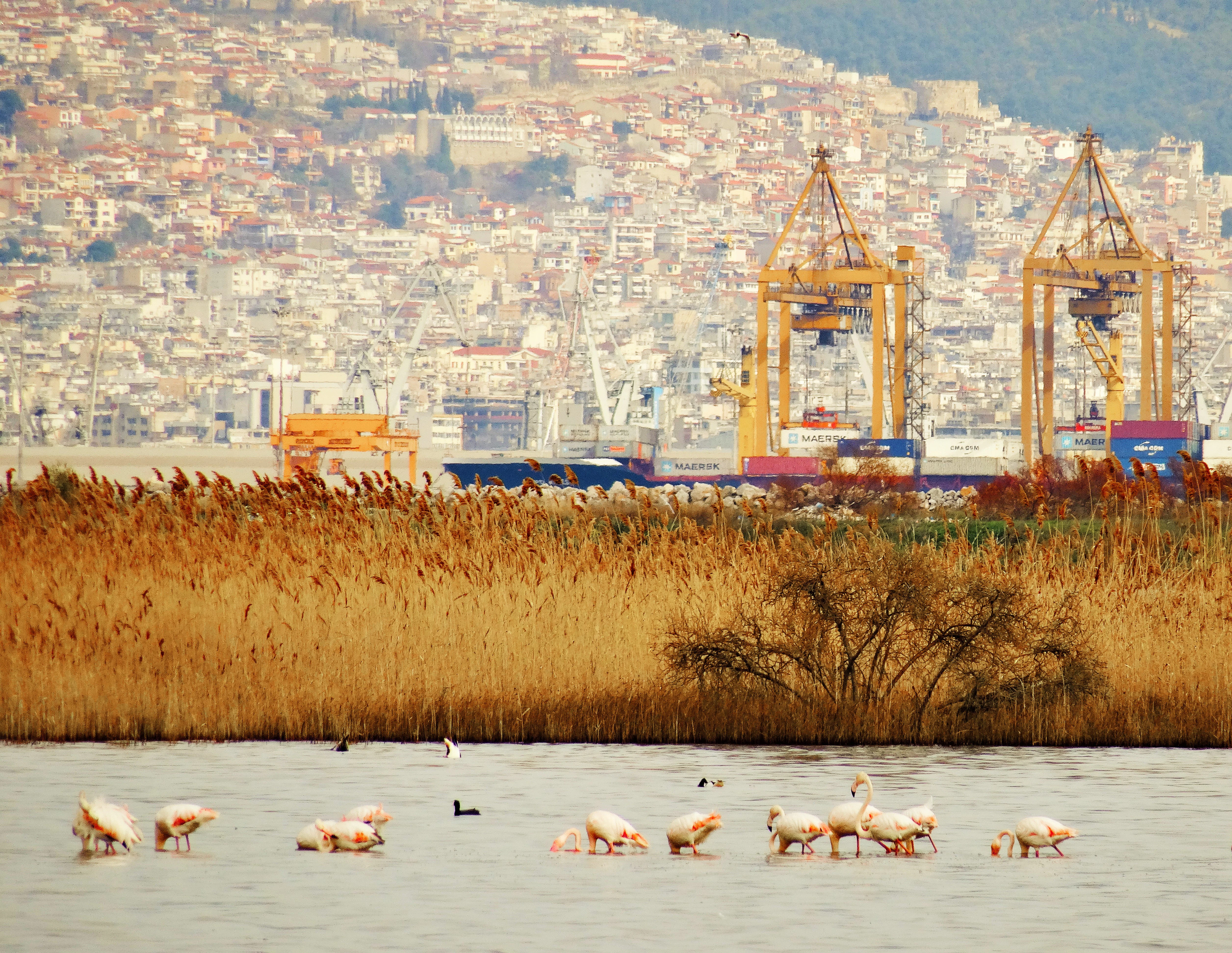
The Dalmatian pelican holds particular importance, as the park supports one of the largest breeding populations of this vulnerable species in Europe. These massive waterbirds nest in the reedbeds and feed in the shallow lagoon waters, their distinctive white plumage and pendulous throat pouches making them unmistakable. Greater flamingos congregate in even larger numbers, their pink plumage creating striking visual displays as they feed on brine shrimp and other invertebrates in the lagoon shallows. The park also supports significant populations of pygmy cormorant, glossy ibis, squacco heron, collared pratincole, and Mediterranean gull, among many other species.
Mammal populations include 40 species, with the grey wolf, Eurasian badger, European wildcat, golden jackal, red fox, and Eurasian otter representing the larger predators and mesocarnivores. Fifteen species of bats exploit the abundant insect populations, while rodents including the forest dormouse and endangered European ground squirrel occupy terrestrial niches. The park's most distinctive mammalian resident is the Axios horse, a feral breed found nowhere else in the world, descended from domestic animals abandoned by farmers in the early 1960s and now integrated into the delta ecosystem. Reptiles include 19 species, with the two tortoise species—Greek tortoise and Hermann's tortoise—being particularly notable, the latter supporting Europe's largest and the world's most dense population in the sand dunes. Eight amphibian species and at least 38 freshwater fish species round out the vertebrate diversity, while invertebrates include the critically endangered noble pen shell (Pinna nobilis) and numerous dragonfly, butterfly, and beetle species.
Axios Delta National Park conservation status and protection priorities
Axios Delta National Park occupies a central position in European wetland conservation, its multiple international designations reflecting the exceptional ecological value of this coastal delta system. The park's Ramsar status, dating to 1971, commits Greece to maintaining the ecological character of the wetland and ensuring its sustainable use for waterbird conservation. As an Important Bird Area, the site is recognized by BirdLife International as crucial habitat for globally threatened bird species, requiring specific conservation attention to preserve the conditions that support these populations.
The Natura 2000 designation integrates the park into Europe's primary conservation network, providing a framework for protecting not just the site itself but also the broader ecological processes that depend on it. The network aims to maintain biodiversity across the continent by protecting representative samples of different habitat types and the species they support. For the Axios Delta, this means ensuring that the wetland complex continues to function as a productive ecosystem capable of supporting the hundreds of bird species that depend on it, the fish populations that sustain them, and the invertebrate communities that form the base of the food web.
However, the park faces significant conservation challenges. The location within one of Greece's most densely populated regions creates ongoing pressure from urban development and agricultural expansion. The productive delta soils have traditionally been converted to rice paddies—now occupying approximately one-third of the park's area—though this use predates formal protection and continues under the sustainable use framework appropriate for IUCN Category VI. Water quality in the rivers and coastal zone faces threats from agricultural runoff and the expanding mussel cultivation industry, with recent studies detecting cyanotoxins in some areas. The water buffalo population, once widespread across Greek wetlands, has declined dramatically, with most of the national herd now concentrated in this area, requiring active management to prevent genetic erosion of this traditional breed. The critically endangered noble pen shell has suffered catastrophic population declines across the Mediterranean, making the Axios Delta populations increasingly important for species survival.
Axios Delta National Park cultural meaning and human context
The Axios Delta has been shaped by millennia of human activity, with the fertile delta soils and abundant fish and wildlife supporting agricultural communities since antiquity. The rivers that form the delta carry historical names reflecting the region's complex past—the Axios was known as the Vardar in antiquity and remains important in the cultures of North Macedonia and Serbia, while the Haliacmon (Aliakmonas) was a significant river in the ancient Macedonian kingdom. The area's traditional occupations—fishing, rice cultivation, salt production, and water buffalo husbandry—reflect the natural resources the delta provides and have become embedded in the cultural identity of the local communities.
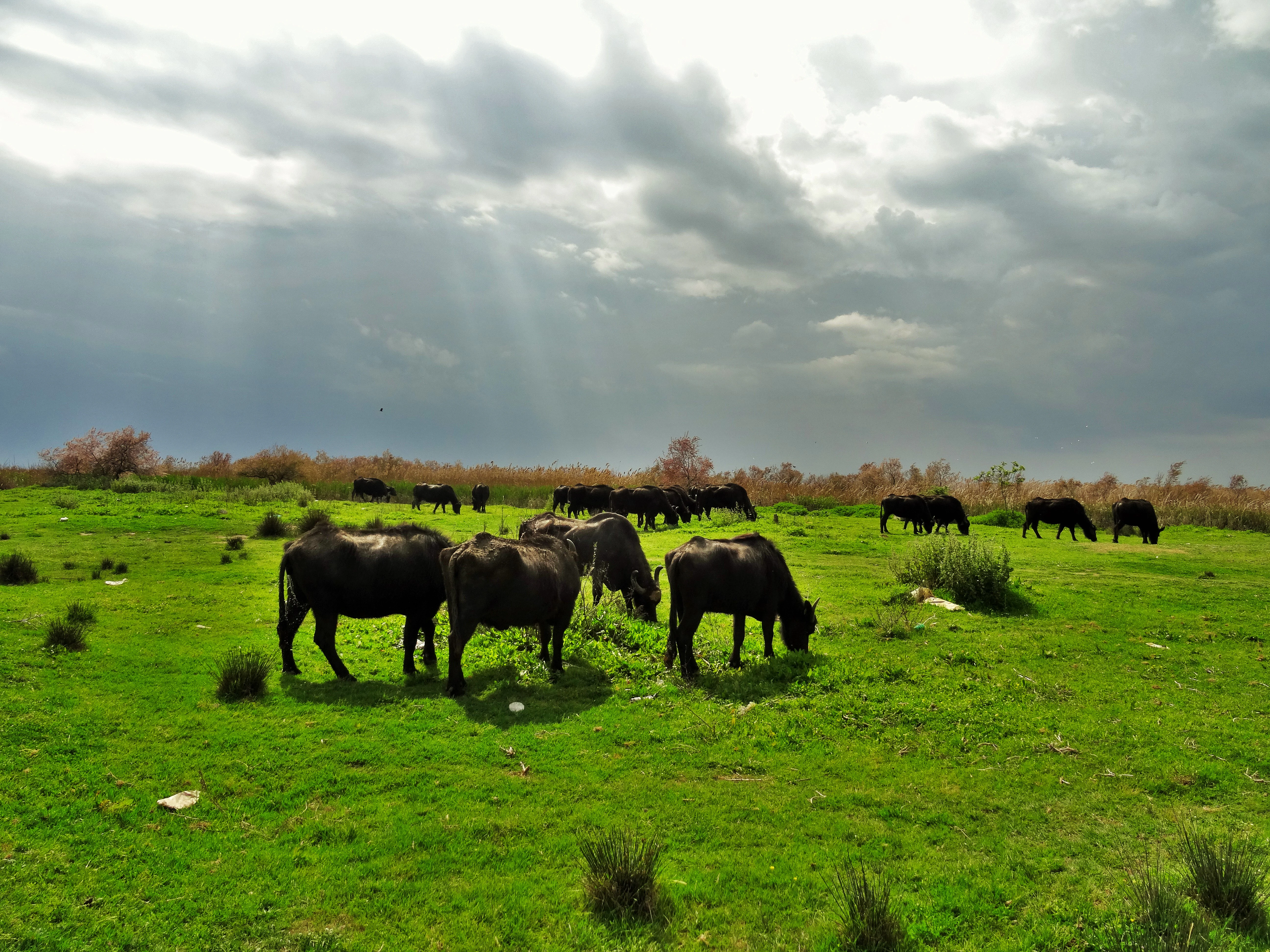
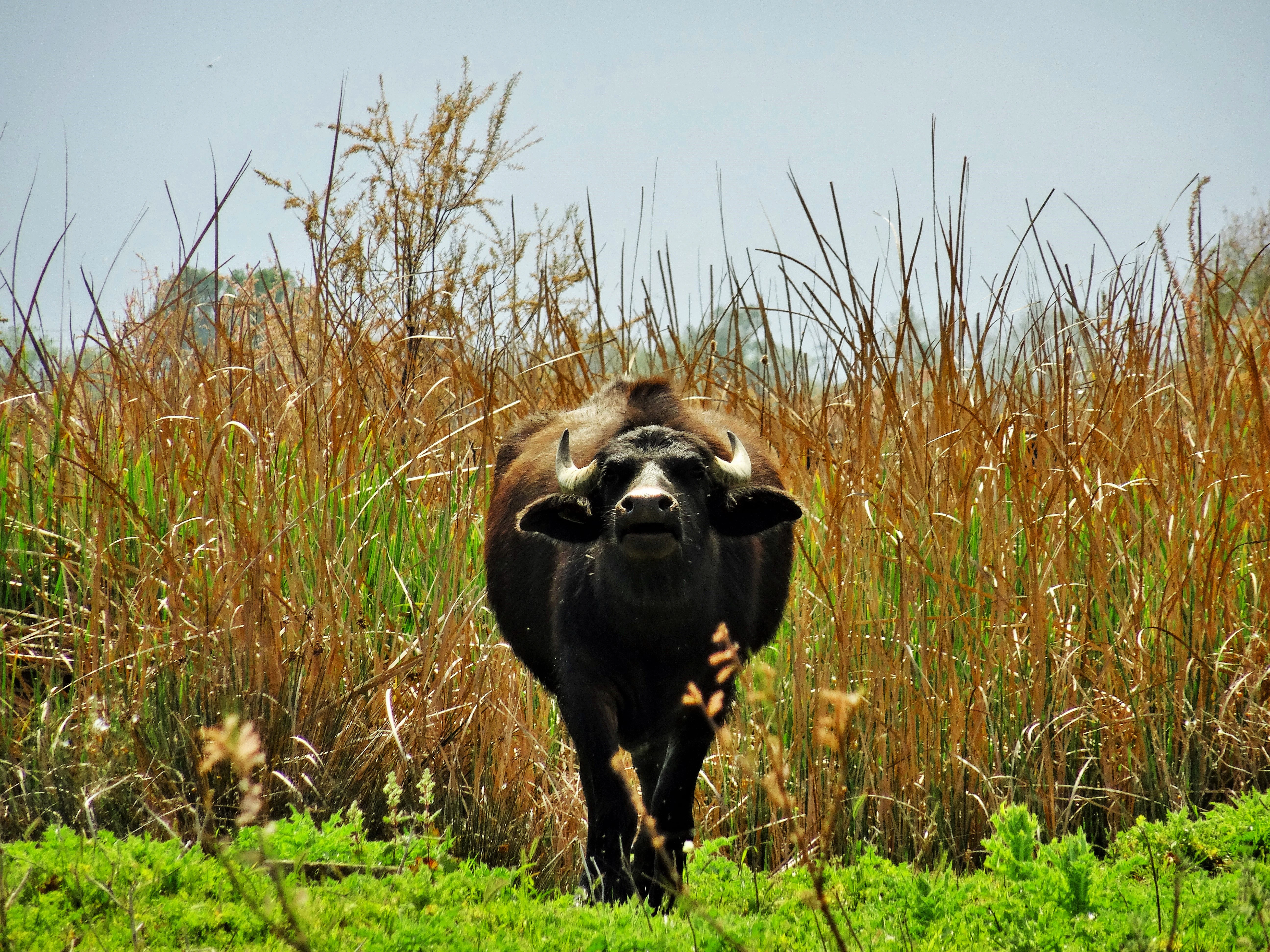
Water buffalo farming in the delta exemplifies this cultural connection, with Greek buffaloes dating back approximately 2,500 years to the period when Xerxes used them to supply his army during the Greco-Persian Wars. These animals remain in the delta today, with one of Greece's largest herds concentrated near the Gallikos river mouth. The traditional mussel cultivation industry produces 30,000 tons annually—80-90% of Greece's total production—supporting local livelihoods and contributing significantly to the national economy. Rice cultivation occupies extensive areas within the park, with the flat, easily flooded delta soils being ideal for paddy rice production. The salt evaporation ponds at Alyki Kitrous represent another traditional activity, producing 28,000 tons annually and constituting Greece's second-largest salt works.
Fishing villages such as Chalastra cluster along the delta margins, their traditional architecture reflecting the maritime and agricultural character of the region. These communities have adapted their practices over generations to work with the seasonal rhythms of the delta—timing fishing activities with fish migrations, adjusting rice cultivation to water availability, and managing water buffalo herds in response to changing wetland conditions. The coexistence of these traditional uses with modern conservation objectives defines the character of the park as a living landscape where cultural and natural values interweave rather than exist in opposition.
Top sights and standout views in Axios Delta National Park
The Axios Delta stands as one of the Mediterranean region's most significant wetland complexes, where the confluence of four major river systems creates exceptional biodiversity along Europe's principal bird migration corridor. The park's 299 recorded bird species—representing two-thirds of Greece's avifauna—include globally important populations of Dalmatian pelican, greater flamingo, and pygmy cormorant that nest and feed in the extensive reedbeds and shallow lagoons. The coastal sand dunes between Alyki Kitrous lagoon and the Aegean Sea hold Europe's largest and the world's most densely populated colony of Hermann's tortoises, a vulnerable species found in remarkable concentrations in this specialized habitat.
The park's cultural landscape reflects centuries of human interaction with the delta environment, where rice paddies, mussel farms, salt works, and water buffalo herds continue operating alongside conservation objectives. The Axios horse, a unique feral breed descended from abandoned farm animals in the 1960s, represents an unusual example of domestic animals becoming integrated into a wild ecosystem. The proximity to Thessaloniki—just 10 kilometers away—makes this an accessible wilderness area for urban populations, while the multiple international designations (Ramsar site, Important Bird Area, Natura 2000) ensure ongoing attention to conservation challenges including water quality, habitat management, and the preservation of traditional land uses that define the delta's character.
Best time to visit Axios Delta National Park
The Axios Delta offers excellent birdwatching opportunities throughout the year, though the optimal timing depends on specific interests. Spring migration (March through May) brings enormous numbers of passage birds through the delta, with the reedbeds and lagoons hosting dramatic concentrations of waders, terns, and waterfowl as they move between wintering and breeding grounds. This period offers the best chance to observe the full diversity of species, as both resident breeders and migratory visitors are present simultaneously. The breeding season (April through July) sees the colonial nesting species—flamingos, pelicans, herons—at their most active, with chick-rearing providing excellent viewing opportunities.
Autumn (September through November) offers another migration spectacle as birds return south, often in even larger numbers than in spring. The winter months bring different species as northern European birds join the resident populations, with large flocks of greater flamingos remaining year-round and providing reliable viewing. The climate is cold semi-arid, with hot dry summers and cold wet winters, meaning that spring and autumn visits avoid both the intense summer heat and the potentially wet winter conditions. Summer temperatures can be high, though the wetland areas remain productive, while winter brings the majority of annual rainfall, with most precipitation occurring in autumn. Snow is infrequent and waters rarely freeze, ensuring the delta remains accessible and active even in the cooler months.