Mori Atlas logo
National parkDrawa National Park

Discover the unique lowland river ecosystem and ancient forests of this key Polish national park.

Drawa National Park: Mapped Protected Landscape and River Geography in Poland

(Drawieński Park Narodowy)

Drawa National Park represents a significant protected landscape within West Pomeranian Voivodeship, Poland, offering a detailed view of a prime lowland river ecosystem. This national park showcases the remarkable Drawa River, known for its unusually fast currents and scenic valleys, alongside rare old-growth forests and the geologically unique meromictic Lake Czarne. MoriAtlas provides structured geographic context and map-based exploration to understand the park's distinct natural terrain, protected boundaries, and rich wetland environment.

lowland forestriver ecosystemwetlandsold-growth forestlake districtprotected area
Illustration showing a river flowing through a valley with forests, mountains, a waterfall, and a lake under a partly cloudy sky

Drawa National Park

National park

Park overview

Structured park overview, official facts, and landscape profile for Drawa National Park

Drawa National Park park facts, protected area profile, and essential visitor context
Review the core facts for Drawa National Park, including designation, size, terrain, visitor scale, habitats, and operating context in one park-focused overview.

About Drawa National Park

Drawa National Park sits within the heart of the Drawsko Forest, one of Poland's largest and most ecologically significant lowland forest complexes. The park's landscape is shaped by the Drawa and Plociczna rivers, which have carved deep valleys through the generally flat terrain of the Drawsko Plain. These valleys, together with numerous lakes, peat bogs, and artificial water channels, create a diverse mosaic of wetland and forest habitats. The terrain exhibits remarkable topographic variation in places, with elevation differences of up to 30 meters occurring within just 500 meters—unusual for Poland's lowlands. The highest point reaches 106 meters near Martew Lake in the northern part of the park. The soil is predominantly poor, sandy material, which has limited agricultural development and helped preserve the forest cover that defines the region. The park was created in 1990 initially covering 86.91 square kilometers and was later expanded to its current size of approximately 113 square kilometers, with forests accounting for 96 square kilometers and water bodies for another 9.4 square kilometers.

Quick facts and research context for Drawa National Park

Drawa National Park occupies approximately 113 square kilometers on the Drawsko Plain in northwestern Poland, where it protects one of the nation's most extensive lowland forest complexes. The park encompasses the valley systems of the Drawa and Plociczna rivers, along with about twenty lakes including the meromictic Lake Czarne and the largest, Ostrowieckie Lake. Forests dominate the landscape, primarily beech and pine woods with oak trees reaching up to 400 years of age. The park maintains twelve strictly protected zones covering nearly 1,400 hectares, with a surrounding buffer zone of 352 square kilometers. The Drawa River kayaking trail is widely regarded as one of the most picturesque in Poland, drawing significant visitor interest.

Park context

Deeper park guide and search-rich context for Drawa National Park

Drawa National Park history, landscape, wildlife, and travel context
Explore Drawa National Park through its history, landscape character, ecosystems, wildlife, conservation priorities, cultural context, and seasonal travel timing in a structured park guide built for atlas discovery and search intent.

Why Drawa National Park stands out

Drawa National Park is best known for its exceptional river landscape and the Drawa River, whose fast-flowing current through deep valleys creates scenery more typical of mountain rivers than lowland waterways. The park protects one of Poland's most valuable lowland river corridors, with 40 kilometers of the Drawa running through its boundaries. The meromictic Lake Czarne is a nationally significant limnological feature, while the old-growth beech and oak forests, particularly within the Radecin Preserve, represent rare examples of mature lowland woodland. The park also stands out for its population of European otters and Eurasian beavers, both of which thrive in the clean waters of the river system.
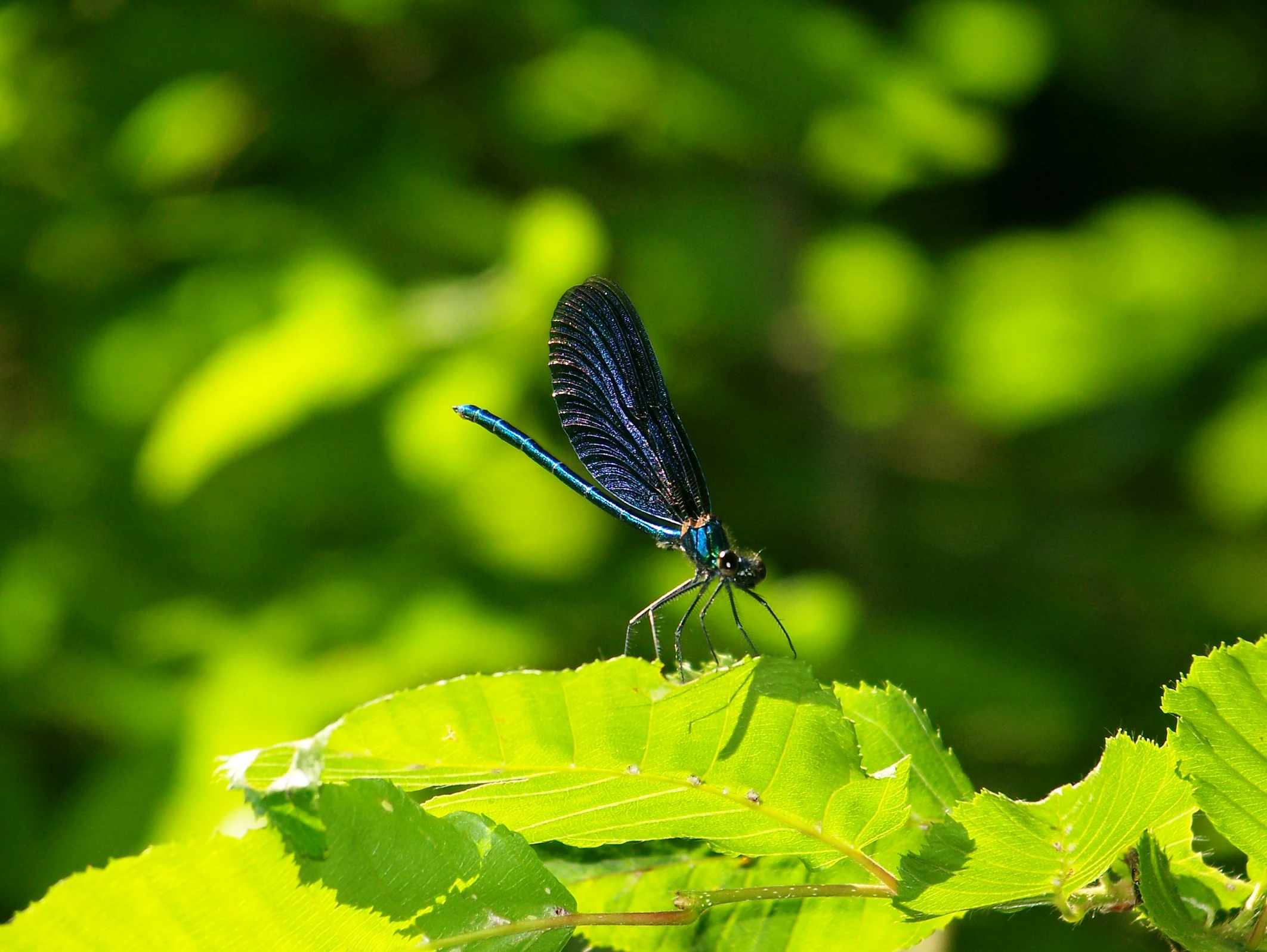
Blue dragonfly resting on a green leaf with blurred foliage background
Dragonfly perched on a leaf in Drawa National Park

Drawa National Park history and protected-area timeline

Drawa National Park was established on May 1, 1990, initially covering 86.91 square kilometers. The creation of the park was driven primarily by the need to protect valuable natural areas along the Drawa and Plociczna rivers, which harbor exceptional ecological value. The park was subsequently expanded to its present size of 113.42 square kilometers. The region has a long history of limited human settlement due to its difficult terrain and poor soils; during the period when the area lay on the border between Poland and Western Pomerania (later Prussia), the forests were considered unsuitable for significant human settlement. Active forest clearing for settlement only began in the 17th century. The park headquarters are located in the town of Drawno in Choszczno County.

Drawa National Park landscape and geographic character

The physical landscape of Drawa National Park is characterized by an extensive forest cover interrupted by the distinctive valleys of the Drawa and Plociczna rivers. The Drawa River flows through the park for 40 kilometers, maintaining a remarkably fast current for a lowland river—making it resemble mountain streams and contributing to its reputation as one of Poland's most scenic kayaking waterways. The river has carved interesting valleys and hollows throughout its course. The terrain includes numerous lakes, of which the meromictic Lake Czarne covering 3.7 square kilometers is particularly notable, and Ostrowieckie Lake represents the largest waterbody within the park. Peat bogs and wetland channels add further diversity to the landscape. In certain areas, the topography becomes surprisingly varied, with elevation differences of up to 30 meters occurring within 500-meter distances. The highest hill in the park reaches 106 meters and is located near Martew Lake in the northern sector. The underlying soils are predominantly sandy and of poor agricultural quality, which has historically limited development and helped preserve the natural forest character.
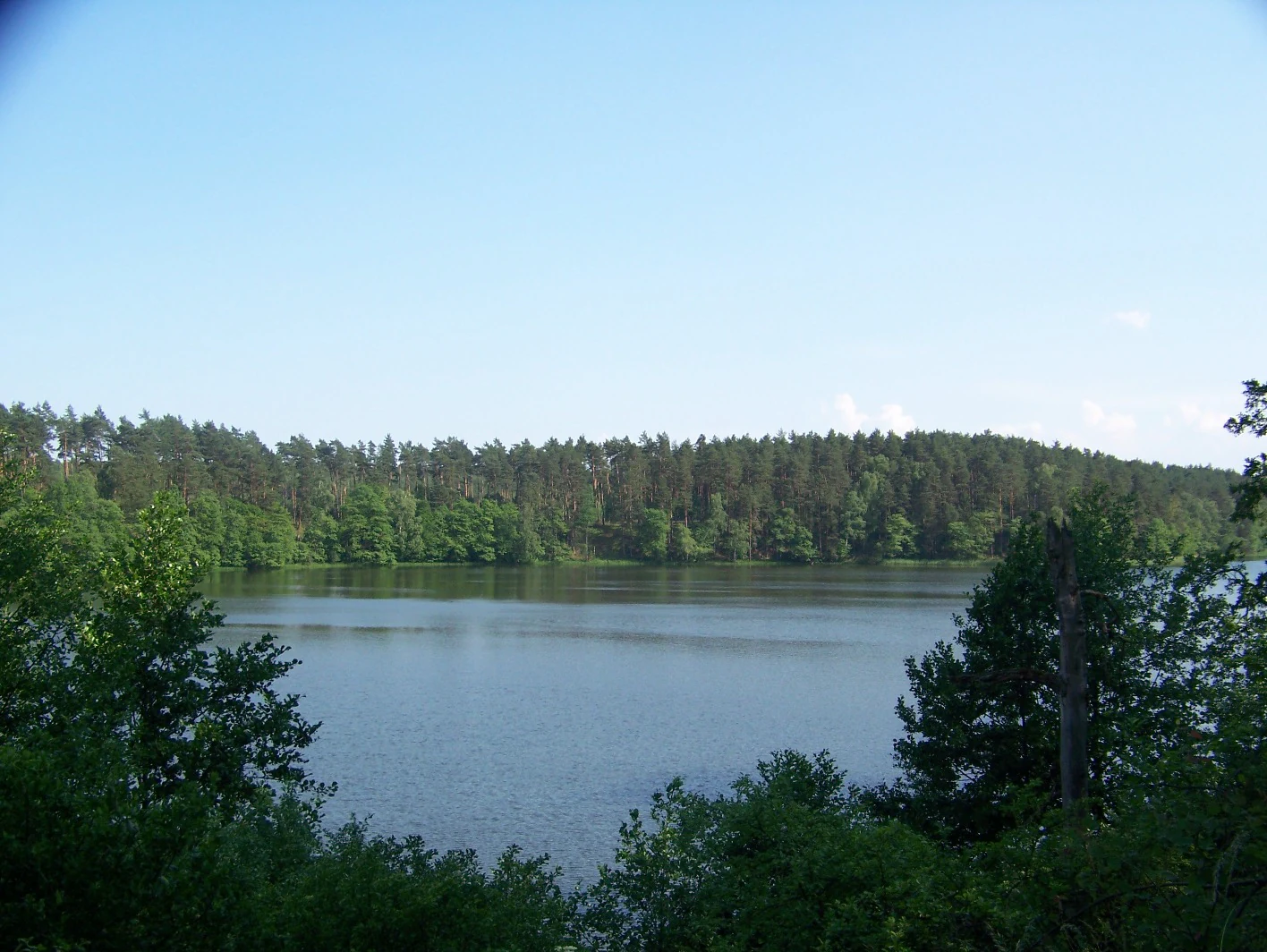
Calm lake surrounded by dense forest under clear blue sky
Calm lake surrounded by forest in Drawa National Park under clear blue sky

Drawa National Park ecosystems, habitats, and plant life

The ecological character of Drawa National Park is defined by its extensive lowland forests and riverine ecosystems. Over 80 percent of the park is covered by forest, primarily beech and pine stands, with oak-dominant woodlands also present. The forests include remarkable old-growth elements, with oak trees up to 400 years old found within the Radecin Preserve, where the oldest trees receive strict protection. Trees older than 81 years cover 40 percent of the forested area, indicating significant ecological maturity. The park supports approximately 900 plant species and 210 mushroom species, reflecting the biodiversity value of these lowland forest communities. The river system, fed by clean waters, supports diverse aquatic ecosystems, while the lakes, peat bogs, and wetlands create additional habitat diversity. The Drawa River's relatively fast current and clean water quality support fish communities typical of flowing waters, and the meromictic Lake Czarne provides unique ecological conditions found nowhere else in the country at this scale.
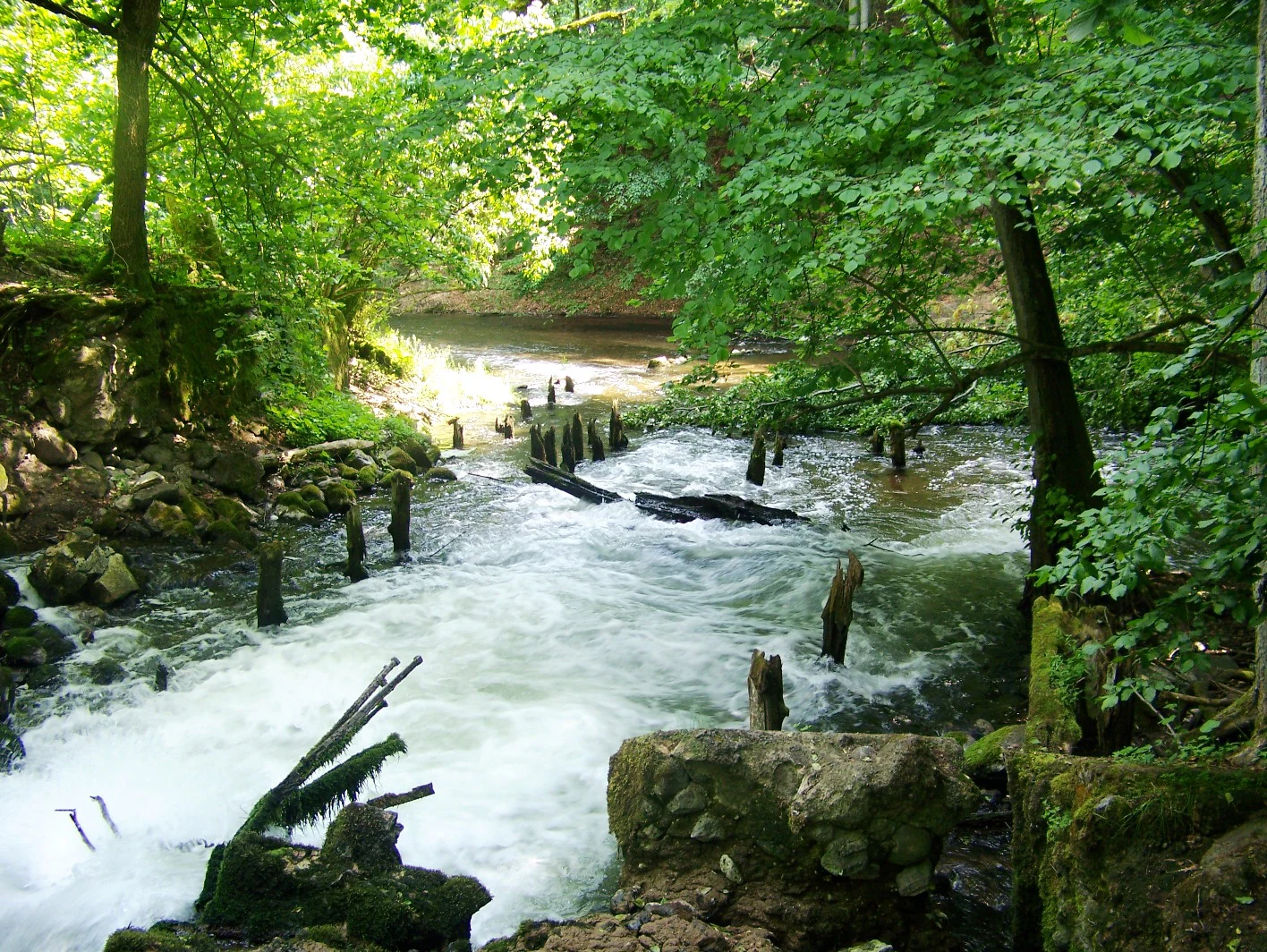
A river with flowing water surrounded by dense green forest and wooden posts from an old coal mine ruin
Ruins of an old coal mine along the Płociczna River in Drawa National Park

Drawa National Park wildlife and species highlights

Drawa National Park supports substantial biodiversity across multiple animal groups. The mammal fauna includes approximately 40 species, with roe deer, red deer, and wild boar being particularly common. The park hosts notable populations of European otters and Eurasian beavers, both species closely tied to the clean river and lake ecosystems—the otter serves as the park's symbolic animal. Occasional sightings of moose and gray wolves occur, representing larger mammals that use the forest as habitat. Birdlife is diverse, with 129 species recorded including approximately 130 breeding species. Notable birds include white-tailed eagle, osprey, lesser spotted eagle, eagle owl, goosander, red-breasted merganser, mountain wagtail, dipper, kingfisher, corncrake, grey heron, and black stork. The park's waters support about 30 fish species, including migratory brown trout, lake trout, brook trout, grayling, Danube salmon, whitefish, and vendace. Reptiles are represented by 7 species and amphibians by 13 species.
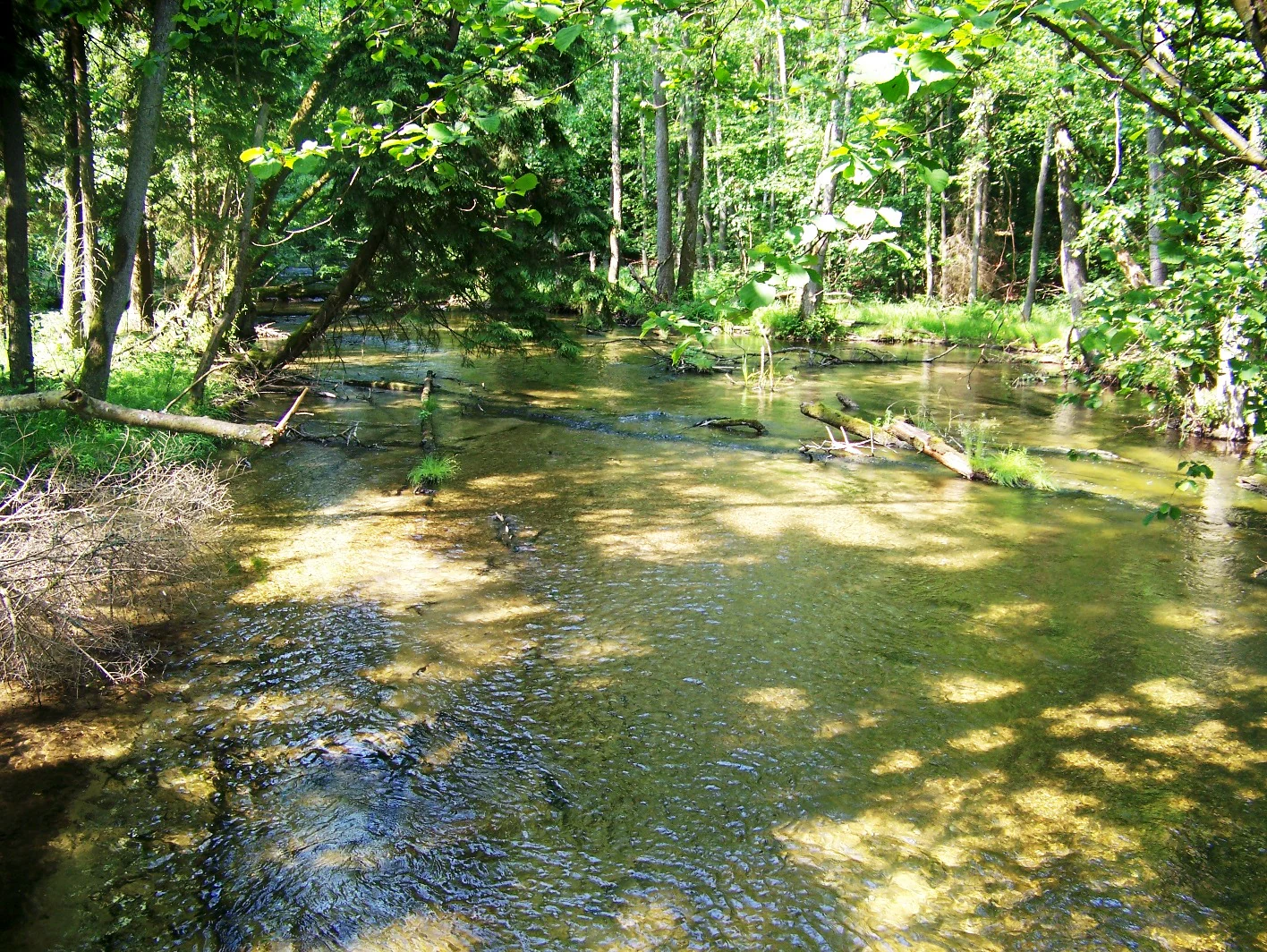
Shallow stream flowing through forest with dappled sunlight and lush green vegetation
Shallow stream flowing through forested wetland in Drawa National Park

Drawa National Park conservation status and protection priorities

Drawa National Park represents one of Poland's important conservation areas for lowland forest and river ecosystems. The primary conservation rationale focuses on protecting the Drawa and Plociczna river corridors, which harbor exceptional biodiversity and serve as migration corridors for aquatic species. Twelve strict protection zones cover 1,391.62 hectares, preserving the most ecologically valuable fragments of the park. An additional 9,609.27 hectares receive active management protection, while 534.77 hectares are maintained under landscape protection status. The surrounding buffer zone spans 352.67 square kilometers and includes five additional nature reserves. The park protects old-growth forest communities with trees up to 400 years old, the rare meromictic Lake Czarne, and populations of species such as the European otter that serve as indicators of ecosystem health. The protection of this lowland river system addresses conservation needs that are poorly represented in Poland's protected area network.

Drawa National Park cultural meaning and human context

The region encompassing Drawa National Park has historically been characterized by sparse human settlement due to its challenging terrain and poor soils. During the period when the area lay at the border between Poland and Western Pomerania (later part of Prussia), the dense forests and wetlands were regarded as unsuitable for significant human settlement. Only beginning in the 17th century did forest clearing for settlement become more active. The park is now administered from the town of Drawno, which serves as the administrative center and gateway for visitors. The Drawa River has long served as a navigation and transportation route, and the tradition of kayaking and fishing remains embedded in local recreational culture, as evidenced by the high proportion of visitors who engage in these activities.

Top sights and standout views in Drawa National Park

Drawa National Park offers visitors one of Poland's most scenic lowland river experiences through its Drawa River kayaking trail, where the fast-flowing water creates mountain-like conditions. The park protects old-growth beech and oak forests with trees reaching 400 years of age, rare in Poland's lowlands. The meromictic Lake Czarne represents a unique limnological feature of national significance. Wildlife highlights include reliable populations of European otters and beavers along the river corridors, along with diverse birdlife including white-tailed eagles, ospreys, and black storks. Five educational trails and one geological trail provide structured interpretation of the park's natural and cultural values.

Best time to visit Drawa National Park

Drawa National Park can be visited throughout the year, with each season offering distinct experiences. The summer months draw the highest visitor numbers, particularly for kayaking on the Drawa River when water levels and weather conditions are most favorable. The spring and autumn seasons offer excellent conditions for wildlife observation and hiking as the forest canopy shifts with the seasons. Winter provides a different character to the landscape, though visitor numbers decrease significantly. The park's rivers and lakes support year-round ecological interest, with different species more observable during specific seasons—spring brings breeding bird activity while autumn offers mushroom foraging opportunities in the forests.
Park location guide

Geography guide, regional context, and park location map for Drawa National Park

Drawa National Park park geography, regions, and map view in Poland
Understand where Drawa National Park sits in Poland through a broader geographic reading of the surrounding landscape, nearby location context, and its mapped position within the national park landscape.

How Drawa National Park fits into Poland

Poland, officially the Republic of Poland, is a Central European country spanning from the Baltic Sea in the north to the Carpathian Mountains in the south. It borders Germany, Czech Republic, Slovakia, Ukraine, Belarus, Lithuania, and Kaliningrad Oblast. The country has a temperate climate, diverse landscapes, and is known for its rich history, cultural heritage, and strong economic position within the EU.

Wider geography shaping Drawa National Park in Poland

Poland occupies 312,696 km2 in Central Europe, extending from the Baltic Sea coast in the north to the Sudetes and Carpathian Mountains in the south. It borders Germany to the west, Czech Republic and Slovakia to the south, Ukraine and Belarus to the east, and Lithuania and Kaliningrad Oblast to the northeast. The landscape includes lowland plains, uplands, and mountain ranges.

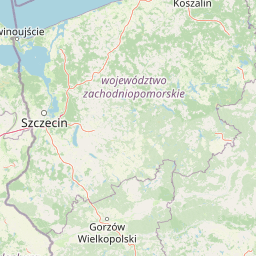
Map view of Drawa National Park

Use this park location map to pinpoint Drawa National Park in Poland, understand its exact geographic position, and read its mapped placement within the surrounding landscape more clearly.

Pigeon | © OpenStreetMap contributors

Location context for Drawa National Park

Greater Poland VoivodeshipLubusz VoivodeshipWest Pomeranian Voivodeship

Explore the park's visual identity: fast-flowing rivers, old-growth forests, and unique lake environments.

Drawa National Park Photos: Discover the Diverse Lowland River and Forest Landscapes
Browse a curated collection of imagery capturing Drawa National Park's distinct lowland river landscapes, extensive old-growth forests, and diverse wetland habitats. These visuals provide essential context for understanding the park's physical geography, unique ecosystems, and the overall character of this significant protected area in Poland.

Blue dragonfly resting on a green leaf with blurred foliage background

Aerial view of two blue lakes surrounded by dense green forest with a smaller lake in the foreground

Calm lake surrounded by dense forest under clear blue sky

A river with flowing water surrounded by dense green forest and wooden posts from an old coal mine ruin

Shallow stream flowing through forest with dappled sunlight and lush green vegetation

Park atlas

Trace the regional spread of protected landscapes surrounding Drawa National Park, comparing diverse ecosystems across northwestern Poland.

Explore Other National Parks and Protected Areas Near Drawa National Park in West Pomeranian Voivodeship
Continue your park discovery from Drawa National Park to explore other protected areas and national parks that define the diverse geography of West Pomeranian Voivodeship. Compare varied lowland forests, river ecosystems, and wetland habitats to understand the broader conservation landscape of northwestern Poland.
Watercolor illustration showing a river winding through rolling green hills with sparse vegetation
National parkLubusz Voivodeship

Warta Mouth National Park: A National Park Protecting Vital European Wetlands

Explore mapped protected areas and bird habitats in Lubusz Voivodeship.

Warta Mouth National Park, located in Poland's Lubusz Voivodeship, is a significant protected landscape safeguarding the ecologically rich confluence of the Warta and Oder rivers. As the nation's most recently established national park, it provides critical habitat for a vast array of migratory and breeding bird species within its extensive marshlands and floodplains. This park offers a unique opportunity for atlas-driven exploration of Central European wetland geography and the mapped boundaries of a vital conservation area.

Area
80.38 km²
Established
2001
IUCN
II
Visitors
52K annual
Watercolor painting depicting a river flowing through a valley with green vegetation and distant mountains
National parkBrandenburg

Lower Oder Valley National Park: Unique Polder Landscape and Bird Sanctuary

Discover protected area maps and regional geography in Brandenburg

Delve into the Lower Oder Valley National Park, a national park recognized for its extraordinary polder landscape and extensive wetland ecosystems. This page provides detailed geographic context, highlighting the park's unique engineered floodplain, its role as a sanctuary for numerous bird species, and its position within the regional geography of Brandenburg. Understand the mapped boundaries and ecological importance of this exceptional protected area.

Area
103.23 km²
Established
1995
IUCN
II
Visitors
150K annual
Watercolor painting depicting mountains, rivers, and green terrain
National parkWest Pomeranian Voivodeship

Wolin National Park: Coastal Protected Landscape and Glacial Terrain in West Pomeranian Voivodeship

Explore Poland's first marine national park and its dynamic geography.

Wolin National Park offers a profound look into Poland's protected coastal geography. This national park in the West Pomeranian Voivodeship is distinguished by its high sea cliffs, inclusion of Baltic Sea and Szczecin Lagoon waters as Poland's first marine protected area, and a landscape sculpted by glacial moraines. Discover the park's complex delta systems, ancient forests, and the mapped terrain that supports significant bird migration, providing a rich focus for atlas exploration.

Area
109.37 km²
Established
1960
IUCN
II
Visitors
1.5M annual
Watercolor painting of a river flowing through a forested area with colorful fields
National parkPomeranian Voivodeship

Tuchola Forest National Park: Explore Poland's Largest Protected Woodland and Glacial Lakes

Detailed maps and geographic context of unique forest ecosystems and terrain.

MoriAtlas offers a comprehensive geographic overview of Tuchola Forest National Park, a vital protected area in Pomeranian Voivodeship, Poland. This page delves into the park's identity as Poland's largest contiguous forest, distinguished by its post-glacial landscape. Users can explore the mapped boundaries of its extensive coniferous forests, numerous interconnected glacial lakes, dynamic dunes, and ecologically rich peatlands. It serves as a key entry point for understanding the park's unique terrain and its significant place within the broader regional geography and protected lands atlas.

Area
46.13 km²
Established
1996
IUCN
II
Visitors
33K annual
National park

Wielkopolska National Park: Poland's Glacial Landscape and Lake District Protected Area

Explore the mapped terrain and protected landscape.

Wielkopolska National Park is a vital protected landscape in western Poland, notable for its characteristic post-glacial terrain. Featuring a landscape defined by numerous kettle lakes nestled within mixed forests and gently rolling hills, this national park offers a representative sample of the Greater Poland lake district's natural heritage. Its mapped boundaries delineate an area of ecological importance, providing valuable context for understanding regional geography and protected area distribution through structured atlas exploration.

Watercolor painting of a landscape with a lake, trees, and distant hills
National parkMecklenburg-Vorpommern

Müritz National Park: Explore Protected Beech Forests and Glacial Lakelands in Mecklenburg-Vorpommern

Germany's largest national park: mapped boundaries and terrain.

Müritz National Park represents a significant protected landscape within northeastern Germany's Mecklenburg-Vorpommern region. Its expansive territory encompasses not only Germany's largest lake, Müritz, but also substantial tracts of ancient beech forests awarded UNESCO World Heritage status. Users can explore the park's glacial terrain, its intricate network of lakes and wetlands, and understand its position within the regional geography, making it a key destination for structured atlas-based discovery of German protected areas.

Area
318 km²
Established
1990
IUCN
II
Watercolor painting showing chalk cliffs along a coastline with calm water and distant hills
National parkMecklenburg-Vorpommern

Jasmund National Park: Germany's Coastal Chalk Cliffs and Primeval Forest Landscape

Explore the protected geography of Mecklenburg-Vorpommern's Rügen island.

Jasmund National Park showcases one of Northern Europe's most dramatic natural formations, defined by its striking white chalk cliffs plunging into the Baltic Sea and its UNESCO-recognized primeval beech forests. This protected area offers a profound look into geological heritage and undisturbed forest ecosystems. Navigate its mapped boundaries and understand its unique landscape context within the Mecklenburg-Vorpommern region through detailed atlas exploration on MoriAtlas.

Area
30 km²
Established
1990
IUCN
II
Visitors
300K annual
National parkPomeranian Voivodeship

Slovincian National Park: Moving Dunes and Baltic Coast Protected Landscape Exploration

Discover its unique geography and mapped terrain.

Slovincian National Park is a protected area in Pomeranian Voivodeship, Poland, celebrated for its impressive moving sand dunes and coastal wetland ecosystems. These dynamic dunes, some reaching 30 meters high, migrate inland, creating an ever-changing landscape. The park also features large shallow lakes like Łebsko and Gardno, vital for migratory birds. Explore the mapped boundaries and geographic context of this significant protected area, a Ramsar site and UNESCO biosphere reserve.

Area
186.18 km²
Established
1967
IUCN
II
Visitors
319K annual

Common questions about visiting, size, designation, and location context for Drawa National Park

Drawa National Park FAQs for park facts, access, geography, and protected area context
Find quick answers about Drawa National Park, including protected-area facts, park geography, trail and visitor context, and how the park fits into its surrounding country and regional landscape.
MoriAtlas Explorer

Continue Your Protected Areas Search Across the Global Atlas

Deepen your exploration by continuing the structured search for national parks and protected areas worldwide. Utilize the comprehensive filtering capabilities to compare different conservation landscapes and refine your understanding of global park geography. Discover more about the distribution and characteristics of protected natural areas.

Global natural geography