Why Femundsmarka National Park stands out
Femundsmarka National Park is best known for its extraordinary musk oxen population, one of only a few herds in Norway. The park's defining characteristic is its vast expanse of marshland and lakes surrounding Femunden, creating a distinctive wetland wilderness that is rare in the Norwegian landscape. The area has a centuries-old association with falconry, and the presence of wild reindeer in the higher elevations adds to the park's wildlife significance. The park is also renowned as a premier destination for canoeing and fishing, with its network of interconnected lakes and rivers providing exceptional paddling opportunities through a remote boreal landscape.
Femundsmarka National Park history and protected-area timeline
Femundsmarka National Park was established in 1971 as part of Norway's expanding network of protected areas during the latter half of the twentieth century. The park's creation was driven by recognition of the unique character of the Femunden lake system and the surrounding forests, which represented a landscape type increasingly rare in Norway's more densely populated western regions. The specific goal was to protect both the lake itself and the eastern forests extending toward the Swedish border, preserving a coherent ecosystem rather than protecting isolated features.
The area has a longer human history reflected in place names associated with falconry, suggesting that the region has been valued for its wildlife resources for centuries. The locations known as Falkfangerhøgda, or "falcon hunters' height," indicate that falcons were harvested from this area for use in the traditional sport of falconry, which was practiced across Europe and Asia. This historical use of falcons reflects the ecological richness of the region and the park's position as a significant habitat for birds of prey.
The establishment of the national park also reflected growing awareness of the importance of protecting representative examples of Norway's diverse landscapes. As one of the country's easternmost national parks, Femundsmarka preserves a landscape type quite different from the mountainous parks of central Norway or the coastal parks of the west, ensuring that Norway's protected area network encompasses the full diversity of the nation's natural heritage.
Femundsmarka National Park landscape and geographic character
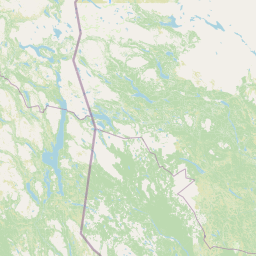
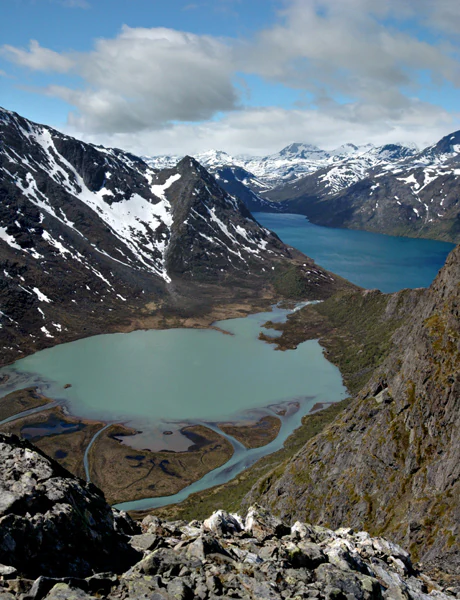
The landscape of Femundsmarka National Park is dominated by an extensive system of marshes, lakes, and wetlands that characterize the eastern Norwegian uplands. The park lies adjacent to Femunden, Norway's second-largest natural lake, and encompasses the lakes and marshes that extend eastward from its shores toward the Swedish border. This terrain is largely flat or gently rolling, shaped by glacial processes that left behind a landscape of shallow depressions filled with water and peat-forming vegetation.
The marshlands form the most distinctive element of the park's scenery, covering vast areas with a complex pattern of wet meadows, peat bogs, and shallow lakes. These wetlands support specialized vegetation adapted to waterlogged conditions and contribute significantly to the park's ecological character. Between the marshes, areas of higher ground support the sparse boreal forest that gives the park its name, with pine and birch trees growing in a scattered pattern across the landscape.
The park's waterways, including the Røa and Mugga Rivers, provide natural corridors through the marshland, offering paddling routes that are among the park's most popular recreational features. The rivers and lakes support fishing, particularly for Arctic char and other cold-water species, while the open marshes and forest margins provide habitats for diverse birdlife. The overall impression is of a wild, open landscape where water and forest intermingle across a vast expanse of northern wilderness.
Femundsmarka National Park ecosystems, habitats, and plant life
The nature of Femundsmarka National Park reflects the boreal forest zone that covers much of inland Scandinavia, adapted to the continental climate and relatively short growing season of this region. The park's wetlands represent one of its most ecologically significant features, with extensive marshes and peat bogs forming a complex hydrological system that supports specialized plant communities. These wetlands play important roles in water filtration, carbon storage, and habitat provision for wildlife.
The sparse forest that occupies higher ground within the park consists primarily of Scots pine and birch, the two tree species best adapted to the harsh northern climate and poor soils of the eastern Norwegian uplands. The forest is not dense but rather open and park-like, with trees scattered across the landscape rather than forming the closed canopy typical of more southerly forests. This open character allows light to reach the forest floor, supporting a layer of shrubs, grasses, and herbs that add to the park's biodiversity.
The wetland habitats are particularly important for biodiversity, providing breeding grounds for waterfowl, feeding areas for migratory birds, and habitat for a range of species adapted to marsh environments. The lake system supports fish populations and provides foraging areas for birds including osprey and common merganser. The combination of wetland, forest, and lake creates a mosaic of habitats that supports ecological diversity across the park.
Femundsmarka National Park wildlife and species highlights
The wildlife of Femundsmarka National Park is highlighted by the presence of musk oxen, a remarkable species that was reintroduced to Norway as part of conservation efforts beginning in the early twentieth century. The park's herd of approximately 30 individuals represents one of several populations established across Norway, with this particular group originally migrating from the Dovrefjell area. These massive Arctic ungulates graze along the Røa and Mugga Rivers during the summer months, providing one of the park's most distinctive wildlife viewing opportunities.
Wild reindeer also inhabit the higher elevations of the park, moving between summer grazing areas on the heights and winter ranges in lower terrain. These native deer have been part of the Norwegian fauna since the post-glacial period and continue to follow traditional migration routes across the landscape. The presence of both musk oxen and reindeer gives the park significance as a location for observing Arctic megafauna in their natural habitat.
The park's wetlands and forests support diverse birdlife, including species associated with northern boreal ecosystems. The raptors, including the falcons that gave the park its historical connection to falconry, remain present in the area. Waterfowl nest on the lakes and marshes, while passerines occupy the forest and shrubland habitats. The waterways support fish populations including Arctic char, a cold-water species that thrives in the lake and river systems of the park.
Femundsmarka National Park conservation status and protection priorities
Femundsmarka National Park plays an important role in Norway's conservation framework, protecting a representative example of the boreal wetland and forest ecosystems that characterize the country's eastern interior. The park's designation as an IUCN Category II protected area reflects its primary purpose of preserving natural ecosystems while allowing for sustainable recreational use. The establishment of the park in 1971 ensured protection for the Femunden lake system and the forests extending toward Sweden, creating a coherent protected area that maintains ecological connectivity across the landscape.
The wetland habitats within the park hold particular conservation significance, as they store carbon in peat deposits and provide ecosystem services including water filtration and flood regulation. These marshes also serve as important habitats for breeding waterfowl and migratory birds, contributing to broader conservation goals for Nordic bird populations. The protection of these wetlands within a national park framework ensures their long-term preservation.
The management of the park by the Norwegian Directorate for Nature Management balances conservation objectives with opportunities for outdoor recreation, particularly canoeing and fishing which have long traditions in the area. The musk oxen population receives specific attention in management planning, ensuring that the herd has access to suitable grazing areas while minimizing potential conflicts with other uses of the park. This approach reflects Norway's broader commitment to maintaining viable populations of large mammals within appropriately managed protected areas.
Femundsmarka National Park cultural meaning and human context
The cultural context of Femundsmarka National Park is most clearly reflected in the place names associated with falconry that persist in the landscape. The locations known as Falkfangerhøgda, or "falcon hunters' height," indicate that the park's falcons were historically harvested for use in falconry, a sport with deep roots in European and Asian aristocratic traditions. This historical connection suggests that the area was recognized for its wildlife resources over many centuries, even if the specific history of human activity in the area remains less documented than in more populated regions.
The name Femundsmarka itself reflects the park's geography and naming conventions, combining the genitive form of the lake name Femund with "mark," the Norwegian term for woodland or forest. This naming reflects the traditional way in which Norwegians identified landscapes by their relationship to prominent natural features, particularly lakes and forests. The name captures the park's essential character as a forested area associated with a major lake, a relationship that has defined the landscape for generations.
The Røros region, of which Femundsmarka is part, has historical connections to mining and metallurgy that have shaped the broader cultural landscape of eastern Norway. While the park itself was not directly affected by mining, the regional context influences the park's identity and the communities that surround it. The municipalities of Røros and Engerdal maintain connections to this heritage while also embracing the recreational and conservation values represented by the national park.
Top sights and standout views in Femundsmarka National Park
Femundsmarka National Park offers visitors the opportunity to experience one of Norway's most distinctive wilderness landscapes, where vast marshes and interconnected lakes create a paddling paradise through remote boreal terrain. The highlight for many visitors is the chance to observe musk oxen grazing along the river valleys during summer, an encounter with Arctic wildlife that ranks among Norway's most memorable wildlife experiences. The park's network of waterways provides exceptional canoeing routes, allowing paddlers to navigate through a landscape of islands, inlets, and open lakes surrounded by marshland and sparse forest.
The park's falconry heritage, reflected in names like Falkfangerhøgda, adds a cultural dimension to the natural landscape, connecting contemporary visitors to centuries of human interaction with the area's wildlife. The proximity to Femunden, Norway's second-largest lake, ensures that the park protects one of the country's most significant lake systems, preserving not only the water body itself but also the wetlands and forests that contribute to its ecological health. Whether exploring by canoe, fishing in the clear waters, or simply walking through the open forest and marshland, visitors to Femundsmarka experience a wilderness character quite different from Norway's more famous mountain parks.
Best time to visit Femundsmarka National Park
The best time to visit Femundsmarka National Park depends on what visitors hope to experience, with each season offering distinct character. Summer months, particularly July and August, bring the warmest conditions and longest days, making this the prime season for canoeing and wildlife viewing. The musk oxen are most easily observed along the Røa and Mugga Rivers during summer when they graze in the river valleys, and the extended daylight allows for full days of exploration. This is also the best season for fishing, with open water access to the lake and river systems.
Autumn brings changing colors to the birch forests and reduced visitor numbers, offering a quieter experience of the park's wilderness character. The marshland takes on golden hues as vegetation dies back, and migratory birds pass through the area heading south. Winter transforms the park into a snow-covered landscape, though access is more challenging and the park sees fewer visitors during this season. The cold climate means that wildlife is less visible, though tracks in the snow can reveal the presence of reindeer and other species. Spring, with its meltwater and returning birdlife, offers another distinctive season, though the wet conditions underfoot can make some areas difficult to access.