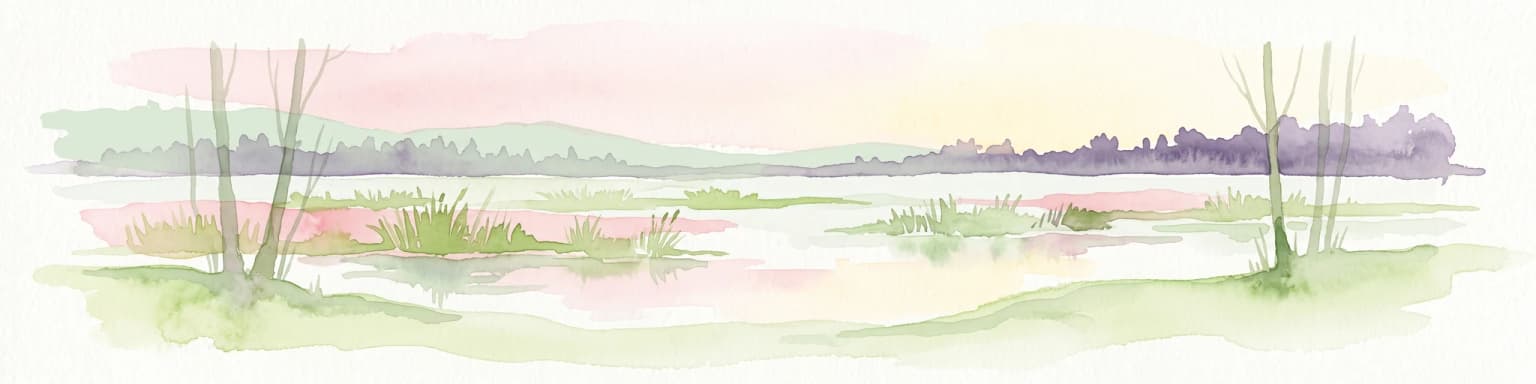
A small glacial-origin landscape protection area in eastern Berlin, sheltering two former sand and gravel pit lakes surrounded by forest, meadows, and reed-fringed shores.
Kaulsdorfer Seen
The Kaulsdorfer Seen are a 93.7-hectare landscape protection area located in the Kaulsdorf-Süd locality of Berlin's Marzahn-Hellersdorf district, in the eastern part of the city. The protected landscape centers on two lakes, the Butzer See and the Habermannsee, together with an enclosed wooded tract known as the Kaulsdorfer Busch, which lies within the groundwater protection zone of the historic Kaulsdorf waterworks. The area combines small post-mining lake basins, mixed forest, meadows, willow thickets, and reed-lined shorelines, offering a calm green pocket in an otherwise densely built section of the German capital.
Both lakes originated in the 1930s as a byproduct of sand and gravel extraction, filling naturally with rising groundwater. Over the following decades, the surrounding land has matured into a richly vegetated mosaic of woodland and wetland habitat, while continuing to serve an important drinking-water protection function for the city. The landscape sits at the southern edge of the Barnim Plateau and the northern edge of the Berlin Urstromtal, two contrasting ice-age natural regions whose transition runs just north of the lakes.
Although modest in size, the Kaulsdorfer Seen hold a distinct place in Berlin's network of protected open spaces, combining ecological value, drinking-water protection, and quiet recreational use. The lakes are known locally for cross-country running events and informal outdoor activity, while also facing ongoing challenges from illegal summer bathing and littering.