Why Koygorodsky National Park stands out
The park is most notable for its extensive old-growth fern-green spruce forests, a rare taiga type that persists only where logging and human disturbance have been absent for extended periods. These mature spruce-dominated forests, combined with significant old-growth aspen stands, represent some of the most pristine forest ecosystems remaining in the European taiga belt. The park also stands out for its remarkably low human footprint, with no settlements within its boundaries and roads covering only about one percent of the total area.
Koygorodsky National Park history and protected-area timeline
Koygorodsky National Park was officially established on July 12, 2019, making it one of Russia’s more recently designated national parks. The creation of the park represented a culmination of conservation efforts to protect the remaining virgin forest landscapes in the southern portion of the Komi Republic. Prior to designation, the area had remained largely undeveloped due to its remote location and challenging terrain, allowing forests to mature without significant industrial intervention. The park is managed by FGBU Koygorodsky, the federal government body responsible for overseeing its protection and sustainable management. Since its establishment, the park has been the focus of systematic scientific inventory efforts to document its ecological resources and establish a baseline for ongoing conservation work.
Koygorodsky National Park landscape and geographic character
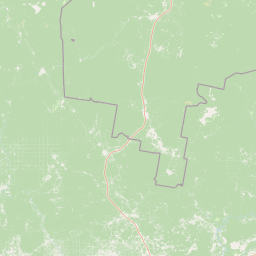
The terrain within Koygorodsky National Park is remarkably flat, with the highest and lowest points differing by only 50 meters in elevation. This low-relief landscape is characterized by extensive floodplains formed by meandering rivers that wind slowly across the forest floor. The hydrological character of the area is defined by a positive water balance, where annual precipitation exceeds evapotranspiration, resulting in abundant surface water that collects in a network of rivers, streams, and lakes. The Sedka River flows northward from the park, ultimately reaching the White Sea, while other smaller watercourses flow southward into rivers that drain toward the Caspian Sea. This watershed divide adds geographic significance to the park’s location. The flat, poorly-drained terrain supports the extensive wetland and forest ecosystems that define the park’s character.
Koygorodsky National Park ecosystems, habitats, and plant life
The park is situated within the Scandinavian and Russian taiga ecoregion, one of the world’s largest contiguous forest ecosystems. The climate is classified as subarctic (Dfc under the Köppen system), featuring short, mild summers with only one to three months exceeding 10 degrees Celsius, and long, cold winters with the coldest month averaging below minus 3 degrees Celsius. Snow cover persists through the winter season, creating the conditions typical of boreal forest environments. The park is characterized by exceptional forest cover exceeding 99 percent, with the landscape remaining entirely undeveloped and free from fragmentation. This makes the protected area one of the most ecologically intact forest landscapes in the European portion of the taiga zone.
Koygorodsky National Park wildlife and species highlights
Koygorodsky National Park supports notable biodiversity, particularly in its old-growth forest habitats. Avian surveys have documented 118 bird species within the park, including 14 species that are classified as critically endangered, vulnerable, or near-threatened on conservation Red Lists. The Yellow-breasted bunting and the Greater spotted eagle represent two particularly significant species found in the park, both facing population pressures across their ranges. Mammal species of conservation interest include the near-threatened Eurasian otter, a semi-aquatic predator dependent on clean water bodies and riparian habitats, and the Pond bat, a species of bat that inhabits wetland areas. The park also provides habitat for the Siberian salamander, a common amphibian species in the region’s wet forest environments.
Koygorodsky National Park conservation status and protection priorities
The establishment of Koygorodsky National Park reflects the growing recognition that old-growth taiga forests represent irreplaceable ecological assets requiring active protection. The park preserves rare fern-green spruce forests that can only develop where human disturbance has been absent for extended periods, making them among the most ecologically valuable and threatened forest types in Europe. The park’s proximity to the Nurgush-Tulashor nature reserve creates a larger contiguous protected zone that supports ecological connectivity and allows wildlife populations to maintain natural movement patterns. With virtually no settlements and roads covering only about one percent of the area, the park maintains an exceptionally low human footprint that supports natural ecological processes and preserves the integrity of the forest ecosystem.
Koygorodsky National Park cultural meaning and human context
The park is located in the Komi Republic, a region historically associated with the Komi people, an indigenous Finno-Ugric population whose traditional territories span the boreal forests of northeastern European Russia. While the park itself contains no settlements, the broader region has a long history of human presence tied to forestry, reindeer husbandry, and traditional resource use. The establishment of the park represents a balance between continued recognition of the region’s cultural heritage and the ecological imperative to preserve the remaining tracts of virgin forest that have survived largely intact.
Top sights and standout views in Koygorodsky National Park
The park protects one of Europe’s largest remaining expanses of virgin southern taiga, featuring old-growth spruce forests and old-growth aspen stands that represent rare ecological communities. The absence of roads, settlements, and significant human infrastructure makes this one of the most ecologically intact forest protected areas in the region. The park sits at a continental watershed divide, with rivers flowing to both the White Sea and the Caspian Sea. Bird diversity includes significant populations of conservation-concern species, while the overall landscape represents a near-pristine example of boreal forest ecology.
Best time to visit Koygorodsky National Park
The optimal visiting period for Koygorodsky National Park corresponds to the brief summer season typical of subarctic climates. The summer months, when temperatures rise above 10 degrees Celsius, offer the most accessible conditions for exploration and wildlife observation. Winter visits are possible but present significant challenges due to extreme cold and heavy snow cover. Spring and autumn serve as transitional seasons that offer unique opportunities to observe seasonal phenomena such as bird migrations and the changing character of the forest.