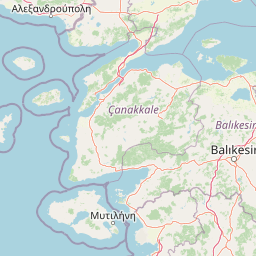

Why Kuşcenneti National Park stands out
Kuşcenneti is best known as Turkey's premier bird sanctuary and one of the most significant wetland ecosystems in the eastern Mediterranean. The park is particularly famous for its large breeding colonies of Dalmatian pelicans, great white pelicans, and pygmy cormorants, as well as its spectacular migratory bird congregations that transform the lake into a vast avian landscape each spring and autumn. The flooded willow forests create a unique habitat where thousands of waterfowl nest in dense vegetation, while the surrounding marshes and meadows support diverse herons, egrets, and waders. The park's international importance as a migratory crossroads and breeding ground for globally significant bird populations makes it a cornerstone of Turkey's conservation estate.
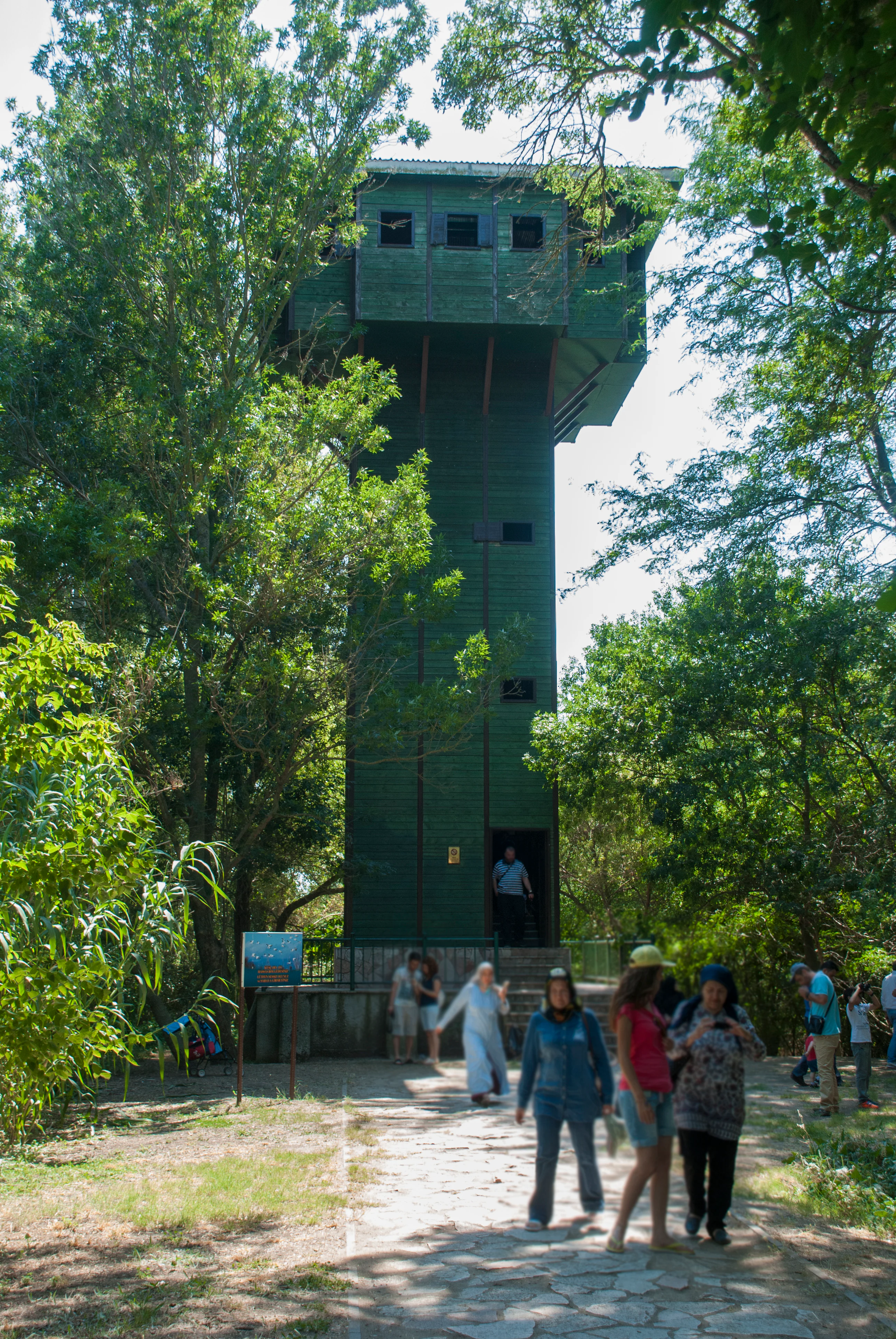
Kuşcenneti National Park history and protected-area timeline
The formal protection of Kuşcenneti began with the pioneering work of Professor Curt Kosswig, a German zoologist at Istanbul University's Faculty of Science, and his wife Leonore, a biologist. They first visited the Lake Kuş area in 1939 and were struck by the extraordinary bird communities nesting in the willow groves surrounding the lake. Recognizing the site's exceptional ornithological value, they established a biology station in 1952 and assigned a station guard to provide initial protection for the area. Their sustained efforts over nearly two decades built awareness of the site's importance and laid the groundwork for formal protection.
On August 31, 1959, the Cabinet of Turkey declared an initial area of 52 hectares as a national park, making Kuşcenneti one of Turkey's earliest national parks specifically created to protect bird habitat. The park subsequently expanded through additional land acquisitions, including a 12.1-hectare parcel added in 1975. In 1981, the area was declared a First Degree Natural Site, transferring its administrative oversight to the Ministry of Culture and Tourism. The park's boundaries were significantly expanded in 2005 through official gazette publications, extending the protected area to 24,047 hectares including the lake. Turkey's ratification of the Ramsar Convention in 1994 led to the formal designation of Kuşcenneti and Lake Kuş as a Wetland of International Importance, integrating the site into the global network of Ramsar protected areas.
Kuşcenneti National Park landscape and geographic character
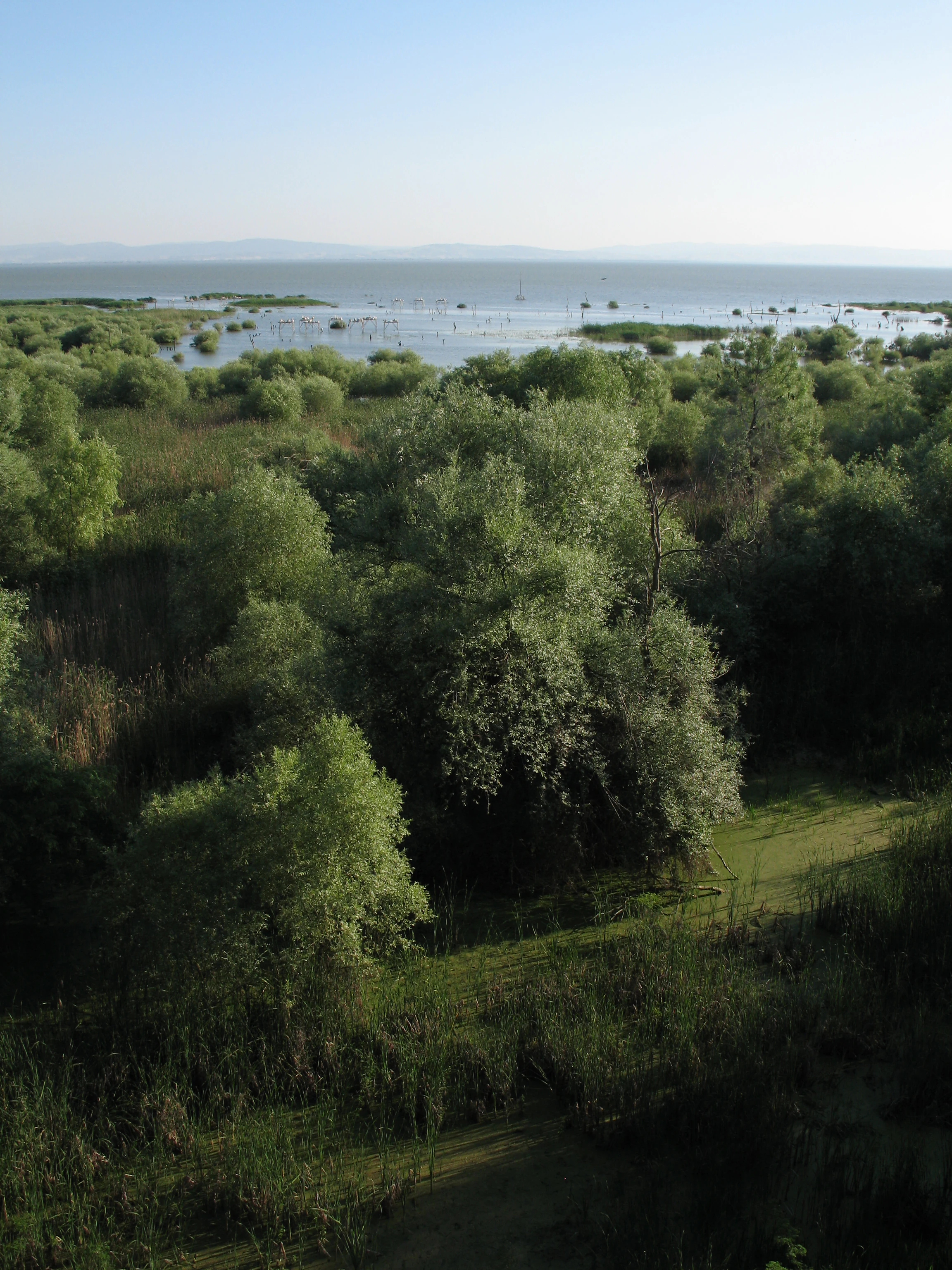
Kuşcenneti National Park occupies a low-lying wetland landscape at the northeastern edge of Lake Kuş, a large freshwater lake in the Marmara region of northwestern Turkey. The terrain is predominantly flat, with elevations barely above sea level, characterized by extensive marshlands, shallow seasonal flooding, and gallery forests dominated by willow and ash trees that become inundated during periods of high water. The lake itself is relatively shallow, with average depths allowing for extensive emergent vegetation beds that create ideal bird habitat.
The park's landscape is defined by the dynamic interface between open water, emergent marshes, flooded woodlands, and adjacent terrestrial areas. Willow groves form distinctive forested wetlands that become partially or fully submerged depending on seasonal water levels, creating a constantly shifting habitat mosaic. The reed beds that fringe the lake margins provide dense vertical cover, while the wet meadows and seasonally flooded areas offer more open habitat for different bird species. This heterogeneity of wetland types within a relatively compact area is fundamental to the park's ecological significance, as different species require different water depths, vegetation structures, and feeding conditions.

Kuşcenneti National Park ecosystems, habitats, and plant life
The ecosystem of Kuşcenneti National Park represents one of the most ecologically significant wetland complexes in Turkey, characterized by a remarkable diversity of interconnected habitats that support extraordinary bird populations. The dominant habitat types include flooded willow and ash tree communities that form gallery forests along the lake margins, extensive reed beds that create vast beds of emergent vegetation, open freshwater areas with floating and submerged aquatic plants, and seasonally wet meadows that provide important feeding and resting areas for migratory species.
The ecological importance of Kuşcenneti stems from its position at a biogeographic crossroads and its role as a critical refueling station for migratory birds traveling between breeding grounds in northern Europe and Asia and wintering areas in Africa. The lake's shallow, productive waters support abundant fish populations and aquatic invertebrates that provide food for waterfowl, while the dense vegetation offers nesting sites and protection from predators. The combination of permanent water bodies and seasonal wetlands ensures that resources are available throughout the annual cycle, supporting both breeding birds and migrants during spring and autumn passage.
Beyond its ornithological significance, the park supports notable fish diversity, including species of conservation concern such as the Lake Kuş spined loach (Cobitis puncticulata), which is found nowhere else in the world. The freshwater crayfish populations have historically supported commercial harvesting, though disease events have impacted populations in recent decades. This aquatic biodiversity complements the site's avian focus and reflects the broader ecological richness of the wetland system.
Kuşcenneti National Park wildlife and species highlights
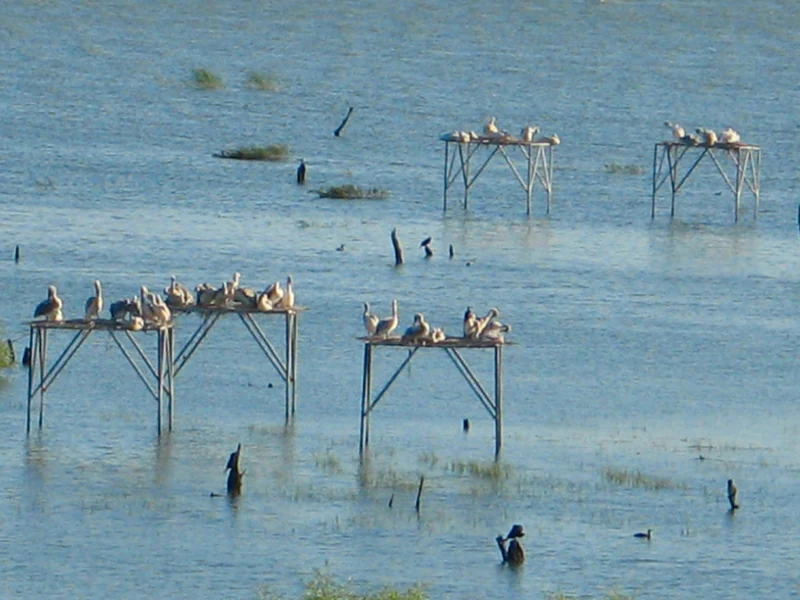
Kuşcenneti National Park is renowned for its extraordinary birdlife, with over 230 species recorded within its boundaries representing one of the most diverse avian communities in Turkey. Approximately 64 bird species regularly breed within the park each year, while an additional 22 species breed in some years, and another 178 species pass through during migration. The total number of birds visiting annually reaches an impressive two to three million individuals, creating one of the most spectacular bird concentrations in the Mediterranean region.
The park is particularly famous for its pelican populations, with both great white pelicans and Dalmatian pelicans breeding in substantial colonies. The Dalmatian pelican, a globally threatened species, finds one of its most important breeding sites in Turkey at Kuşcenneti. The pygmy cormorant, another species of conservation concern, also breeds here in significant numbers. Herons and egrets are exceptionally well represented, with species including grey heron, great egret, little egret, and Eurasian bittern all nesting within the park. The flooded willow forests provide breeding habitat for diverse waterfowl including mallard, gadwall, Eurasian teal, red-crested pochard, and common pochard.
The park supports important populations of waders and shorebirds during migration, with species such as black-tailed godwit, common redshank, northern lapwing, and Kentish plover using the wetland margins. Raptors including western marsh harrier, Eurasian sparrowhawk, and European honey buzzard hunt over the marshes and open areas. The site's significance extends to wintering birds, with species such as greater flamingo, diving ducks, and grebes present during the colder months. This year-round avian activity makes Kuşcenneti a destination for birdwatchers in every season.
Kuşcenneti National Park conservation status and protection priorities
Kuşcenneti National Park holds exceptional conservation significance as Turkey's oldest national park specifically created to protect bird habitat and one of the most important wetlands in the Eastern Mediterranean. The park's international recognition is evidenced by its Ramsar designation since 1994, which places it within the global network of wetlands of international importance, and by the Council of Europe's Class A European Diploma awarded in 1976 and repeatedly renewed to acknowledge successful conservation practices.
The conservation value of Kuşcenneti extends beyond national boundaries, as the park protects breeding populations of species with ranges spanning multiple continents. The Dalmatian pelican, pygmy cormorant, and Eurasian bittern are species of global conservation concern that depend on the protected habitats for their survival. The site's position on major migratory flyways means that it serves as a critical refuge for millions of birds navigating between continents, making its protection essential for maintaining healthy migratory populations across wide geographic ranges. The combination of breeding, wintering, and migratory bird functions within a single protected area is relatively rare and enhances the site's conservation importance.
Management of the park focuses on balancing conservation objectives with public access, as Kuşcenneti is one of Turkey's most visited national parks despite its relatively small size. The regulatory framework includes the 2005 Regulation for the Protection of Wetlands and the formal boundary determinations that established the expanded protected area. Ongoing challenges include balancing visitor access with disturbance-sensitive breeding birds, managing water levels to maintain optimal habitat conditions, and addressing broader watershed issues that affect water quality and quantity in Lake Kuş.
Kuşcenneti National Park cultural meaning and human context
The Lake Kuş region has a long human history that predates its modern conservation designation. Historically, Lydians settled in the southeastern region of the lake beginning in the 8th century BCE. Following the Persian invasion of Anatolia, the region acquired the name Paradeisos and was used as a hunting ground and royal park by Persian kings, establishing an early association between this landscape and elite recreational use. This historical significance as a place of natural abundance and royal enjoyment echoes the modern designation as a bird paradise.
The contemporary conservation story of Kuşcenneti is intimately tied to scientific discovery and advocacy. The recognition of the area's ornithological importance by Curt and Leonore Kosswig in the mid-20th century established a model for science-based conservation in Turkey. Their efforts to document the site's value and advocate for protection resulted in the establishment of Turkey's first bird-focused national park, demonstrating how scientific understanding can drive conservation outcomes. This legacy continues to influence the park's management and reputation as a site where scientific research and conservation practice are closely linked.
Top sights and standout views in Kuşcenneti National Park
Kuşcenneti National Park stands as Turkey's premier bird conservation area, offering visitors the chance to witness extraordinary concentrations of waterfowl, pelicans, and migratory birds in a compact and accessible wetland setting. The park's flooded willow forests create a unique visual landscape where birds nest amid submerged trees, while the open lake waters host thousands of waterfowl and the reed beds provide cover for secretive species like the Eurasian bittern. The Dalmatian pelican breeding colony represents one of the most significant populations of this threatened species in the world. Spring and autumn migration periods transform the park into a dynamic spectacle as millions of birds pass through, creating unforgettable viewing opportunities for ornithologists and nature enthusiasts alike.
Best time to visit Kuşcenneti National Park
Kuşcenneti National Park offers excellent birdwatching opportunities throughout the year, though different seasons provide distinct experiences. Spring migration, typically from March through May, brings the greatest diversity of species as birds return from wintering grounds in Africa to breeding sites across Europe and Asia. This period offers excellent opportunities to observe a wide variety of species in relatively compact areas as birds feed and rest before continuing their journeys. The breeding season from late spring through summer sees thousands of birds nesting in the reeds and willow groves, with pelican colonies and waterfowl broods providing excellent viewing opportunities.
Autumn migration from September through November offers another major birdwatching opportunity, as southbound migrants stop to rest and feed at the lake. The winter months bring different bird assemblages, with diving ducks, grebes, and greater flamingos present in significant numbers, offering a different character to the park. The relatively mild climate of the Marmara region makes winter visits feasible and rewarding, though some areas may have limited access. Summer months can be hot but offer the chance to see fledged young and observe breeding behavior at its peak, while the reduced migrant numbers provide a more peaceful experience for visitors seeking quieter exploration.