Why Van Gogh National Park stands out
Van Gogh National Park is distinguished by its dual identity as both a cultural landscape tied to one of history's most famous painters and a modern conservation initiative. The park encompasses the drift sand dunes of the Loonse en Drunense Duinen, one of the Netherlands' most extensive dune systems, as well as the wooded valleys and heaths of Het Groene Woud. The connection to Vincent van Gogh is particularly significant, as the artist lived and worked in multiple locations within the park's boundaries, including Nuenen where the iconic Van Gogh church stands. This blend of artistic heritage with diverse Dutch heathlands, forests, and valley landscapes makes the park uniquely positioned in the national park system.
Van Gogh National Park history and protected-area timeline
The Van Gogh National Park initiative was formally presented on March 30, 2021, marking the beginning of a multi-year process to establish this collaborative protected area. After several years of development and stakeholder coordination, the park received its official National Park status on October 14, 2024, becoming one of the newest additions to the Netherlands' national park system. The establishment followed a distinctive "new style" model that has been increasingly adopted in Dutch conservation, emphasizing partnership-based management over traditional top-down administration. The project brought together an unusual coalition of participants—including multiple municipalities (Meierijstad, Eindhoven, Tilburg, Zundert, Oirschot), nature organizations (Natuurmonumenten, IVN, Het Groene Woud), water authorities (Waterschap De Dommel), financial institutions (Rabobank), and cultural organizations (Kunstloc Brabant)—to jointly shape the park's direction. This collaborative framework reflects evolving Dutch approaches to landscape conservation that integrate ecological preservation with regional economic and cultural development.
Van Gogh National Park landscape and geographic character
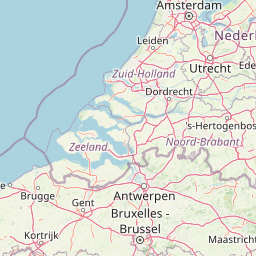
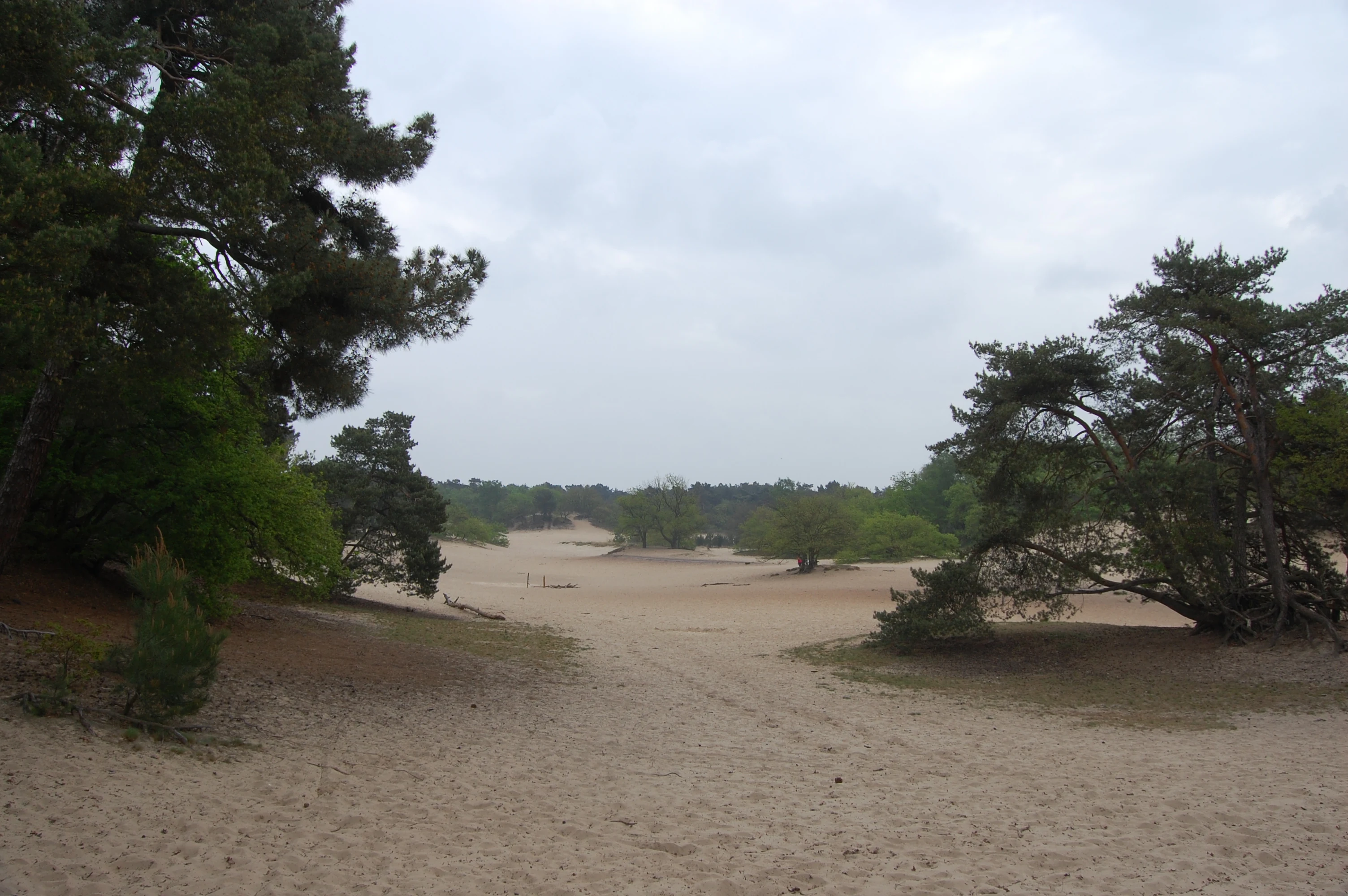
The park's landscape is remarkably varied for the Netherlands, encompassing several distinct terrain types within its boundaries. The Loonse en Drunense Duinen (Loon and Drunen Dunes) forms a central core, featuring one of the country's most extensive drift sand dune systems—a rare landscape in the otherwise flat Dutch terrain. These moving dunes create a dynamic, almost semi-desert environment in the heart of the country. Beyond the dunes, the park includes the wooded Dommelvallei (Dommel Valley), a river valley landscape with meandering waterways and adjacent forests. The Het Groene Woud area contributes additional diversity through its heathlands (heide), forested sections, and open agricultural landscapes. The park spans the region between major Dutch cities, creating an extensive green corridor that provides both ecological connectivity and recreational opportunities within one of the Netherlands' most densely populated regions.
Van Gogh National Park ecosystems, habitats, and plant life
The ecological character of Van Gogh National Park reflects the diverse habitats found within its boundaries. The dune areas support specialized heathland and open sand communities adapted to the nutrient-poor, acidic soils created by the drift sand deposits. These areas represent rare examples of semi-natural heathland in Western Europe, increasingly scarce due to historical agricultural intensification. The Dommelvallei provides wetland and riparian habitats along the river corridor, while the broader park encompasses forest patches, grasslands, and the transitional landscapes between these habitat types. The collaborative management model explicitly aims to maintain and enhance these ecological values while balancing the needs of a populated and cultivated region. The park contributes to broader biodiversity conservation goals in the Netherlands by protecting substantial areas of semi-natural habitat within a landscape that has otherwise undergone significant historical modification for agriculture and settlement.
Van Gogh National Park wildlife and species highlights
The diverse habitats within Van Gogh National Park support characteristic Dutch wildlife species adapted to heathland, dune, forest, and valley environments. Heathland areas provide suitable habitat for ground-nesting birds and insects associated with these semi-open landscapes. The forest patches and wooded estates offer breeding and foraging territory for various bird species typical of the Dutch lowlands. The river valley and wetland areas along the Dommel support aquatic and riparian wildlife. While specific species inventories are not detailed in available sources, the park's habitat diversity suggests presence of species typical of Dutch heathland and dune ecosystems, including various passerine birds, small mammals, and invertebrates adapted to these increasingly rare environments.
Van Gogh National Park conservation status and protection priorities
Van Gogh National Park was established with explicit conservation objectives while simultaneously embracing a broader regional development mandate. The park protects the remaining semi-natural landscapes of North Brabant, including the critically endangered drift sand dune systems and heathland habitats that have largely disappeared from the Dutch lowlands through historical land use change. The collaborative governance model represents an innovative conservation approach that seeks to embed environmental protection within broader sustainable development goals, linking nature conservation with cultural heritage preservation, economic development, and community engagement. The designation recognizes that effective landscape conservation in a densely populated country like the Netherlands requires broad stakeholder buy-in and integrated regional planning rather than strict protected area exclusion.
Van Gogh National Park cultural meaning and human context
The park's identity is inextricably linked to Vincent van Gogh, one of the most influential painters in Western art history. Born in Zundert within North Brabant, van Gogh lived and worked in multiple locations throughout the region that now falls within the park's boundaries, including Nuenen where the famous Van Gogh church (the "Van Gogh church" depicted in his paintings) remains a cultural landmark. Many of van Gogh's early works depict the landscapes, peasants, and rural scenes of this same territory—the heathlands, farmhouses, churches, and fields that characterized late nineteenth-century North Brabant. The park's naming explicitly acknowledges this deep connection between the landscape and artistic heritage, making cultural interpretation a core element of the park's purpose alongside nature conservation. This cultural dimension distinguishes Van Gogh National Park from most other Dutch national parks and provides unique opportunities for integrating art, history, and nature in visitor experience.
Top sights and standout views in Van Gogh National Park
Van Gogh National Park combines the Netherlands' newest conservation initiative with deep cultural significance through its association with Vincent van Gogh. The park encompasses the remarkable Loonse en Drunense Duinen, one of the country's most extensive drift sand dune systems, creating a landscape more reminiscent of heathland environments than typical Dutch terrain. The collaborative "new style" governance model represents an innovative approach to protected area management that integrates conservation with regional development goals. The proximity to major cities (Eindhoven, Tilburg, 's-Hertogenbosch, Breda) makes this extensive green space particularly valuable for regional quality of life and nature access. The park protects substantial remaining areas of semi-natural habitat—heathland, dune, forest, and valley ecosystems—that have become increasingly rare in the densely populated Netherlands.
Best time to visit Van Gogh National Park
As a newly established park dating from October 2024, specific seasonal visitor guidance remains to be developed through the park's management. Generally, the Dutch lowland landscapes of North Brabant offer year-round visitation opportunities, with spring and early summer (April through June) traditionally providing optimal conditions for experiencing heathland flora and outdoor exploration in the Netherlands. The park's extensive area encompasses diverse terrain that can be appreciated across seasons, though visitors should note that some trail conditions may vary with weather. The connection to van Gogh heritage means the park offers cultural interest beyond pure nature recreation, with the Van Gogh church in Nuenen and other sites of artistic significance providing visitor engagement throughout the year.