National parkIsrael

Masada National Park
Discover mapped boundaries and archaeological significance in the Judean Desert.
Masada National Park, in Israel.
VMinor water

Understanding and browsing the distinct ecological, cultural, and scenic value of Israel's Category V protected lands.
Discover Israel's Category V protected areas, designated as Protected Landscapes/Seascapes, where long-term human interaction with nature has forged unique ecological, cultural, and scenic value. This page details how Israel implements this IUCN management category, offering insights into parks and protected lands that embody this dynamic relationship between people and the environment across its diverse geography.
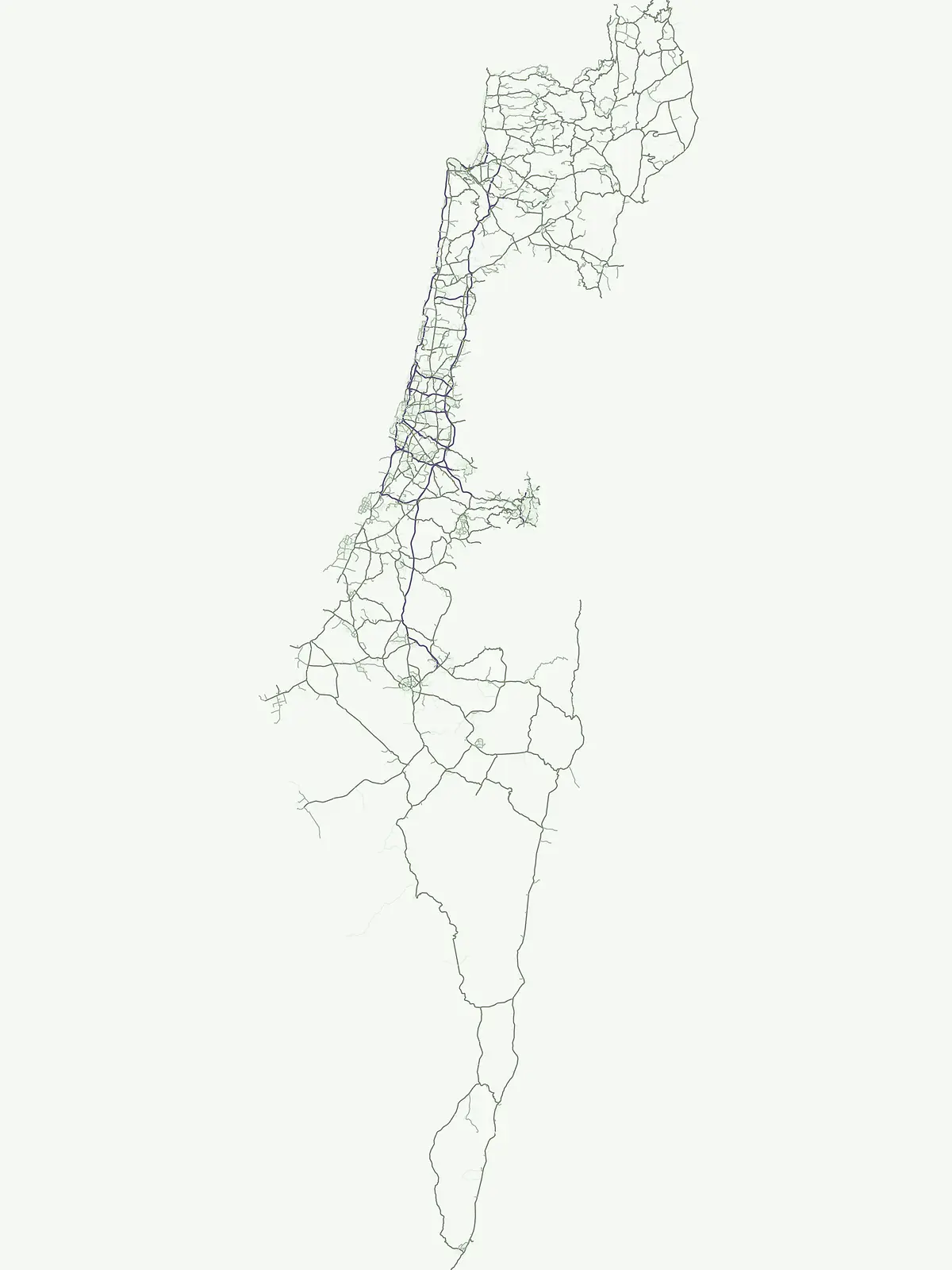
Discover Israel's distinctive Protected Landscape/Seascape areas, revealing unique human-nature interactions across the country's diverse geography.
Discover mapped boundaries and archaeological significance in the Judean Desert.
Masada National Park, in Israel.
Explore its mapped boundaries and regional geographic context.
Hermon National Park, in Golan Heights, Israel.
Discover the protected geography of ancient burial sites in Israel.
Beit She'arim National Park, in Israel. Landscapes: caves.
Mapped geography and protected terrain in the heart of the Levant.
Zippori National Park presents a fascinating protected landscape within Israel, offering insights into its historic terrain and geographic context. As a designated national park, its mapped boundaries delineate an area significant for its archaeological sites, particularly those from the Roman period. This entry provides structured information on the park's protected status and its place within the broader atlas of the Levant, emphasizing discovery through its landscape and historical geography.
Discover unique bell caves and archaeological landscape in the Judean lowlands.
Beit Guvrin-Maresha National Park in Israel presents a unique atlas-style discovery of a landscape defined by ancient human excavation. Explore the vast networks of bell caves, Phoenician necropolises, and Byzantine underground churches carved into the soft limestone hillsides. This protected area offers a compelling journey through millennia of history, revealing the geography and terrain shaped by continuous habitation and burial practices, making it a vital site for understanding regional archaeology and ancient cave systems.
Explore exceptionally preserved Nabataean urban architecture and regional geography.
Mamshit National Park offers a rare window into ancient desert urbanism, preserving an exceptionally intact Nabataean caravan city and Byzantine settlement in Israel's Negev Desert. The site showcases unique residential compounds and religious structures, demonstrating sophisticated architectural traditions and water management systems against a backdrop of striking natural terrain. As a vital component of the Incense Road heritage, Mamshit provides rich context for understanding ancient trade, regional geography, and the enduring human adaptation to arid landscapes.
Explore mapped ruins, Fatimid walls, and Mediterranean coastal geography.
Ashkelon National Park in Israel offers a unique dive into ancient urban development, preserving layers of history from multiple civilizations along the Mediterranean coast. This protected area features landmark archaeological discoveries, including the Middle Bronze Age gate and extensive Roman ruins, all situated within a distinct coastal landscape. Understanding its mapped boundaries and the progression of its terrain provides critical context for appreciating this significant heritage site's geographic and historical importance.
Explore natural springs, waterfalls, and ancient ruins within this national park.
Gan HaShlosha National Park presents a remarkable protected landscape in Israel, distinguished by its warm, natural spring-fed pools and picturesque waterfalls. This national park serves as a vital oasis within the Jordan Valley, boasting lush vegetation and a unique microclimate. Visitors can explore the park's archaeological heritage, featuring ruins that speak to its long history of human habitation. Understanding Gan HaShlosha National Park through its mapped geography and protected-area context provides valuable insight into Israel's natural and historical landscapes.
Explore its unique springs, waterfalls, and ancient Nabatean and Byzantine history.
Ein Avdat National Park showcases a rare desert oasis environment, a starkly beautiful protected landscape where natural springs emerge from the Negev's arid terrain. This park is celebrated for its dramatic waterfalls, deep pools, and the preserved remnants of ancient human habitation, including a remarkable Byzantine cave monastery carved directly into the canyon walls. Its geography, shaped by the Nahal Zin wadi, provides a vivid study in desert ecosystems and their capacity for supporting life and history over millennia, making it a key site for understanding landscape context in Israel.
Mapped riparian geography and vital protected landscape in Israel.
Alexander River National Park is a significant protected coastal wetland in Israel, focusing on the preservation of the lower Alexander River's unique riparian ecosystem. Renowned for its thriving populations of African softshell turtles and its role as the National Sea Turtle Rescue Center for endangered green sea turtles, the park offers a compelling case study in environmental rehabilitation. Users can explore the park's mapped boundaries, understand its geography as a transition zone between freshwater and marine environments, and appreciate its importance within the broader landscape of Mediterranean protected areas.
Explore mapped boundaries and geographic context in Israel's Hula Valley.
Hurshat Tal National Park is a protected area in northern Israel’s Hula Valley, distinguished by its extraordinary grove of ancient Valonia oak trees, some dating back 350 to 400 years. This site offers a rare look at a living forest heritage, serving a dual role as a crucial nature conservation zone and a popular family recreational destination with facilities like accommodation and swimming areas, making it a unique feature on any park atlas.
Explore Category V protected areas, safeguarding Israel's unique landscapes shaped by human-nature interaction across diverse regions.
Matching parks
11
These parks and protected areas currently define how Protected Landscape/Seascape appears across Israel.
Category focus
A protected area where the long-term interaction of people and nature has created a distinct landscape or seascape with significant ecological, cultural, and scenic value.
Representative parks
People and nature
Definition
A Protected Landscape/Seascape is a protected area where the interaction of people and nature over time has produced an area of distinct character with significant ecological, biological, cultural, and scenic value, and where safeguarding the integrity of this interaction is vital to protecting and sustaining the area and its associated nature conservation and other values. The category is not defined by the absence of human presence, but by the quality and significance of a long-evolved relationship between communities, land or sea use, and nature.
Key characteristics
Category V areas are often recognizable as coherent lived-in landscapes or seascapes with strong identity and visible continuity between ecological systems and human practice. They may include traditional agricultural mosaics, terraced valleys, pastoral uplands, island seascapes, cultural coastlines, forest-agriculture patterns, or mixed landscapes where settlement, heritage, biodiversity, and scenic values reinforce one another. The conservation interest often lies not only in habitats or species, but also in the texture of the whole place: its land-use patterns, cultural memory, local management traditions, landscape form, ecological connectivity, and visual character. These areas are frequently more socially inhabited and economically active than stricter categories, but their management seeks to keep use compatible with long-term landscape quality and biodiversity.
Management focus
Management in Category V is usually integrative, collaborative, and place-based. Rather than separating conservation from human life, it aims to guide land and sea use so that ecological, scenic, and cultural values remain mutually supportive. This may involve planning controls, support for traditional management practices, restoration of degraded features, visitor management, heritage protection, sustainable local economies, and governance arrangements that work across public authorities, private owners, communities, and civil society. Because these places are often dynamic rather than static, management is less about freezing a landscape in time and more about steering change in ways that maintain its defining character, ecological function, and social meaning.
Protection purpose
The purpose of Category V is to conserve landscapes and seascapes where nature and people have shaped one another over time in ways that produce high ecological, cultural, and scenic value, and to keep that relationship viable into the future through careful stewardship.
Management objective
Typical objectives include maintaining the characteristic quality and identity of a landscape or seascape, sustaining biodiversity associated with traditional land or sea uses, supporting communities and stewardship practices compatible with conservation, protecting scenic and cultural heritage values, guiding development away from forms that would degrade landscape integrity, encouraging sustainable tourism and local economies, and strengthening long-term resilience of the whole area as a living conservation landscape.
Category history
Category V grew out of a broadening conservation understanding that not all valuable protected places are 'untouched' nature. In many parts of the world, especially in Europe and other long-settled regions, biodiversity and scenic identity are closely tied to long histories of farming, grazing, fishing, woodland use, settlement, and cultural adaptation. Conservation policy gradually moved toward recognizing that these lived-in landscapes could be worthy of protected status in their own right. The IUCN category system formalized this through Category V, giving international legitimacy to protected areas where the continuity of human-nature interaction is central rather than incidental. The category has become especially important for regional identity, connectivity, buffer functions, and conservation at the scale of working landscapes.
Global examples
Examples commonly linked with Category V include traditional mountain valleys, terraced agricultural regions, coastal cultural landscapes, island seascapes, mixed pastoral-woodland systems, and nationally designated protected landscapes where both biodiversity and long-shaped cultural scenery are central. In Europe in particular, many regional parks, protected landscapes, and protected seascapes align with Category V when their management focuses on maintaining a valued human-shaped landscape with strong ecological and cultural significance.
Understanding the geographic distribution and diverse landscapes within Israel's protected areas
Open the park list for Israel to explore locations and park characteristics.