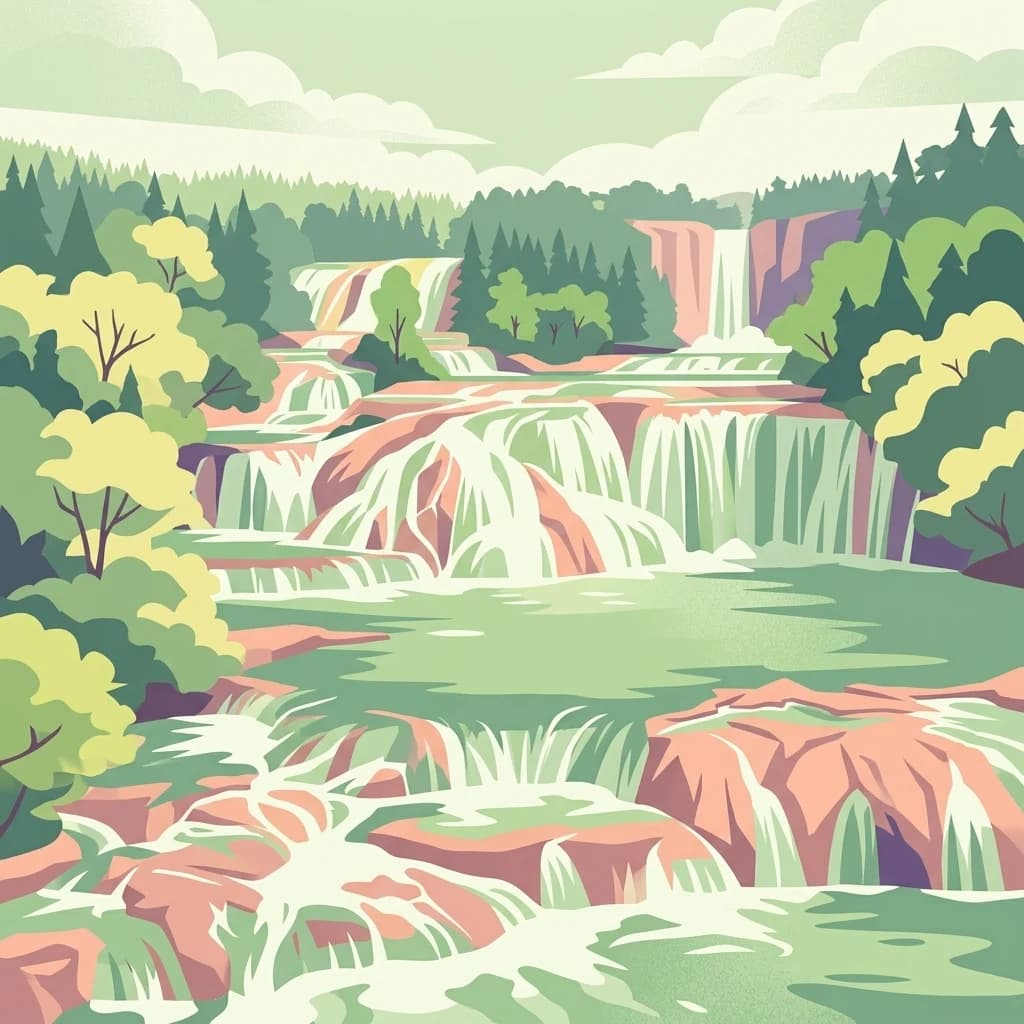
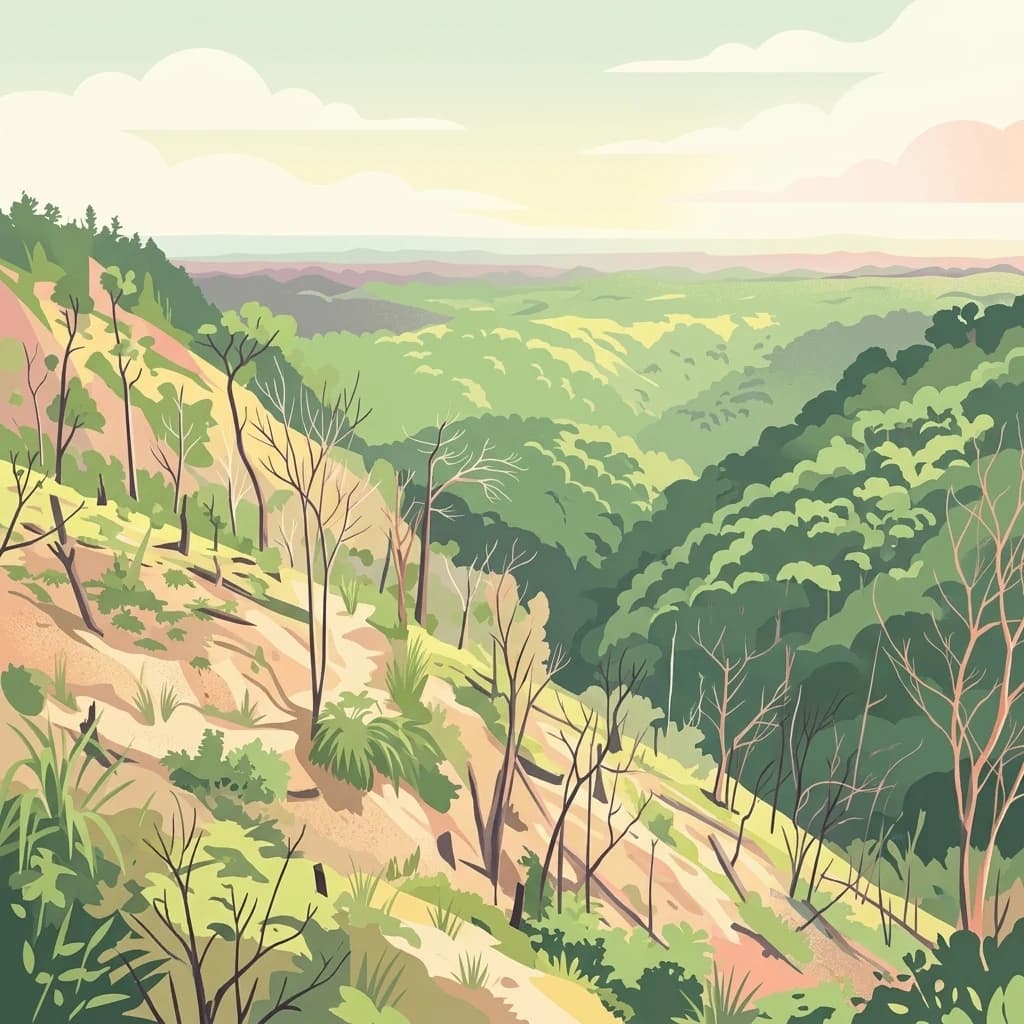
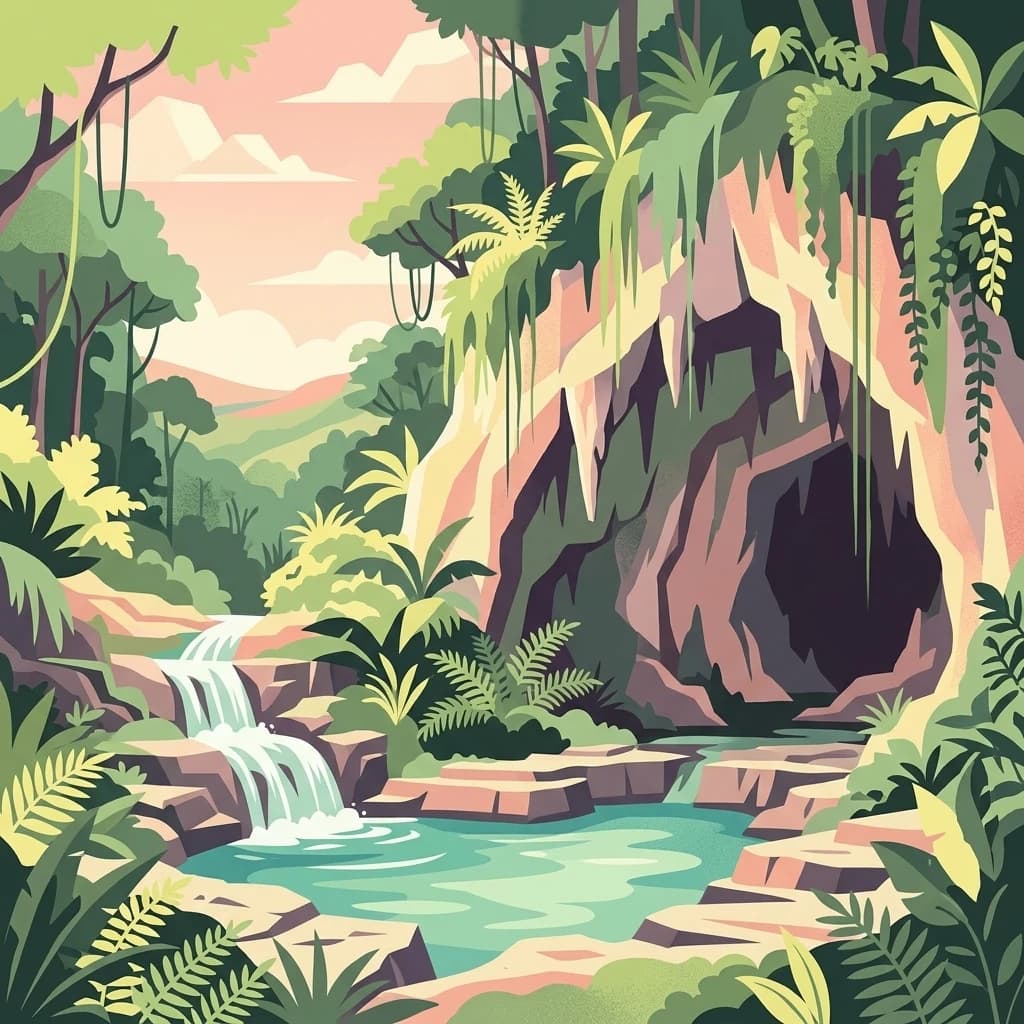
A chain of turquoise waterfalls in the Chiapas rainforest, where rivers carve glowing blue cascades through limestone canyons.
Cascadas de Agua Azul
Cascadas de Agua Azul is a Mexican federal protected area in the northern part of Chiapas, set in a humid, forested landscape where the rivers Otulún, Shumuljá, and Tulijá carve shallow canyons with vertical limestone walls. The park's signature attractions are a succession of block-segmented waterfalls whose waters carry dissolved carbonate salts, filtering light to produce a striking blue color in the pools and rapids.
Although designated mainly for the protection of flora and fauna, Cascadas de Agua Azul has also become an emblem of Chiapas for visitors, drawing both national and international tourism to the river corridor. The surrounding mountain rainforest shelters more than 870 recorded species, including a large fraction of regional birdlife, and 22 endemic species, and the site plays an important role in watershed conservation within the Grijalva basin.
The protected area sits at the intersection of three municipalities, Chilón, Tumbalá, and Salto de Agua, and is bounded by road access from the city of Palenque. Beyond its scenic value, the park also carries significant ecological weight as a refuge for resident and migratory birds and as a karst-fed hydrological system with notable calcium-rich soils and groundwater flow.