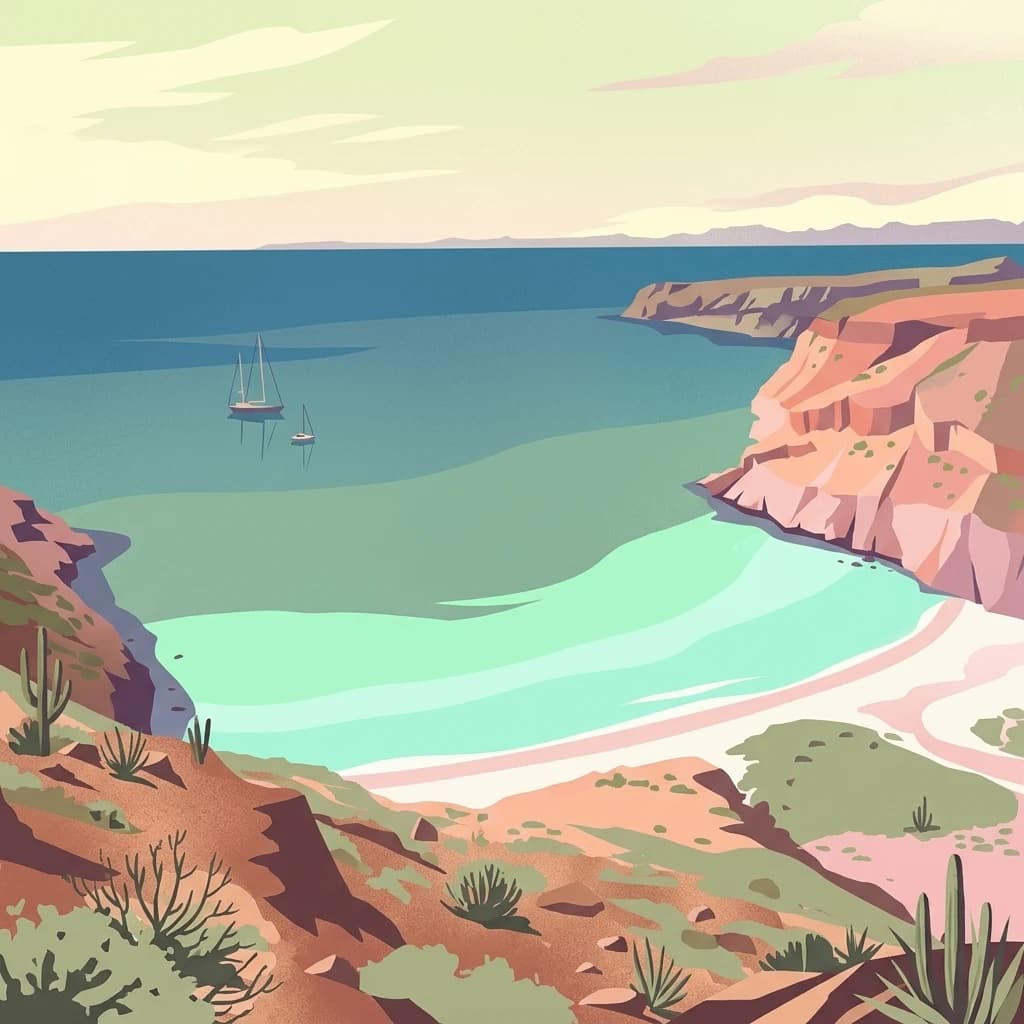
Pristine marine sanctuary in the Gulf of California protecting exceptional biodiversity across five volcanic islands
Bahía de Loreto National Park
Bahía de Loreto National Park is a protected marine area on the east coast of the Baja California Peninsula in the state of Baja California Sur, Mexico. Established in 1996, the park encompasses approximately 206,580 hectares of which roughly 88 percent is ocean surface, making it one of Mexico's largest marine national parks. The protected area centers on Loreto Bay and includes five major uninhabited islands: Isla Coronados, Isla del Carmen, Isla Danzante, Isla Monserrate, and Isla Santa Catalina, along with numerous smaller islets scattered throughout the central Sea of Cortez.
The park is renowned for its remarkable biological diversity, particularly of marine mammals. It hosts 30 species of marine mammals, representing approximately 65 percent of all marine mammal species found along Mexico's coasts, making it the area with the highest marine mammal diversity in the country. The protected marine ecosystem includes diverse coastal environments such as sandy beaches, dramatic sea cliffs, submarine canyons, and marine terraces. The park was designated a UNESCO World Heritage Site in 2005 as part of the larger Islands and Protected Areas of the Gulf of California, and it holds Ramsar Wetland status since 2004, recognizing its international importance as a coastal wetland ecosystem.
The park lies adjacent to the town of Loreto, the historic first capital of the Californias and site of the Jesuit-founded Misión de Nuestra Señora de Loreto Conchó. The Sierra de la Giganta mountain range forms a dramatic backdrop along the park's eastern boundary, creating a striking contrast between arid desert slopes and the productive marine waters below.