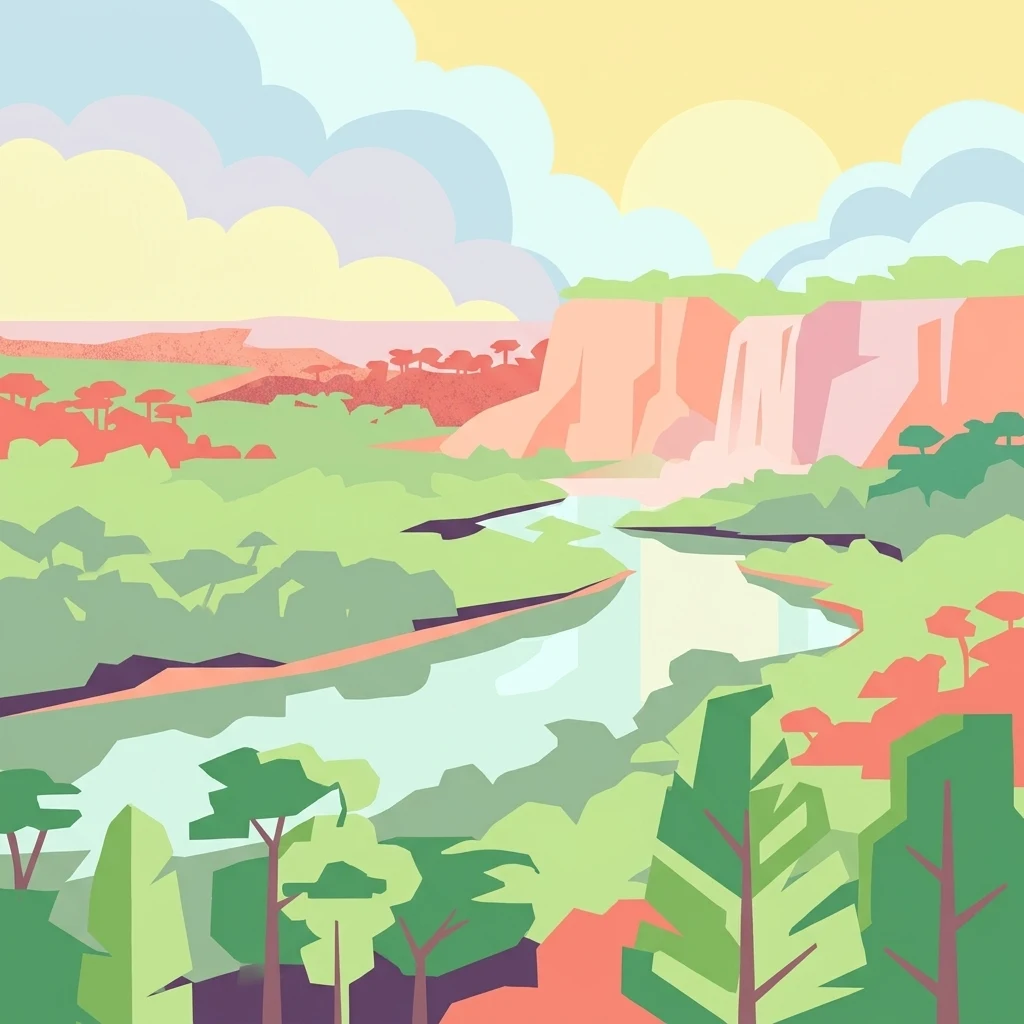
A vast Amazonian stronghold in northwestern Bolivia, protecting the country's largest tract of representative tropical rainforest.
Manuripi Amazonian Wildlife National Reserve
The Manuripi Amazonian Wildlife National Reserve is Bolivia's largest nationally protected area of representative southwestern Amazonian rainforest, covering roughly 747,000 hectares in the northwestern department of Pando. Stretching from the Madre de Dios River along the Peruvian border to the upper Manuripi River basin, the reserve protects an immense block of continuous tropical moist forest, an extensive riverine and lacustrine system, and one of the most biologically rich regions of the country.
Within its boundaries lie major rivers such as the Madre de Dios, Manuripi, Tahuamanu, and Orthon, along with the important Bay Lake and a network of blackwater streams, palm swamps, and seasonally flooded forests. The reserve is a critical stronghold for jaguars, giant otters, giant armadillos, tapirs, multiple primate species, harpy eagles and other raptors, and one of Bolivia's most diverse avifaunas, alongside a flora dominated by Brazil nut trees, rubber trees, ceiba, and vast palm-rich formations.
Manuripi is also a living cultural landscape. Although no indigenous communities are permanently settled inside the reserve today, the forests carry the memory of Ese'ejja, Araona, Cavineño, and Chácobo peoples, while its contemporary population descends largely from rubber-tapper and Brazil nut-harvesting settlers. The reserve is nationally significant both for biodiversity conservation and for sustaining the tradition of castaña harvesting that defines much of the Pando economy.