Mori Atlas logo
Protection category

Understanding the global IUCN definition of National Park within New Zealand's unique geography

New Zealand National Parks: Exploring IUCN Category II Protected Areas and Landscapes

Discover the mapped protected areas within New Zealand designated as IUCN Category II, known globally as National Parks. This specific classification signifies large natural or near-natural regions managed to protect core ecological processes, characteristic species, and vital ecosystems. Within New Zealand's diverse geography, these areas serve not only as crucial conservation landscapes but also as destinations supporting education, recreation, and compatible visitor experiences, offering a window into the country's natural heritage.

Related tags

island countrypacific oceanconstitutional monarchyenglish-speakingsouthern hemisphere
Parks in this category

Mapping New Zealand's National Park Geography, from Volcanic Plateaus to Southern Alps Peaks

New Zealand National Park Protected Areas: Explore a Comprehensive Atlas of Iconic Landscapes
Browse a curated list of National Park protected areas in New Zealand, offering detailed geographic context for each preserve. Discover how these conservation landscapes are distributed across the country's diverse terrain, from North Island volcanoes to the glacial fiords of the South Island, enabling effective regional park comparison.
National parkSouthland Region

Fiordland National Park

Explore its vast boundaries and unique temperate rainforest.

Fiordland National Park, located in the Southland Region of New Zealand, is a testament to dramatic geological forces, featuring fifteen major fiords like Milford Sound, whose Mitre Peak rises majestically from the water. This protected national park encompasses an immense wilderness of alpine terrain, ancient beech forests, and numerous waterfalls, fueled by exceptional rainfall. Its inclusion in the Te Wāhipounamu World Heritage Area underscores its global significance for biodiversity and natural landscape preservation.

12,607 km²1952II
National parkCanterbury Region

Aoraki / Mount Cook National Park

Mapped glacial terrain and mountain peaks in the Canterbury Region.

Delve into the heart of New Zealand's alpine grandeur with Aoraki / Mount Cook National Park. This page offers an atlas-style exploration of its protected boundaries, dramatic glacial formations like the Tasman Glacier, and the towering peaks of the Southern Alps. Understand the park's significant geographic context within the Canterbury Region and discover the mapped landscape that defines this premier national park.

707 km²1953II
National parkNew Zealand

Tongariro National Park

Explore mapped terrain, active volcanoes, and unique dual World Heritage values.

Tongariro National Park, situated in New Zealand's North Island, is a globally significant protected area celebrated for its dramatic volcanic landscapes and profound cultural heritage. As the nation's oldest national park, it features three active volcanoes: Mount Ruapehu, Mount Ngauruhoe, and Mount Tongariro, set within a diverse terrain that includes forests, alpine zones, and the Rangipo Desert. Its dual World Heritage status underscores its importance for both natural attributes and its sacred cultural landscape, offering rich opportunities for geographic and atlas exploration.

795.96 km²1887II
National parkOtagoMountain

Mount Aspiring National Park

Explore the U-shaped valleys and mapped boundaries of this iconic national park.

Mount Aspiring National Park showcases a breathtaking glacial landscape defined by steep-sided U-shaped valleys, active glaciers, and soaring alpine summits. As a designated national park within New Zealand's South Island, its protected status preserves a vast area of wilderness crucial for understanding regional geography and alpine terrain. This page provides an atlas-style exploration of its mapped boundaries and the stark, natural beauty that characterizes this significant conservation landscape in the Otago region.

3,562 km²1964TemperateModerate access
National parkCanterburyMountain

Arthur's Pass National Park

Dramatic alpine terrain and distinct forest ecosystems within New Zealand.

Arthur's Pass National Park is a nationally significant protected area within the Canterbury region of New Zealand's South Island. This park is defined by its dramatic glacial valleys, towering peaks, and the striking ecological transition between the drier mountain beech forests of the east and the lush rainforests of the west. Its mapped boundaries encompass a critical landscape for understanding alpine environments and conservation in the Southern Alps, offering unique geographical context for this protected territory.

1,184.7 km²1929TemperateModerate access
National parkWest Coast

Westland Tai Poutini National Park

Explore its mapped terrain and unique glacial features in West Coast, NZ.

Westland Tai Poutini National Park represents a remarkable intersection of glacial power and lush temperate rainforests along New Zealand's West Coast. As a protected national park, it showcases dramatic alpine scenery and the unique characteristic of glaciers descending to low elevations. Users can explore the mapped boundaries and the distinct natural landscapes that define this significant protected area, offering a clear view of its place within the region's geography.

1,319.8 km²1960II
National parkNew Zealand

Nelson Lakes National Park

Explore New Zealand's protected mountain terrain and natural landscapes.

Nelson Lakes National Park provides a deep dive into a dramatic alpine environment situated at the northern edge of New Zealand's Southern Alps. This national park is characterized by its striking glacial lakes, Rotoiti and Rotoroa, and the extensive mountain ranges that surround them, offering a rich context for understanding protected land distribution. Explore the park's mapped geography, its distinct beech forest ecosystems, and the rugged natural terrain that makes it a significant feature within the broader South Island landscape.

1,018.8 km²1956II
National parkTasman District

Abel Tasman National Park

New Zealand's smallest national park offering iconic coastal hiking and wildlife.

Delve into the mapped boundaries and unique geography of Abel Tasman National Park, New Zealand's smallest national park located in the Tasman District. This protected landscape features renowned golden beaches, forested hills, and vital island ecosystems. Explore its coastal trails, understand its ecological restoration context, and appreciate its historical significance as a site of early European and Māori interaction, making it a key destination for atlas-driven geographic discovery.

237.1 km²1942II
National parkNew Zealand

Egmont National Park

Explore the mapped volcanic terrain and protected landscape of Mount Taranaki.

Egmont National Park represents a significant protected area within New Zealand's North Island, dominated by the iconic stratovolcano, Mount Taranaki. This national park is celebrated for its distinct circular protected boundary, a unique feature against the surrounding pastoral farmlands, and its dramatic volcanic landscape. Visitors can explore a range of natural habitats from dense temperate rainforests to alpine environments, all mapped within this significant conservation landmark.

341.7 km²1900II
National parkWest Coast RegionMountain

Kahurangi National Park

Explore the mapped natural terrain and regional geographic context.

Kahurangi National Park is distinguished by its extraordinary geological diversity, representing New Zealand's finest Paleozoic rock sequence and expansive karst features. Covering a vast area in the West Coast Region, it protects a remarkable array of natural landscapes, from coastal cliffs and nikau palm forests to alpine tussock basins and deep gorges. This national park is crucial for understanding New Zealand's natural heritage, offering a rich tapestry of mapped terrain and protected biodiversity for dedicated geographic exploration.

5,193 km²1996TemperateRemote access
National parkNew Zealand

Rakiura National Park

Explore its rugged terrain and unique subantarctic ecosystem.

Rakiura National Park encompasses the majority of Stewart Island, offering a unique glimpse into one of New Zealand's most remote and undisturbed natural environments. This protected landscape features rugged forested hills, extensive coastlines with isolated beaches, and is globally recognized for its abundant kiwi populations. Discover the park's geographic setting and its significance as a protected area for both wildlife and cultural heritage within the broader atlas of New Zealand's natural wonders.

1,399.6 km²2002II
National parkNorth Island

Whanganui National Park

Explore mapped boundaries and regional geography on North Island.

Delve into Whanganui National Park, a key protected area on New Zealand's North Island. This national park is defined by its extensive lowland podocarp-hardwood forests and the iconic Whanganui River valley, presenting a unique wilderness character. Understand its geographic context and mapped landscape features, offering a distinct point of exploration within the broader atlas of New Zealand's protected lands.

742 km²1986TemperateAccess unknown
National parkWest Coast RegionMountain

Paparoa National Park

Discover protected landscape boundaries and unique New Zealand geology.

Paparoa National Park, located in the West Coast Region of New Zealand, offers a unique window into complex karst geology and dynamic coastal landscapes. This national park is characterized by extensive limestone cave systems, underground rivers, and the famous Pancake Rocks and Blowholes. The park's geography includes dramatic mountain terrain within the Paparoa Range and a striking coastline, providing a rich dataset for mapping protected area context and understanding regional natural features. It stands apart for its subterranean wonders and eroded limestone formations.

429.7 km²1987Easy accessII
National parkQueensland

Eurimbula National Park

Explore mapped terrain and protected ecosystem boundaries.

Eurimbula National Park in Queensland is an exceptional example of a protected coastal wilderness, featuring a remarkable array of habitats including mangroves, littoral rainforests, and extensive paperbark wetlands. Its diverse landscape supports significant biodiversity and offers a clear representation of central Queensland's natural heritage. Understanding Eurimbula National Park's geography through its mapped protected area helps situate its ecological importance within the broader Australian atlas.

125 km²1977II
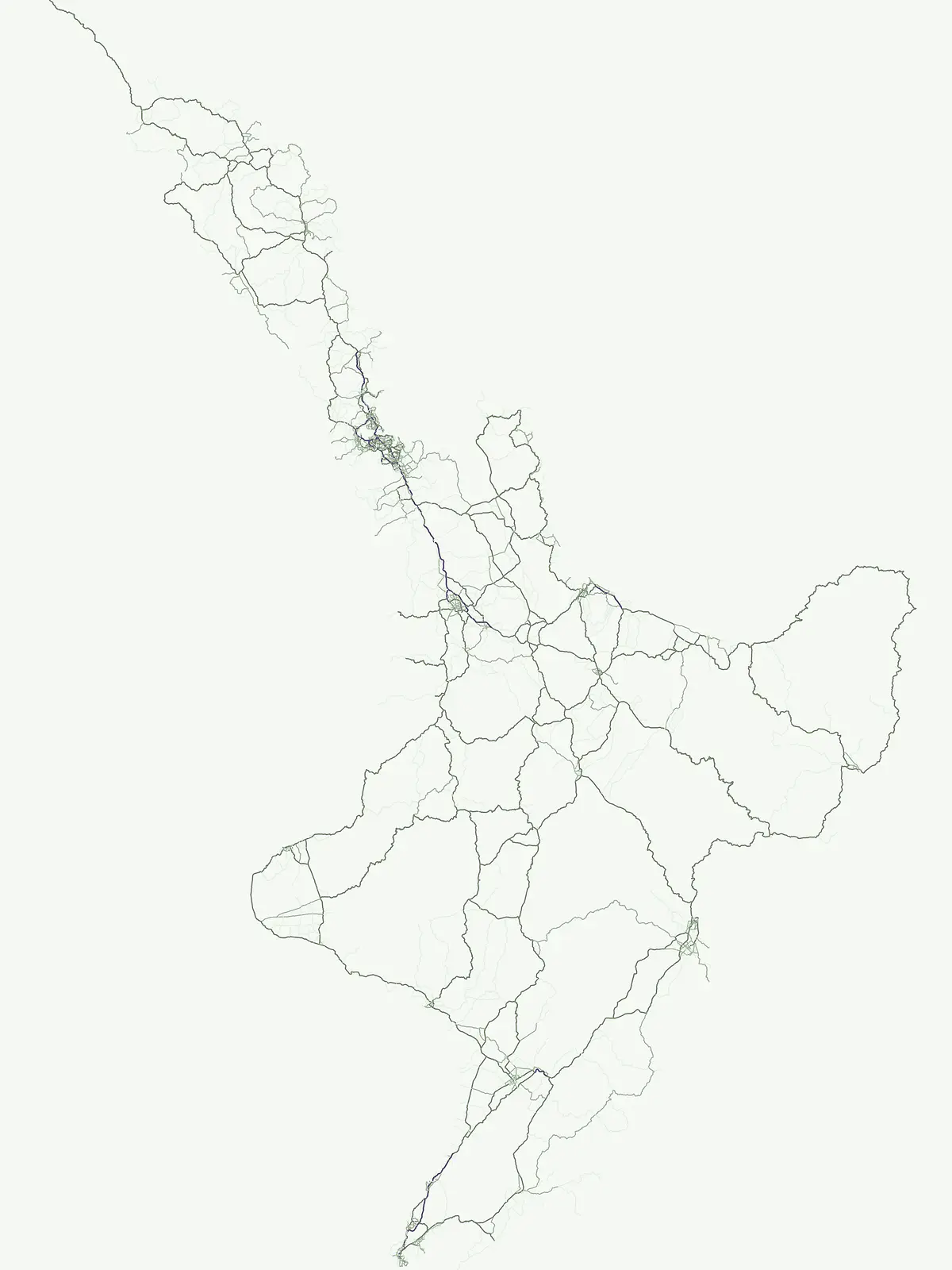
Country pattern

Mapped geography of New Zealand's National Parks, balancing large-scale ecosystem conservation with compatible visitor opportunities.

Discover National Park Protected Areas in New Zealand: IUCN Category II Atlas
National Parks in New Zealand represent IUCN Category II protected areas, designed to safeguard vast ecological processes, characteristic species, and natural ecosystems. These significant conservation landscapes also provide environmentally compatible opportunities for education, recreation, and visitor experiences across New Zealand's diverse islands and terrain.

Matching parks

14

These parks and protected areas currently define how National Park appears across New Zealand.

Category focus

A large natural or near-natural protected area managed to safeguard ecological processes, characteristic species, and ecosystems while also supporting education, recreation, and compatible visitor use.

Representative parks

Fiordland National ParkAoraki / Mount Cook National ParkTongariro National ParkMount Aspiring National ParkArthur's Pass National ParkWestland Tai Poutini National ParkNelson Lakes National ParkAbel Tasman National ParkEgmont National ParkKahurangi National Park
Management profile

Ecosystem protection

National Park
IUCN Category II is one of the most widely recognized protected-area categories in the world because it brings together strong ecosystem protection and public-facing values. A National Park is meant to conserve large-scale ecological processes and representative species and ecosystems, but it is also expected to support compatible spiritual, scientific, educational, recreational, and visitor opportunities. This makes Category II especially important for countries that want protected areas to function both as core conservation landscapes and as places where people can meaningfully experience nature without undermining long-term ecological goals.

Definition

A National Park is a large natural or near-natural protected area established to protect large-scale ecological processes, along with the complement of species and ecosystems characteristic of the area, while also providing a foundation for environmentally and culturally compatible spiritual, scientific, educational, recreational, and visitor opportunities. The category is used for places where conservation remains primary, but where public engagement is an accepted and often important secondary function. The defining balance is not unrestricted access, but carefully managed access compatible with ecosystem protection.

Key characteristics

Category II areas are typically large enough to sustain important ecological functions and to protect more than a single feature or species. They often contain broad habitat mosaics, major watersheds, mountain systems, forests, savannas, coastal landscapes, wetlands, marine systems, or other extensive environments where ecological processes operate across scale. Unlike stricter categories, National Parks usually include a visitor dimension, which may involve trails, viewpoints, interpretation, education, and controlled recreation. However, the category is not meant for heavily urbanized tourism landscapes or places managed mainly as leisure destinations. Its defining character lies in ecosystem-scale conservation, representative natural values, and public use that is shaped around ecological limits rather than the other way around.

Management focus

Management in National Parks generally combines ecosystem protection, visitor planning, interpretation, and long-term stewardship. Managers may use zoning, visitor infrastructure, transport controls, habitat restoration, species protection measures, fire or water management, invasive species control, and education programmes to reconcile conservation with public access. Active management may be required where landscapes have been altered or where visitor pressure is high, but the overriding test is whether actions support the park's ecological purpose. Well-managed Category II areas often balance access and restraint, allowing people to learn from and enjoy the protected area while keeping large-scale ecological processes, characteristic species, and natural systems at the center of decision-making.

Protection purpose

The purpose of Category II is to conserve large natural or near-natural areas in a way that secures ecosystem processes and biodiversity over the long term, while also providing people with opportunities for learning, inspiration, recreation, and connection to nature that remain compatible with conservation.

Management objective

Typical objectives include protecting functioning ecosystems at scale, conserving native species and ecological processes, maintaining scenic and natural values, supporting research and environmental education, providing well-managed visitor access and recreation, restoring degraded areas where necessary, and preventing incompatible development or extractive uses that would undermine the park's long-term ecological integrity.

Global context
Wider background behind National Park
This reference block covers the broader history and global examples that define National Park as an IUCN management category, rather than the country-specific park pattern shown elsewhere on the page.

Category history

The National Park idea has deep roots in nineteenth- and twentieth-century conservation, when governments began setting aside large landscapes for protection from settlement, resource extraction, and landscape transformation. Over time, the concept evolved from scenic reservation toward broader ecosystem conservation. Within the IUCN management category system, Category II became the principal international framework for protected areas that are large, ecosystem-focused, and publicly legible as major conservation landscapes. Although national park names and legal traditions differ widely from country to country, the category helps distinguish those areas managed primarily for ecosystem protection and compatible visitation from both stricter reserves and more human-shaped protected landscapes.

Global examples

Representative examples often include world-famous large protected areas such as Yellowstone National Park in the United States, Serengeti National Park in Tanzania, Torres del Paine National Park in Chile, and many other nationally designated parks whose management priority is ecosystem protection combined with compatible public use. Not every site named 'national park' is automatically IUCN Category II, but the category is widely associated with large, iconic protected areas where conservation and carefully managed visitation are both central.

More categories

Compare New Zealand's complete spectrum of protected area classifications and conservation landscapes.

Browse Other IUCN Protected Area Categories and Conservation Classifications in New Zealand
Dive deeper into New Zealand's conservation atlas beyond National Parks by exploring its full array of IUCN protected area categories. Understanding the national park classification system allows you to compare diverse protected landscapes, offering insight into varied conservation mandates and geographic distribution across the country.

IUCN category v

Protected Landscape/Seascape

A protected area where the long-term interaction of people and nature has created a distinct landscape or seascape with significant ecological, cultural, and scenic value.

Example parks

Beit Guvrin-Maresha National Park

Understanding New Zealand's Park Distribution, Mapped Geography, and Country-Level Conservation Landscapes

Frequently Asked Questions About National Parks in New Zealand: Geography and Protected Areas
Explore common questions regarding New Zealand's national parks, protected landscapes, and their diverse geographic contexts across the North and South Islands. Gain a deeper understanding of the country's unique conservation efforts, alpine environments, and volcanic terrains through structured insights on park geography and regional spread.
MoriAtlas Explorer

Continue Exploring National Park Protected Areas Across New Zealand

Further your understanding of New Zealand's commitment to conservation by delving into the specific National Parks classified under IUCN Category II. This category emphasizes the protection of large-scale ecological processes and characteristic species while enabling compatible visitor use. Examining these protected areas provides critical insights into the nation's geography and conservation strategies, moving beyond a general overview to a detailed appreciation of these vital natural landscapes.