The largest national park in France and the European Union, protecting vast Amazonian rainforest in French Guiana
Guiana Amazonian Park
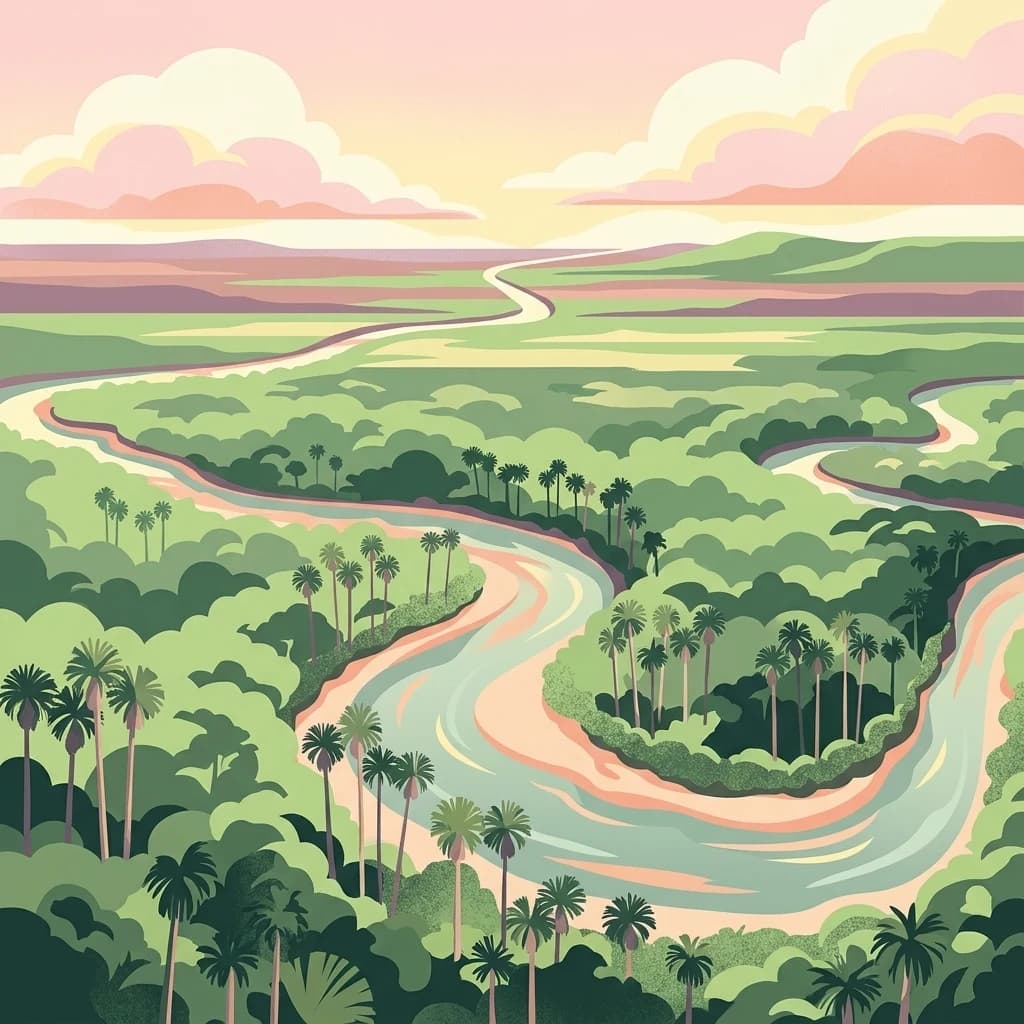
Guiana Amazonian Park is the largest national park in France and the European Union, encompassing approximately 33,900 square kilometers of pristine Amazonian rainforest in the overseas department of French Guiana. Established by decree in February 2007, the park protects roughly 41% of French Guiana's territory, making it one of the most significant protected areas in the world. The park occupies a core zone of 20,300 square kilometers where maximal protection is enforced, alongside a secondary adhesion area of 13,600 square kilometers.
Located in the heart of the Guianan Amazon, the park is virtually inaccessible from the coast, reachable only by light aircraft or traditional pirogue canoes along the Maroni and Oyapock rivers. This remoteness has helped preserve extraordinary biodiversity, with the park serving as a critical corridor connecting to adjacent protected areas in Brazil, particularly Tumucumaque National Park, together forming the largest tropical forest protected area on Earth.
The park encompasses territories belonging to five communes: Camopi, Maripasoula, Papaïchton, Saint-Élie, and Saül, with Montagne Bellevue as its highest point. Its establishment followed more than a decade of negotiation, including the Twenké agreement of 1998 that recognized the rights of indigenous Amerindian and Maroon communities residing within the park's boundaries.