Mori Atlas logo
Protection category

Understanding the definition of National Park and discovering examples across Cambodia's protected area system.

Cambodia National Parks: Exploring IUCN Category II Protected Areas and Natural Landscapes

Discover the significance of IUCN Category II National Parks within Cambodia's geography. This route details the management intent behind these large, natural protected areas, focusing on safeguarding ecological processes and characteristic ecosystems while allowing for compatible education and recreation. Explore the distribution and context of these vital protected lands across the Cambodian landscape, providing a focused view on this specific conservation designation.

Cambodia National Parks: Exploring IUCN Category II Protected Areas and Natural Landscapes
Parks in this category

Examine these essential protected landscapes, from the Cardamom Mountains to coastal conservation zones.

National Park Protected Areas in Cambodia: Explore the Full Country List
Discover the National Park protected areas of Cambodia, including vast forest reserves and critical biodiversity corridors across its mapped geography. Filter and compare these conservation landscapes to understand their regional distribution and the diverse ecosystems protected within Cambodia's national boundaries.
National parkSiem Reap ProvinceMountain

Phnom Kulen National Park

Explore ancient Khmer sites and natural terrain within this Cambodian national park.

Phnom Kulen National Park offers a unique glimpse into Cambodia's geographic and historical richness. As a protected national park in Siem Reap Province, it preserves a distinct highland landscape characterized by sandstone formations, evergreen forests, and sacred sites. Discover the mapped boundaries of this important conservation area, trace the historical significance of the Khmer Empire's origins, and explore the natural terrain that defines this culturally significant region.

373.76 km²1993IIMinor water
National parkKoh Kong provinceMountain

Southern Cardamom National Park

Explore its mapped boundaries and conservation significance.

Southern Cardamom National Park is a crucial protected area in southwestern Cambodia, encompassing a significant portion of the Cardamom Mountains. This national park serves as a vital atlas point for understanding the regional geography and conservation efforts in Southeast Asia. Its expansive territory is dedicated to safeguarding critical habitats and supporting ambitious wildlife programs, making it a cornerstone of landscape-level conservation and a key element in mapping the protected areas of the region.

4,103.92 km²2016TropicalII
National parkRatanakiri provinceMountain

Virachey National Park

Explore its remote montane forest ecosystems and diverse terrain.

Virachey National Park, Cambodia's largest national park, offers a profound glimpse into one of mainland Southeast Asia's last great wildernesses. Spanning remote highland terrain in Ratanakiri province, it features dramatic elevation changes from 400 to 1,500 meters, supporting diverse ecosystems including dense lowland forests, unique montane cloud forests, and upland savannahs. Its recognition as an ASEAN Heritage Park underscores its critical regional conservation value, making it a significant destination for understanding protected landscapes and their geographic context.

3,380.57 km²1993TropicalII
National parkKampong Speu ProvinceMountain

Kirirom National Park

Explore its mapped terrain and regional geography in Kampong Speu Province

Kirirom National Park stands as Cambodia's foundational national park, safeguarding a significant portion of the eastern Cardamom Mountains. This protected landscape is defined by its elevated terrain and mountain forest ecosystems, offering a distinct geographic character within Kampong Speu Province. Its atlas-style exploration reveals the mapped boundaries and regional context of this pioneering conservation area, providing insight into Cambodia's commitment to preserving its natural heritage.

283.75 km²1993TropicalAccess unknown
National parkCambodiaMarine

Botum Sakor National Park

Explore its mapped geography and protected landscape features.

Botum Sakor National Park represents Cambodia's largest national park, offering a unique protected landscape where the Cardamom Mountains meet the Gulf of Thailand. The park's diverse geography includes extensive evergreen forests, grasslands, and significant coastal wetland ecosystems, such as mangrove and freshwater swamp forests. Examining its mapped boundaries reveals a critical area for biodiversity and regional ecological context within Southeast Asia's protected lands.

1,825.85 km²1993TropicalII
National parkRatanakiri province

Veun Sai–Siem Pang National Park

Mapped Boundaries and Primate Conservation Habitat

Veun Sai, Siem Pang National Park in Cambodia's Ratanakiri province is a vital protected area featuring expansive lowland evergreen and semi-evergreen forests. Its designation as a national park underscores its role in safeguarding critical habitat for diverse primate populations, notably the endangered Northern buffed-cheeked gibbon. The park's geography, characterized by gentle terrain and extensive forest cover, makes it a significant component of the region's biodiversity corridor and a key site for understanding Cambodia's natural landscapes.

574.69 km²2016TropicalII
National parkKampot ProvinceMountain

Preah Monivong Bokor National Park

Explore diverse forests and colonial history within its mapped terrain.

Preah Monivong Bokor National Park is a protected national park in Kampot Province, Cambodia, distinguished by its mountainous geography within the Dâmrei Mountains. Covering over 1,500 square kilometers, it showcases varied forest ecosystems and is recognized as an ASEAN Heritage Park. The park's landscape combines significant natural biodiversity with remnants of French colonial history, offering a rich context for atlas-based geographic exploration and protected-area understanding.

1,544.58 km²1993TropicalEasy access
National parkCambodiaMountain

Central Cardamom Mountains National Park

Explore Extensive Rainforest, Diverse Habitats, and Mountain Terrain

Central Cardamom Mountains National Park is Cambodia's largest protected area, a testament to significant rainforest conservation efforts. This national park spans approximately 4,010 square kilometers, showcasing a dynamic mountainous landscape with diverse ecological zones from coastal areas to peaks over 1,500 meters. Discover the geographic distribution of its protected boundaries and the rich tapestry of habitats that define this vital Southeast Asian natural reserve, offering deep context for atlas-based exploration.

4,010.65 km²1999TropicalModerate access
National parkSihanoukville ProvinceMarineMountain

Ream National Park

Explore unique mangrove ecosystems and mapped terrain within Cambodia.

Ream National Park is a significant protected area in Cambodia, celebrated for its intricate coastal and terrestrial ecosystems. This national park offers a detailed view of mangrove wetlands, evergreen forests, rolling hills, and marine habitats like coral reefs and sea grass beds. Situated in Sihanoukville Province, its landscape is characterized by rivers flowing through the terrain into the sea, providing vital habitats for diverse species and contributing to its atlas significance for regional geography and protected-area study.

210 km²1993Easy accessII
Watercolor depiction of a coastal scene with green trees, sandy shore, and calm water under a soft sky
Marine protected areaCambodiaMarine

Koh Rong National Park

Mapped island archipelago and protected landscape geography.

Koh Rong National Park stands as Cambodia's foundational marine protected area, safeguarding seven tropical islands and their surrounding marine environments in the Gulf of Thailand. This designation underscores its importance for coastal and island ecosystem conservation, characterized by lush island interiors, extensive beaches, and vital coral reef formations. Understanding the park's mapped boundaries and its place within the regional geography reveals a significant natural landscape for atlas exploration.

524 km²2018IIMajor water bodies
National parkRatanakiri province

O'Yadav National Park

Explore mapped boundaries and regional landscape context.

O'Yadav National Park is a national park located in northeastern Cambodia's Ratanakiri province, designated to protect significant forest ecosystems and serve as a vital link in the nation's biodiversity corridor system. Spanning 105,019 hectares, the park encompasses forested terrain and includes the historically significant Yak Nang temple site. Its conservation efforts contribute to the ecological integrity of the broader Indochinese region, making it a key protected landscape for atlas-based geographic study.

1,050.19 km²2016IIMinor water
National parkKep ProvinceMountain

Kep National Park

Explore mapped terrain and panoramic viewpoints of this national park.

Kep National Park is a protected national park situated in Kep Province, Cambodia, known for its unique hilly terrain that rises from the coastal lowlands. This protected area offers elevated viewpoints with commanding sights across the Gulf of Thailand, stretching towards Phu Quoc island and the distant Bokor Ranges. Its landscape character is defined by the contrast between its mountainous interior and the surrounding flat coastal regions, making it a significant feature for understanding regional geography and mapped protected areas. The park provides an accessible experience of Cambodia's coastal mountainous ecosystems.

11.52 km²1993Access unknownII
Country pattern

Understanding the Geographic Spread and Conservation Role of Cambodia's IUCN Category II National Parks

Cambodia National Park Protected Areas: Exploring IUCN Category II Conservation Landscapes
Browse Cambodia's National Parks, IUCN Category II protected areas dedicated to conserving vast ecological processes, characteristic species, and diverse ecosystems across the nation's tropical environment. These conservation landscapes balance primary environmental protection with opportunities for compatible scientific, educational, and recreational experiences throughout Cambodia's unique geographic atlas.

Matching parks

12

These parks and protected areas currently define how National Park appears across Cambodia.

Category focus

A large natural or near-natural protected area managed to safeguard ecological processes, characteristic species, and ecosystems while also supporting education, recreation, and compatible visitor use.

Representative parks

Phnom Kulen National ParkSouthern Cardamom National ParkVirachey National ParkKirirom National ParkBotum Sakor National ParkVeun Sai–Siem Pang National ParkPreah Monivong Bokor National ParkCentral Cardamom Mountains National ParkReam National ParkKep National Park
Management profile

Ecosystem protection

National Park
IUCN Category II is one of the most widely recognized protected-area categories in the world because it brings together strong ecosystem protection and public-facing values. A National Park is meant to conserve large-scale ecological processes and representative species and ecosystems, but it is also expected to support compatible spiritual, scientific, educational, recreational, and visitor opportunities. This makes Category II especially important for countries that want protected areas to function both as core conservation landscapes and as places where people can meaningfully experience nature without undermining long-term ecological goals.

Definition

A National Park is a large natural or near-natural protected area established to protect large-scale ecological processes, along with the complement of species and ecosystems characteristic of the area, while also providing a foundation for environmentally and culturally compatible spiritual, scientific, educational, recreational, and visitor opportunities. The category is used for places where conservation remains primary, but where public engagement is an accepted and often important secondary function. The defining balance is not unrestricted access, but carefully managed access compatible with ecosystem protection.

Key characteristics

Category II areas are typically large enough to sustain important ecological functions and to protect more than a single feature or species. They often contain broad habitat mosaics, major watersheds, mountain systems, forests, savannas, coastal landscapes, wetlands, marine systems, or other extensive environments where ecological processes operate across scale. Unlike stricter categories, National Parks usually include a visitor dimension, which may involve trails, viewpoints, interpretation, education, and controlled recreation. However, the category is not meant for heavily urbanized tourism landscapes or places managed mainly as leisure destinations. Its defining character lies in ecosystem-scale conservation, representative natural values, and public use that is shaped around ecological limits rather than the other way around.

Management focus

Management in National Parks generally combines ecosystem protection, visitor planning, interpretation, and long-term stewardship. Managers may use zoning, visitor infrastructure, transport controls, habitat restoration, species protection measures, fire or water management, invasive species control, and education programmes to reconcile conservation with public access. Active management may be required where landscapes have been altered or where visitor pressure is high, but the overriding test is whether actions support the park's ecological purpose. Well-managed Category II areas often balance access and restraint, allowing people to learn from and enjoy the protected area while keeping large-scale ecological processes, characteristic species, and natural systems at the center of decision-making.

Protection purpose

The purpose of Category II is to conserve large natural or near-natural areas in a way that secures ecosystem processes and biodiversity over the long term, while also providing people with opportunities for learning, inspiration, recreation, and connection to nature that remain compatible with conservation.

Management objective

Typical objectives include protecting functioning ecosystems at scale, conserving native species and ecological processes, maintaining scenic and natural values, supporting research and environmental education, providing well-managed visitor access and recreation, restoring degraded areas where necessary, and preventing incompatible development or extractive uses that would undermine the park's long-term ecological integrity.

Global context
Wider background behind National Park
This reference block covers the broader history and global examples that define National Park as an IUCN management category, rather than the country-specific park pattern shown elsewhere on the page.

Category history

The National Park idea has deep roots in nineteenth- and twentieth-century conservation, when governments began setting aside large landscapes for protection from settlement, resource extraction, and landscape transformation. Over time, the concept evolved from scenic reservation toward broader ecosystem conservation. Within the IUCN management category system, Category II became the principal international framework for protected areas that are large, ecosystem-focused, and publicly legible as major conservation landscapes. Although national park names and legal traditions differ widely from country to country, the category helps distinguish those areas managed primarily for ecosystem protection and compatible visitation from both stricter reserves and more human-shaped protected landscapes.

Global examples

Representative examples often include world-famous large protected areas such as Yellowstone National Park in the United States, Serengeti National Park in Tanzania, Torres del Paine National Park in Chile, and many other nationally designated parks whose management priority is ecosystem protection combined with compatible public use. Not every site named 'national park' is automatically IUCN Category II, but the category is widely associated with large, iconic protected areas where conservation and carefully managed visitation are both central.

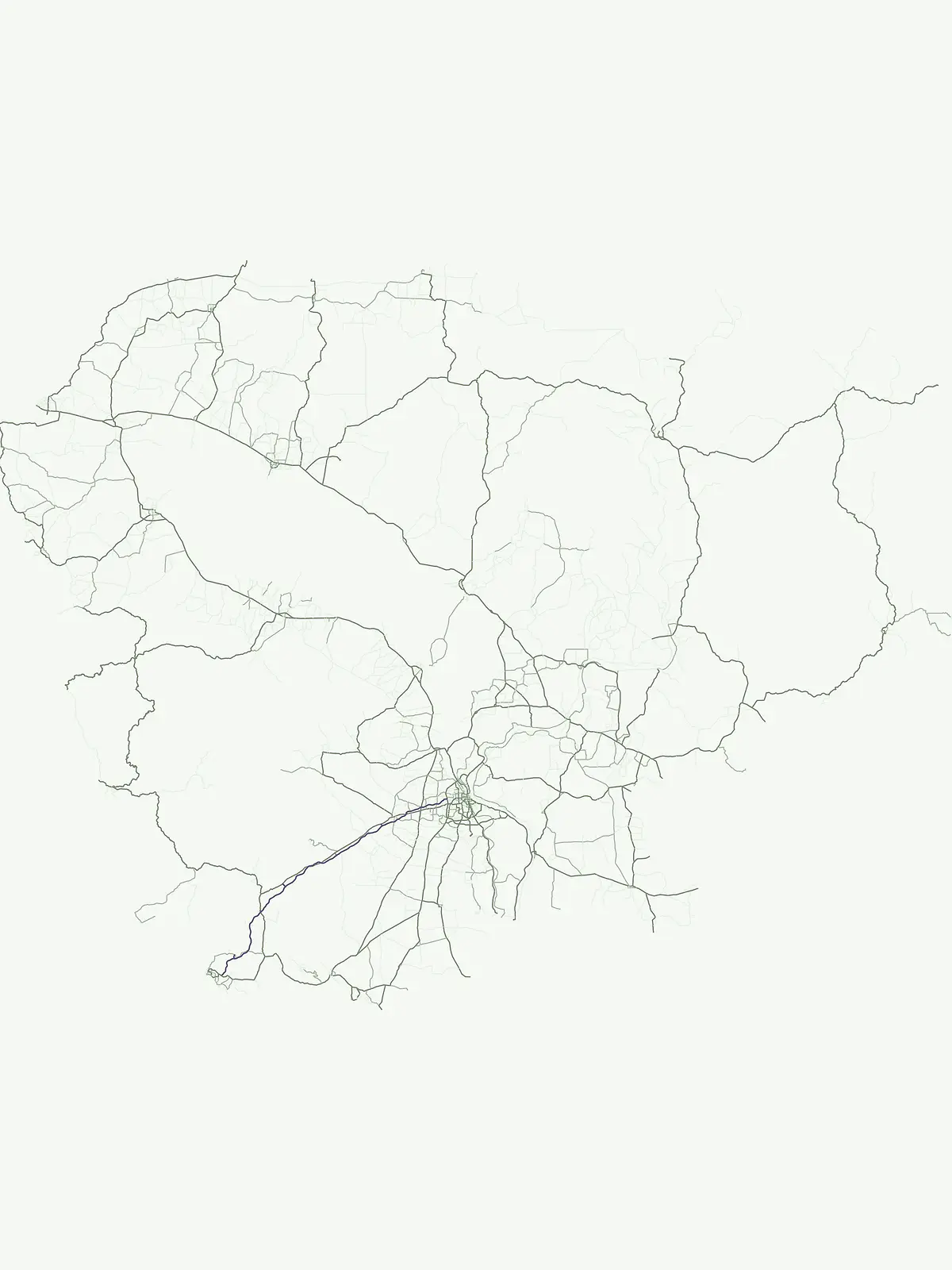
Explore the geographic spread of Cambodia's key conservation landscapes and park distribution

Common Questions on Cambodia's National Parks, Protected Areas, and Regional Geography
Gain comprehensive insights into Cambodia's national parks, wildlife sanctuaries, and other significant protected areas, including key features and conservation efforts. These questions clarify their geographic distribution, conservation priorities, and the diverse natural environments across the country's Mekong region and Cardamom Mountains.
MoriAtlas Explorer

Continue Exploring Cambodia's National Park Protected Areas and Geographic Context

Deepen your understanding of Cambodia's commitment to conservation by continuing to explore its National Parks. Investigate how the IUCN Category II classification informs management and landscape preservation across the nation. This focused discovery route provides essential context for appreciating the scope and intent of these protected areas within Cambodia's natural geography.

Global natural geography