A narrow, tectonically active sea of extraordinary marine diversity between the Baja California peninsula and mainland Mexico.
Gulf of California
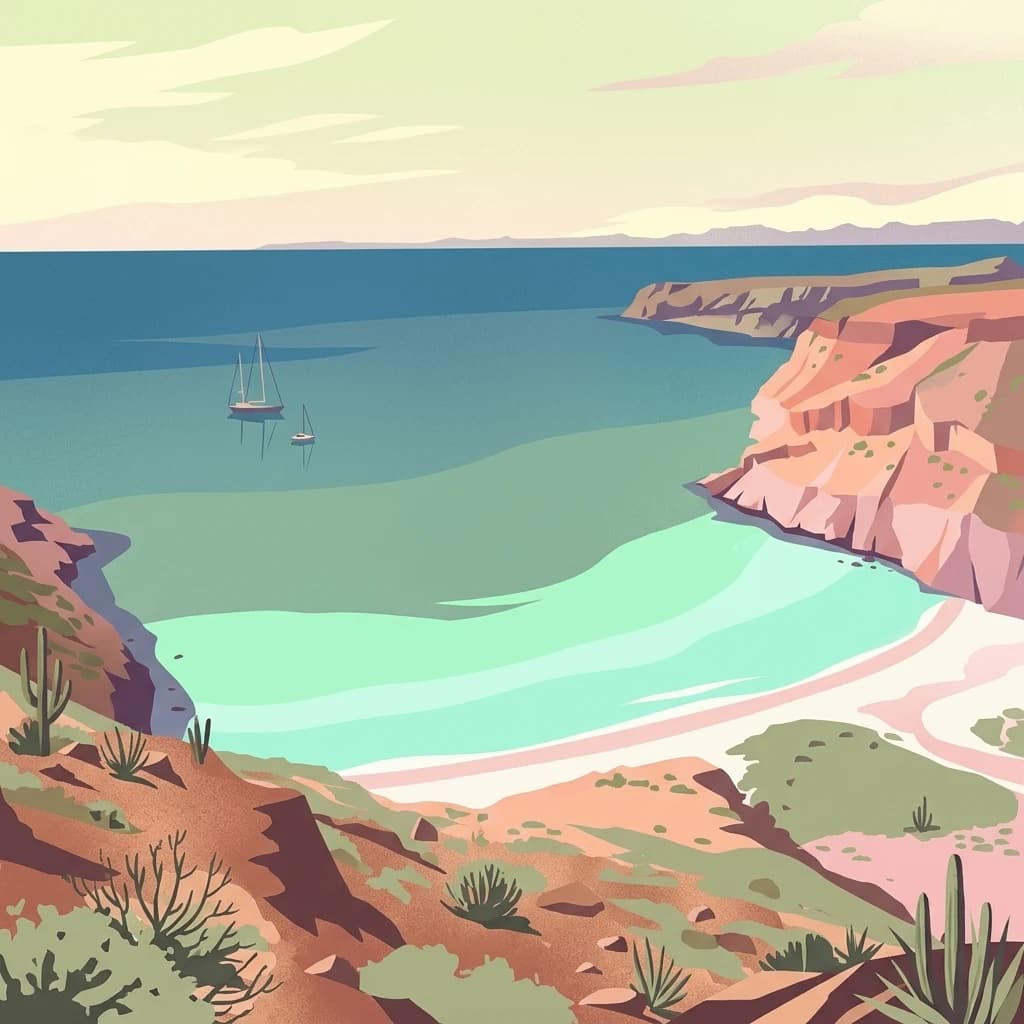
The Gulf of California is a marginal sea of the Pacific Ocean that separates the Baja California peninsula from the Mexican mainland. Bordered by the states of Baja California, Baja California Sur, Sonora, and Sinaloa, the gulf stretches roughly 1,100 kilometers and contains dozens of islands, many of volcanic origin, scattered primarily along its western shore.
The gulf is widely regarded as one of the most ecologically rich marine regions on Earth. It supports an extraordinary concentration of endemic species, critical seabird nesting sites, important breeding and feeding grounds for migratory marine mammals, and vibrant fisheries that have shaped coastal communities for centuries. The combination of deep ocean basins, nutrient-rich currents, arid desert shores, and tropical southern waters creates a dramatic gradient of marine environments within a relatively compact geographic space.
Recognition of the gulf's global importance came in 2005 when its islands and protected areas were inscribed as a UNESCO World Heritage Site. The site was placed on the List of World Heritage in Danger in 2019, reflecting mounting conservation concerns, most notably the imminent extinction of the vaquita, the gulf's only endemic porpoise.