A Pleistocene plateau in northern Piedmont shaped by glaciers, Roman gold mining, and ancient stone.
Riserva naturale speciale della Bessa
The Riserva naturale speciale della Bessa is a small but historically distinctive protected area in northern Piedmont, Italy, lying at the foot of the southern slopes of the Biellese Alps and at the mouth of the Aosta Valley. Established in 2009 through a regional law, the reserve covers around 750 hectares across the municipalities of Borriana, Cerrione, Mongrando, and Zubiena, and is administered as part of the broader Biellese protected-area network managed by the Ticino and Lake Maggiore parks authority.
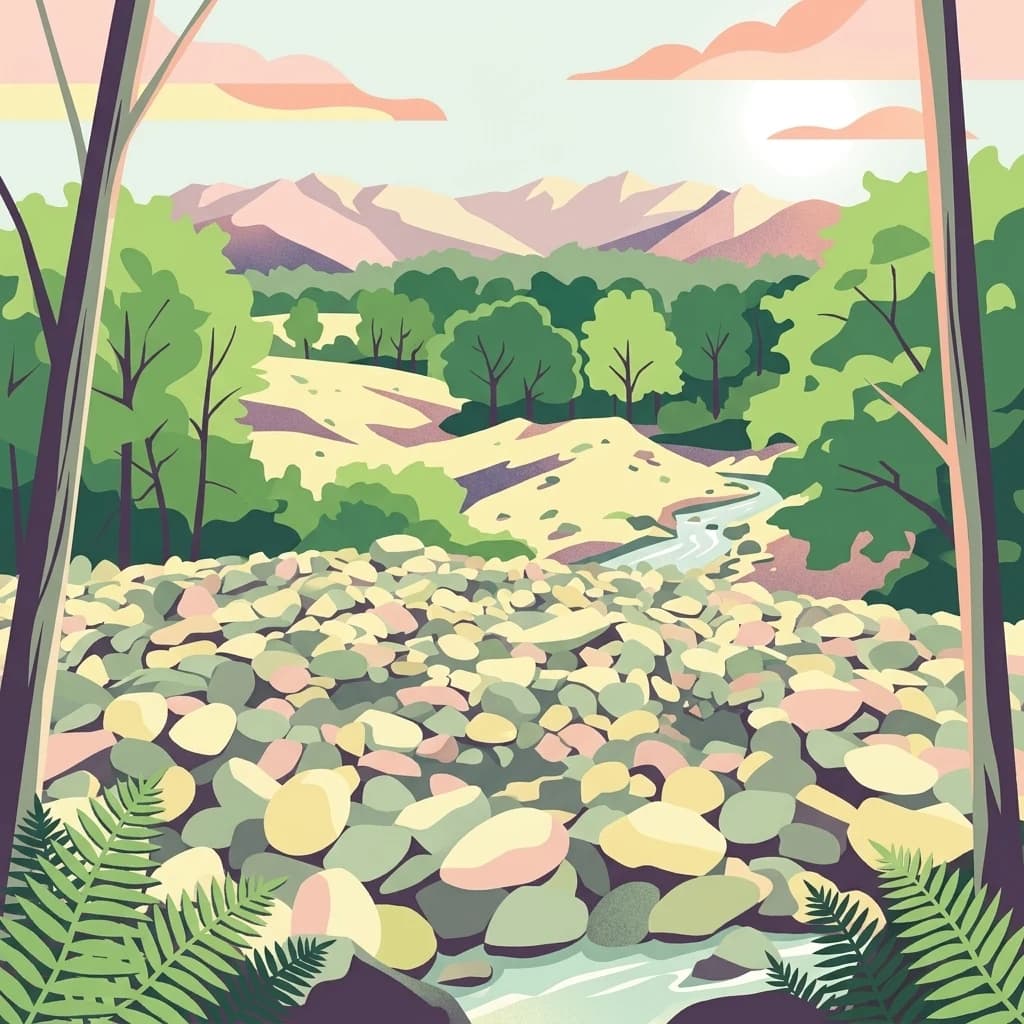
Geologically, the reserve sits along the Biellese flank of the great Serra d'Ivrea moraine, one of the most extensive morainic amphitheaters in Europe. Its surface is an elongated plateau of glacial and fluvioglacial origin, crossed by deep erosional channels and strewn with rounded cobbles and large erratic boulders. Its landscape is austere and unusual for Piedmont: a stony, almost barren highland rather than the forested Alpine terrain typical of the region.
Beyond its geological character, the Bessa is best known as the site of one of the most significant Roman gold mining operations in the Alps. Between the 2nd and 1st centuries BC, thousands of laborers worked the placer deposits left behind by Quaternary glaciers, and that working landscape of piled cobbles, terraced diggings, and prehistoric rock carvings remains the defining cultural and historical layer of the reserve today.