A vast freshwater lake in the heart of the Netherlands, born from one of the 20th century's great feats of hydraulic engineering.
IJsselmeer
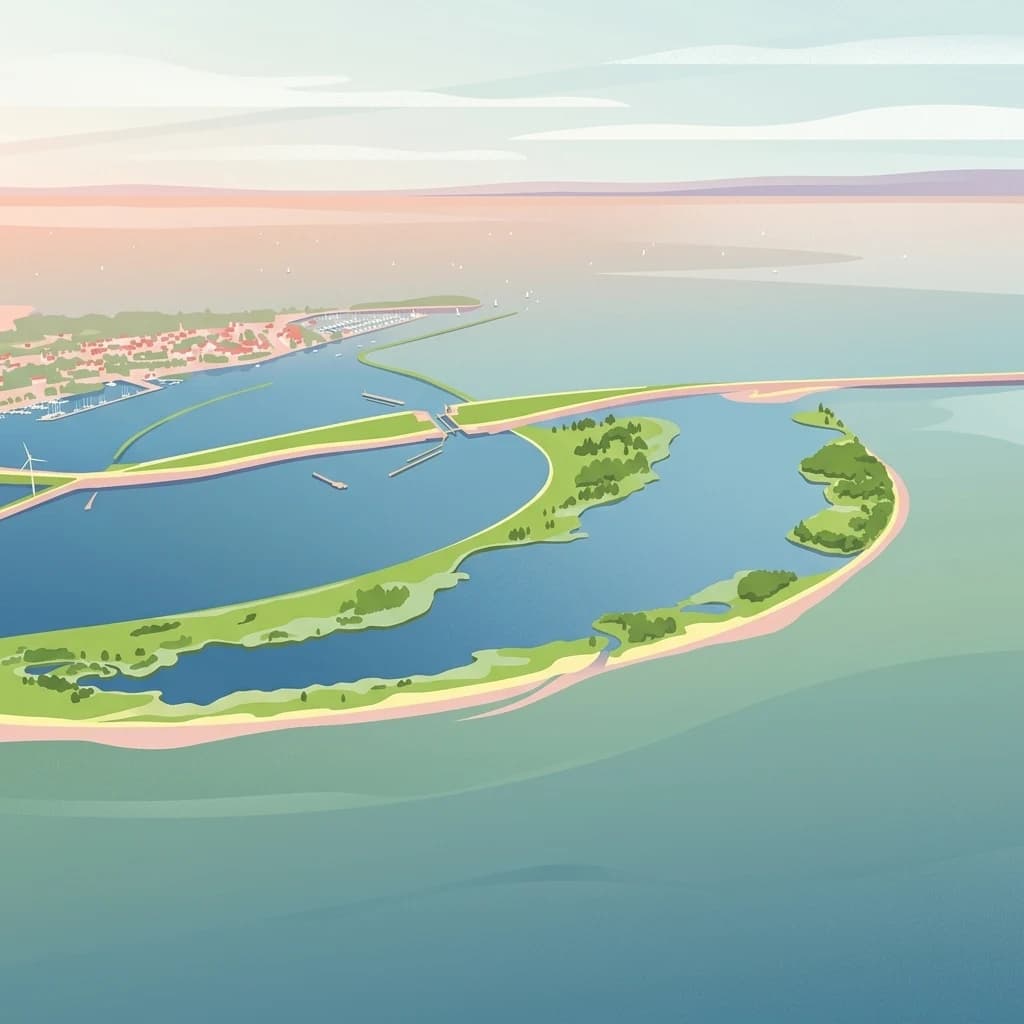
The IJsselmeer is the largest lake in the Netherlands, a broad, shallow body of fresh water that lies in the center of the country. It was created in 1932 when the Afsluitdijk, a long enclosing dam, sealed off the former saltwater Zuiderzee from the North Sea's tidal reach. What had once been a brackish inland sea became within a few years a calm freshwater lake, fed primarily by the River IJssel, itself a distributary of the Rhine.
Surrounded by the provinces of Friesland, North Holland, and the polder landscapes of Flevoland, the lake forms part of the broader IJsselmeer region. Its waters carry multiple roles: freshwater reservoir for agriculture and drinking water, a route for inland shipping, a fishery, a recreation area, and an internationally recognized habitat for waterbirds. The IJsselmeer is designated as an Important Bird Area by BirdLife International and is one of the most significant wetland sites in northwestern Europe.
Apart from ecological and hydrological importance, the lake reflects one of Europe's most ambitious water management stories. The transformation from open sea to enclosed lake is a defining chapter in Dutch landscape history, and ongoing climate adaptation around the Afsluitdijk continues to shape its future.